Articles about
architecture
Thoughts and field notes on MarTech, customer engagement, and solution architecture.
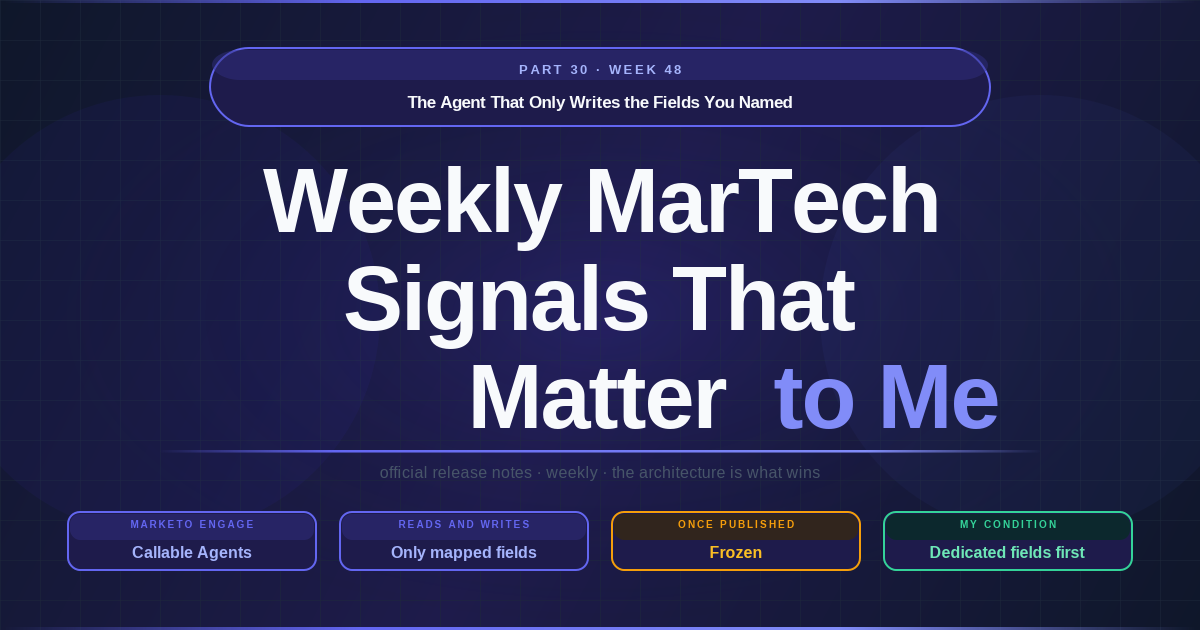
The Agent That Only Writes the Fields You Named: Signals W48
Marketo Engage now lists Callable Agents as Released: an AI agent that runs as a Smart Campaign flow step, reads and writes only the lead fields an administrator maps, and is frozen once published. My position: those limits are the reason to let it run unattended, on fields created for it.
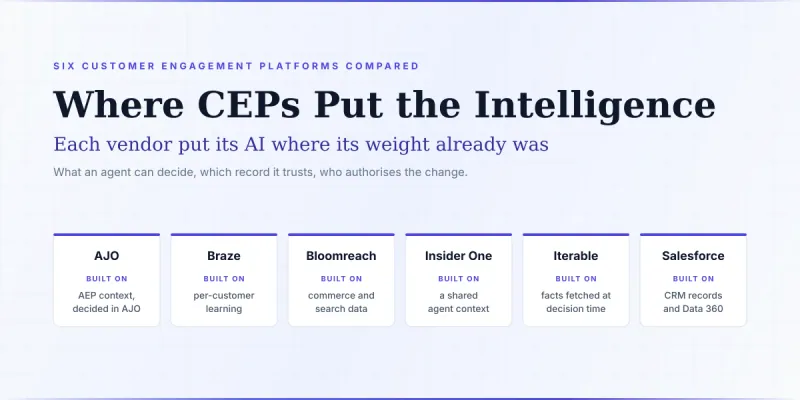
Where CEPs Put the Intelligence: Six Platforms Compared
AJO, Braze, Bloomreach, Insider One, Iterable and Salesforce all ship agents now. Each put its AI where its centre of gravity already was, and that decides what an agent can decide, which record it trusts and who authorises the change.
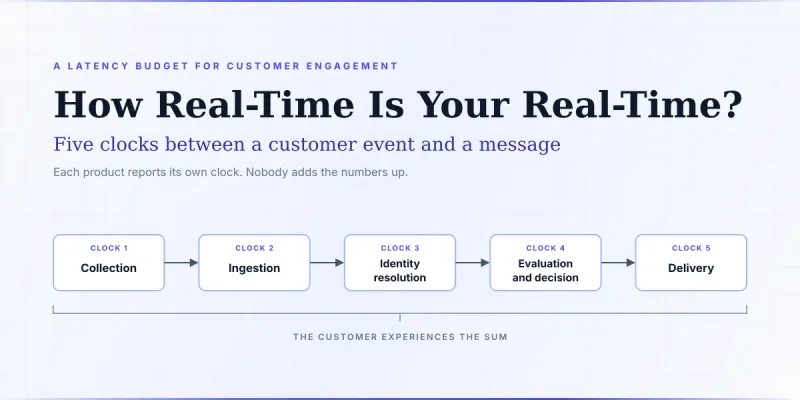
How Real-Time Is Your Real-Time? A Latency Budget for Customer Engagement
Every product between a customer's click and a marketing message can honestly claim to be real-time, and the message can still arrive forty minutes later. Real-time behaviour is a property of the whole chain, and the way to get it is a latency budget set per use case.
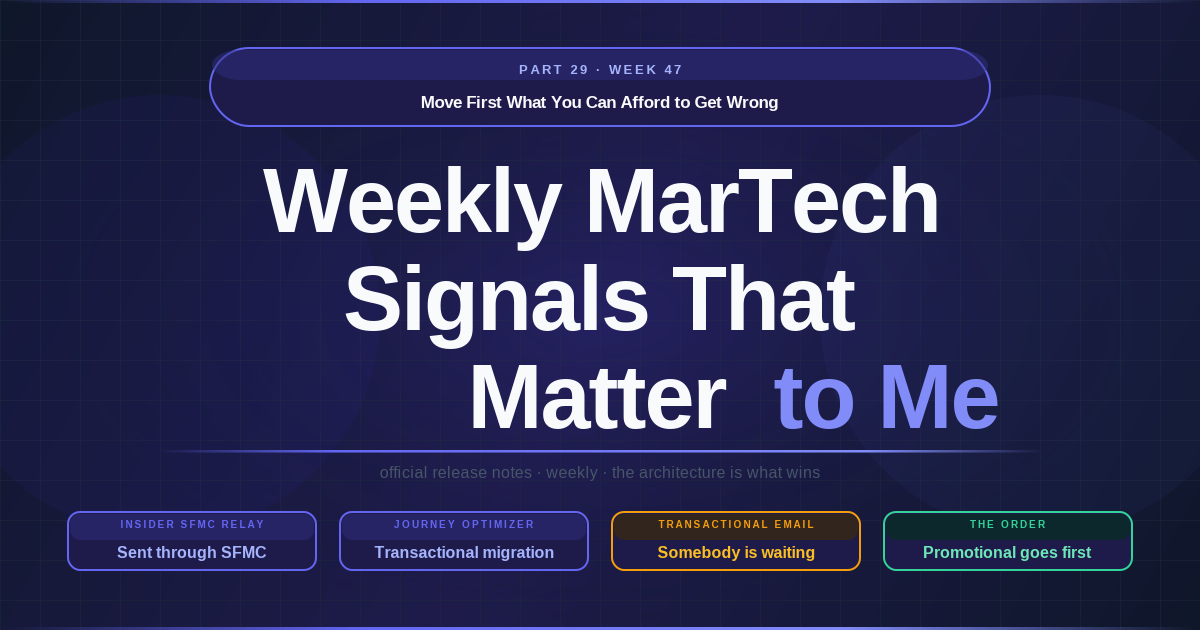
Move First What You Can Afford to Get Wrong: Signals W47
Insider documented a relay that sends promotional email through the customer's own Salesforce Marketing Cloud account, and Adobe Journey Optimizer extended its migration workspace to transactional email. I read them as tools for two different phases of the same plan, and I argue for an order: migrate promotional email first, transactional last.
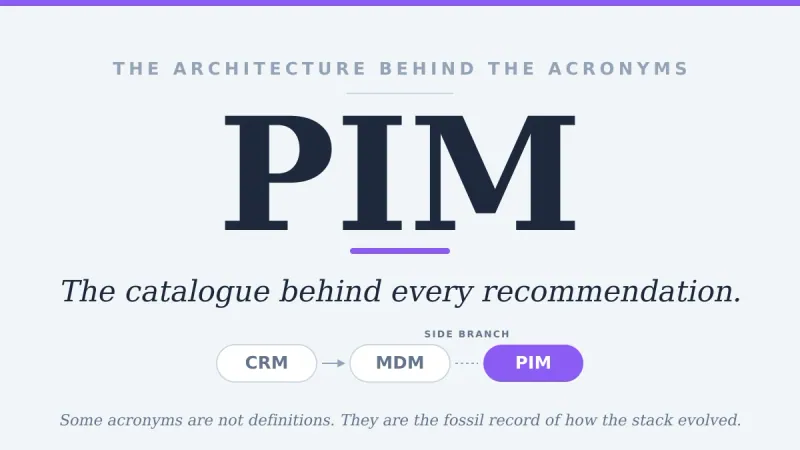
The Architecture Behind the Acronyms (PIM): The Catalogue Behind Every Recommendation
When a recommendation shows a sold-out item or the wrong size range, the engagement platform takes the blame. The failure usually sits in product data, and PIM is the acronym for the layer that marketing architecture rarely budgets for.
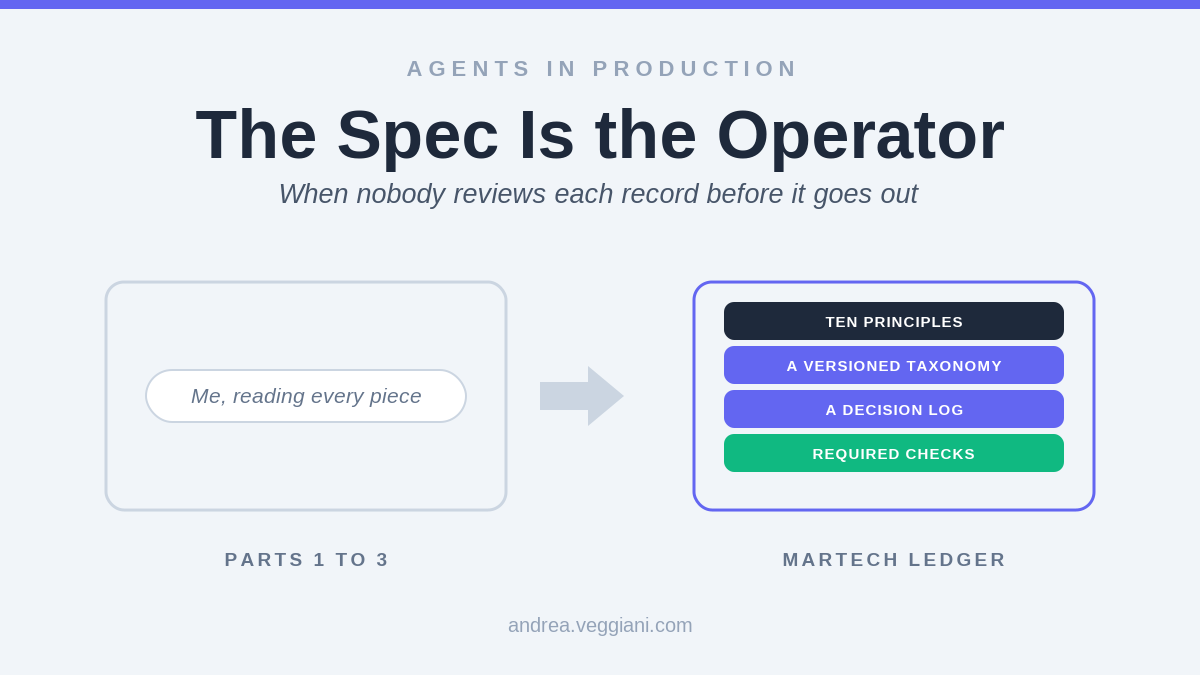
Agents in Production: The Spec Is the Operator
MarTech Ledger publishes dated, sourced facts on 15 MarTech platforms every day without a person reviewing each record. What I had to decide and write down before an agent wrote any code, and why in a system with no operator per record the specification and the decision log do the work I did by hand in the first three parts.
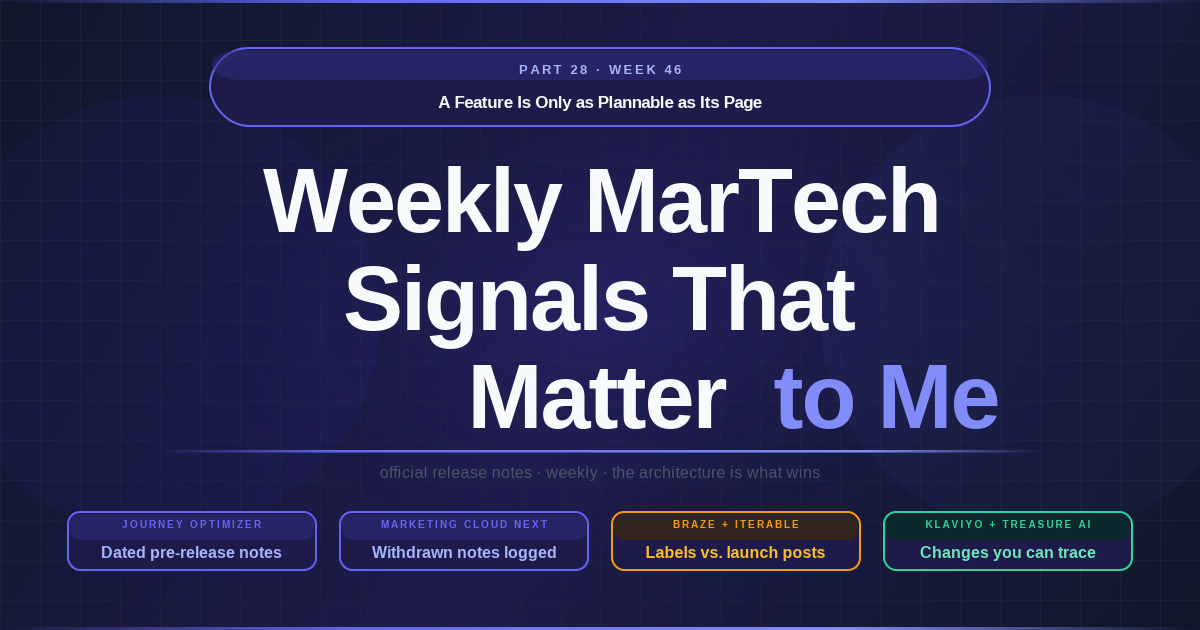
A Feature Is Only as Plannable as Its Page: Signals W46
Adobe Journey Optimizer now publishes what is coming a week before each monthly release, with a date. This week's record shows how differently vendors tell us what is planned, what is live, what is still in beta and what was withdrawn, and why that matters for anyone who plans tests and campaigns around a release.
The Architecture Behind the Acronyms (CMP): The Banner That Became a Layer
CMP started life as the name for a cookie banner inside an adtech framework. The job the category now has to do, holding a customer's permissions across every channel, is one the acronym was never built to describe.
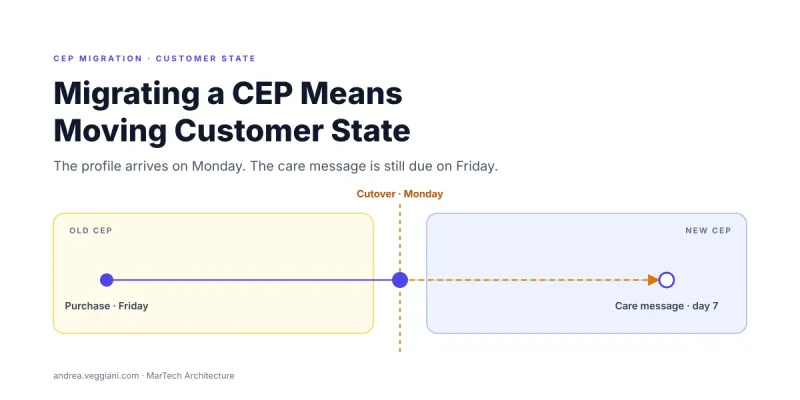
Migrating a CEP Means Moving Customer State
A CEP migration can reproduce every journey diagram and still change what happens to customers already inside it. The cutover depends on what state you preserve, reconstruct or deliberately end.
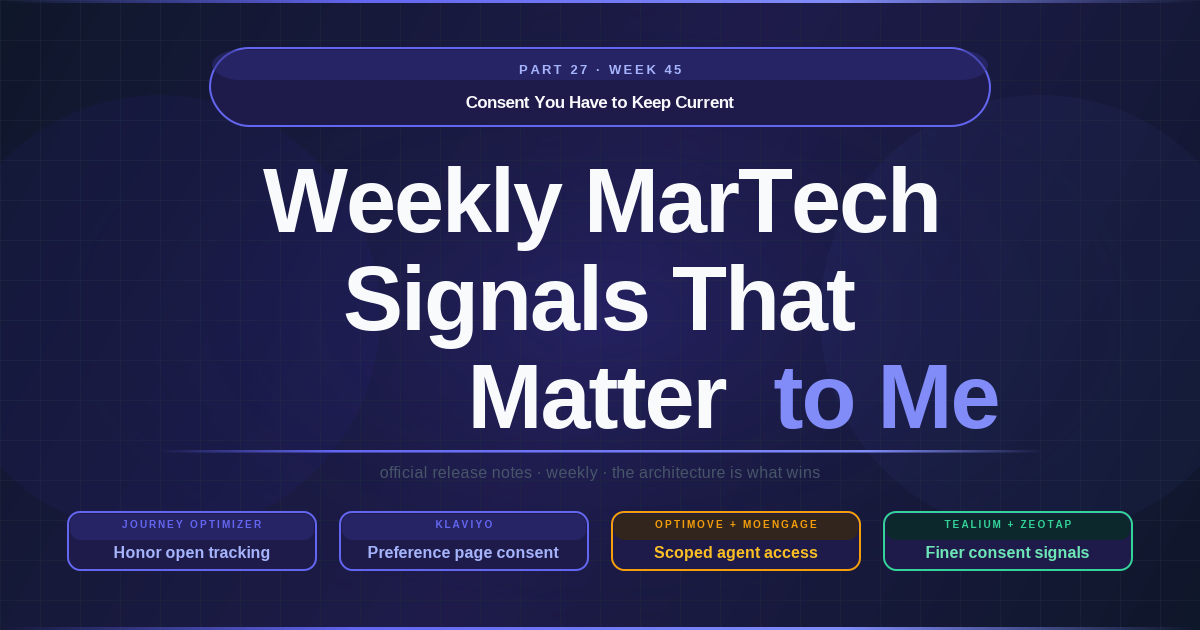
Consent You Have to Keep Current: Signals W45
Tracking consent is moving out of the moment of sending and into the preference centre, where recipients can change it whenever they like. This week's releases show what that asks of the platforms, the consent signals around them and the access model for the agents that now act on the same data.

Weekly MarTech Signals That Matter to Me: Part 26, Week 44
Most platform changes are long periods in which the old and the new system run side by side. This week's releases show which features make that period manageable: assets that can be reused across platforms, audiences that arrive without being rebuilt, and consent that is checked at the moment of sending.
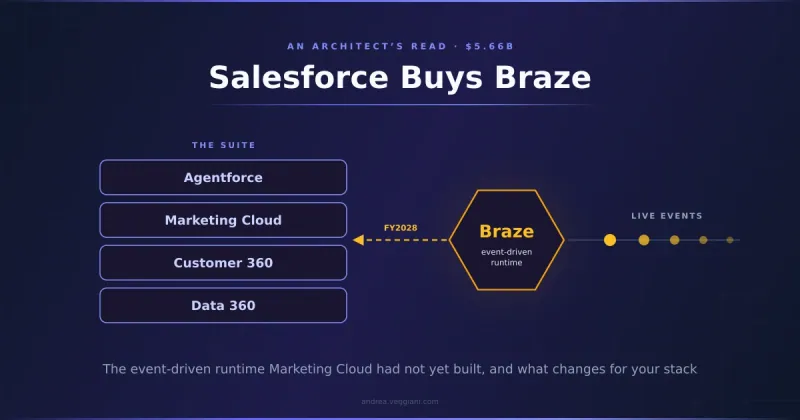
Salesforce Buys Braze: What It Means for Your Stack
Salesforce's $5.66 billion deal for Braze buys an event-driven engagement runtime and the decisioning on top of it, the part of the stack Marketing Cloud's native rebuild had not yet delivered for mobile-first B2C. What it means for Braze customers, Marketing Cloud customers and composable stacks.
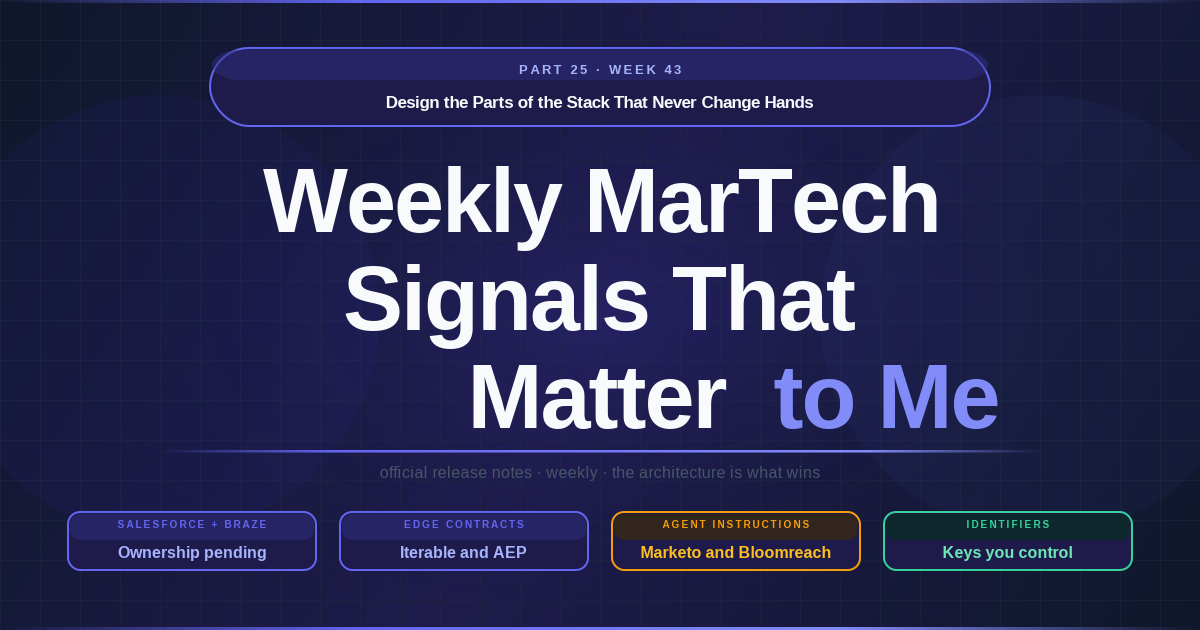
Weekly MarTech Signals That Matter to Me: Part 25, Week 43
Salesforce has agreed to acquire Braze, with the close expected in Salesforce's next fiscal year. For teams running or choosing either platform, the useful question is which parts of their own architecture stay theirs whoever owns the platform: the contracts at the edges, the identifiers that travel, and the instructions written for agents.
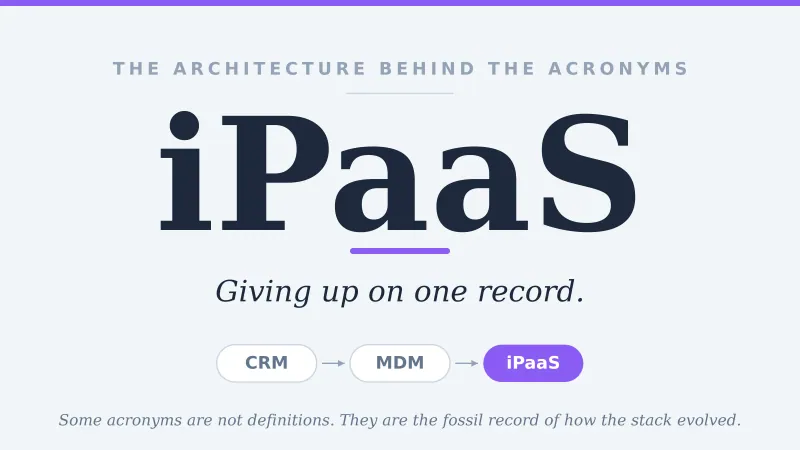
The Architecture Behind the Acronyms (iPaaS): Giving Up on One Record
iPaaS is named after the way it is delivered and says nothing about the job it does. Its rise marks the moment enterprises stopped chasing one customer record and started moving state between many.
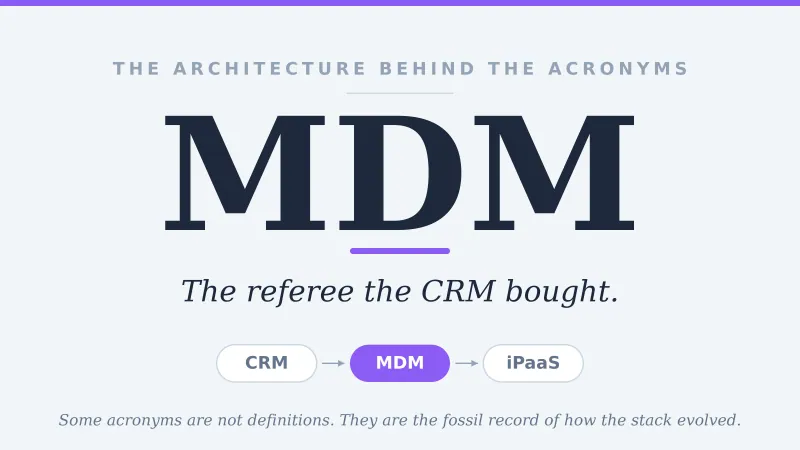
The Architecture Behind the Acronyms (MDM): The Referee the CRM Bought
Master data management was built to settle arguments between systems of record. In 2025 the largest system of record bought one of the category's leaders, and that tells you what MDM has become.
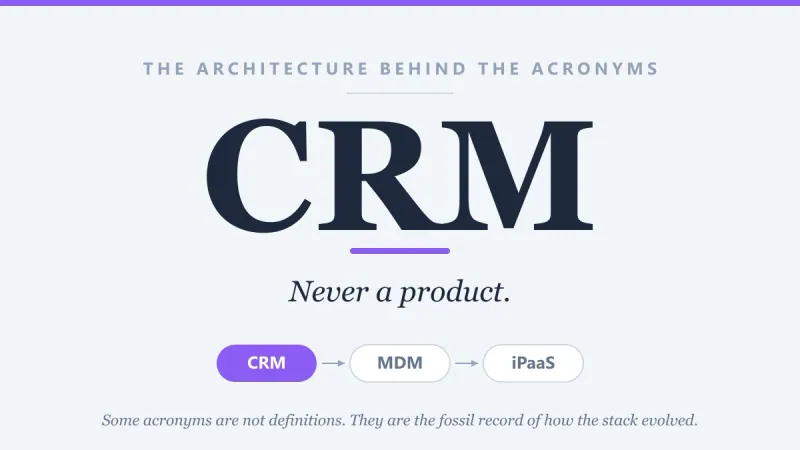
The Architecture Behind the Acronyms (CRM): The Acronym That Was Never a Product
CRM is the largest software market in the enterprise, and the analysts who define it do not describe it as a product at all. They describe it as a business strategy.
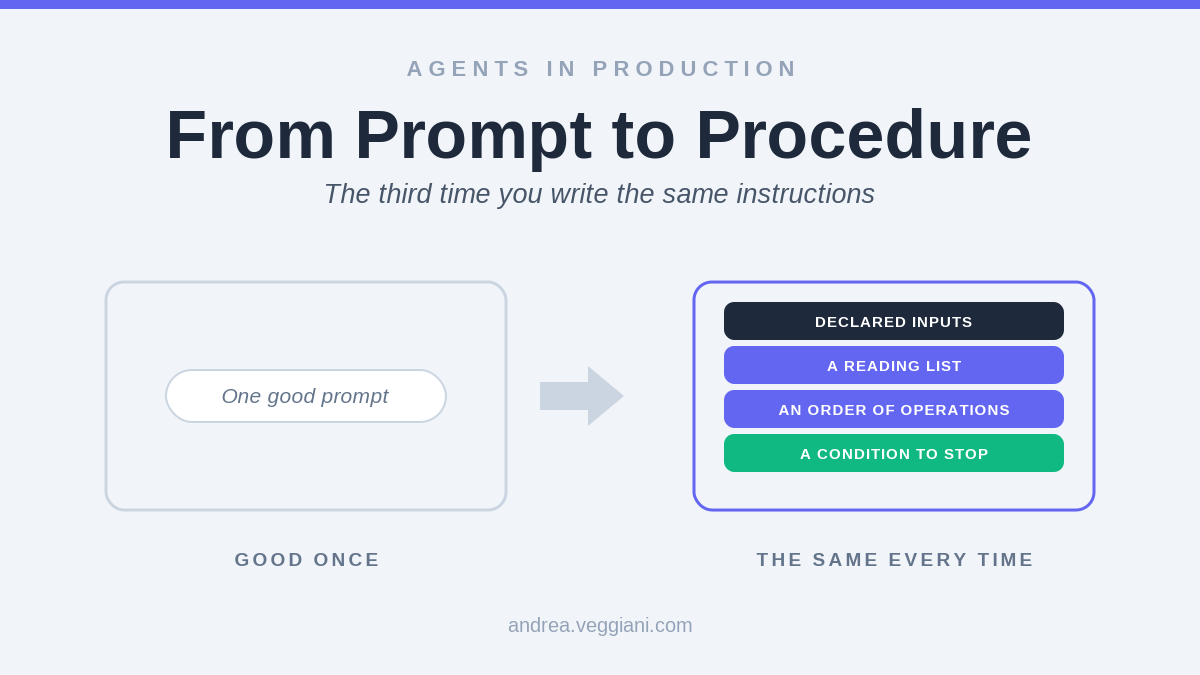
Agents in Production: From Prompt to Procedure
How repeated editorial work on this site became named procedures with their own caps, order of operations and approval gates, what that changed about consistency, and where the comparison to journey orchestration honestly stops holding.
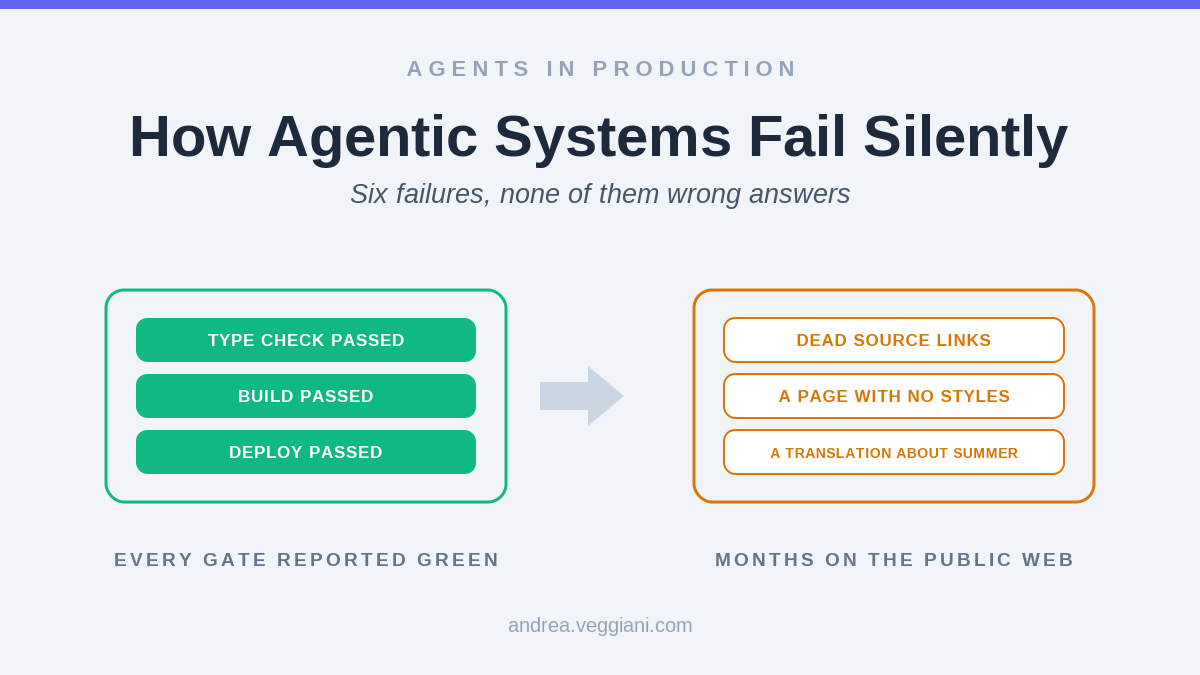
Agents in Production: How Agentic Systems Fail Silently
Six real failures from my own site, none of which were wrong answers. Truncated links that passed every build, a translation that was grammatically perfect and about the wrong thing, and what they say about where governance actually lives in an agentic operation.
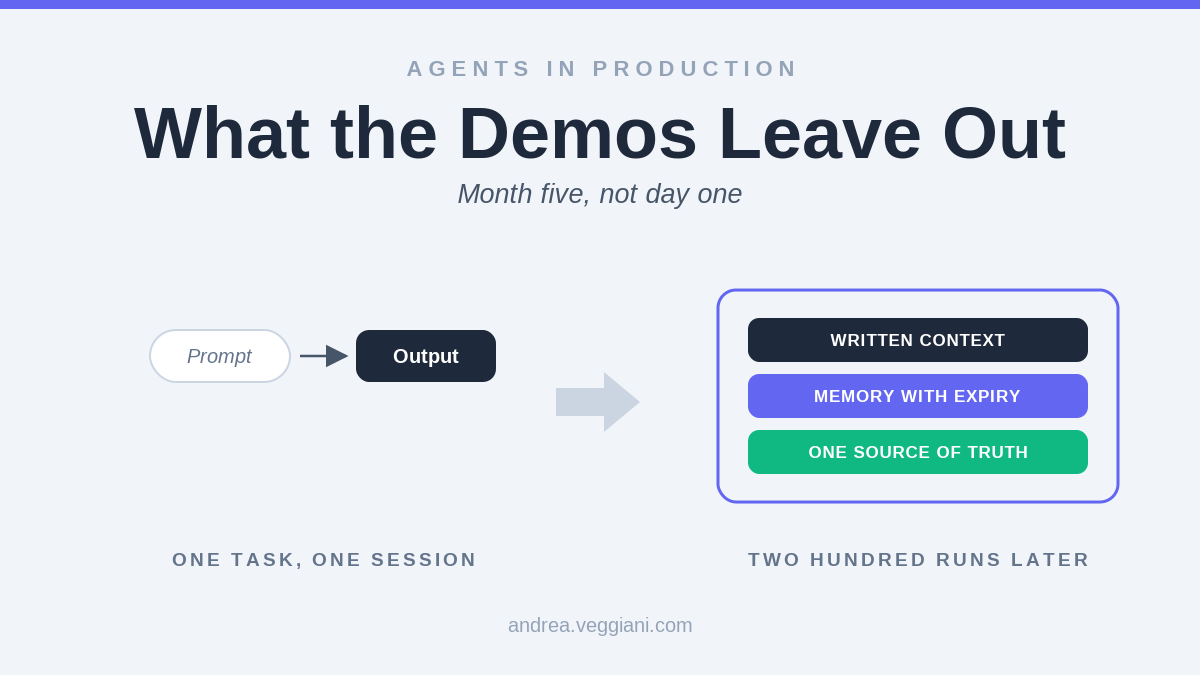
Agents in Production: What the Demos Leave Out
Every agentic demo shows one task in one session. This is what an agentic operation actually consists of on month five, using my own site as the evidence: a written context layer, a memory with expiry, and one unambiguous source of truth.
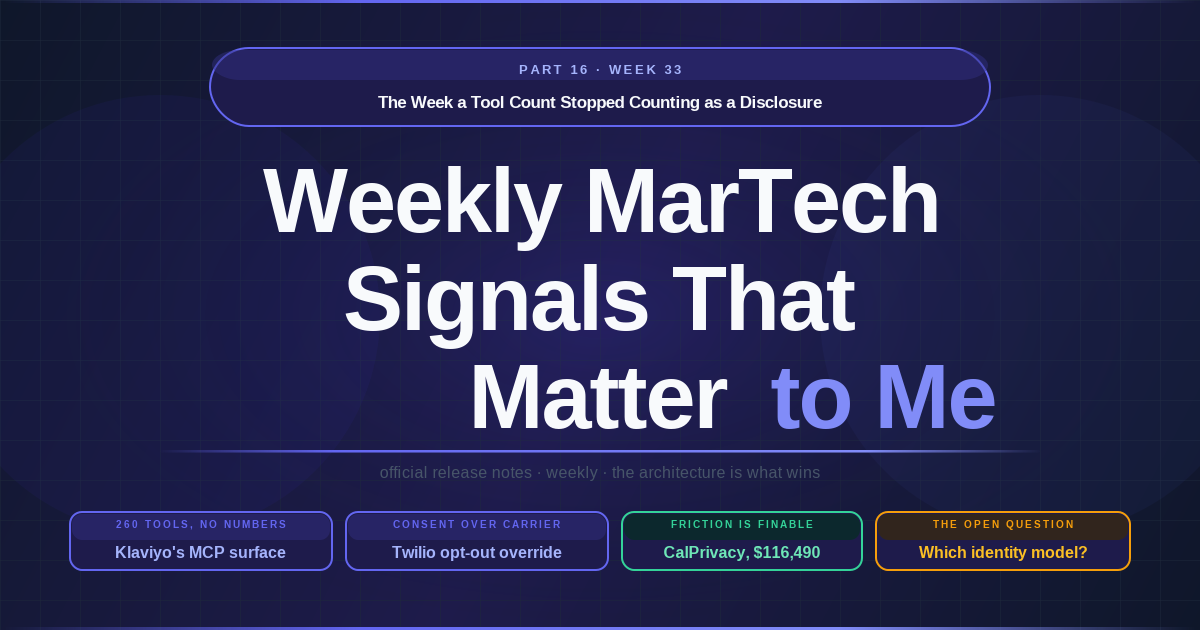
Weekly MarTech Signals That Matter to Me: Part 16, Week 33
Klaviyo published 260 MCP tools with write access in a single sentence, and published nothing about session lifetime or permissions. In the same four days, a regulator, a messaging provider and a standards body all turned the opt-out path into something with an API and an audit trail.
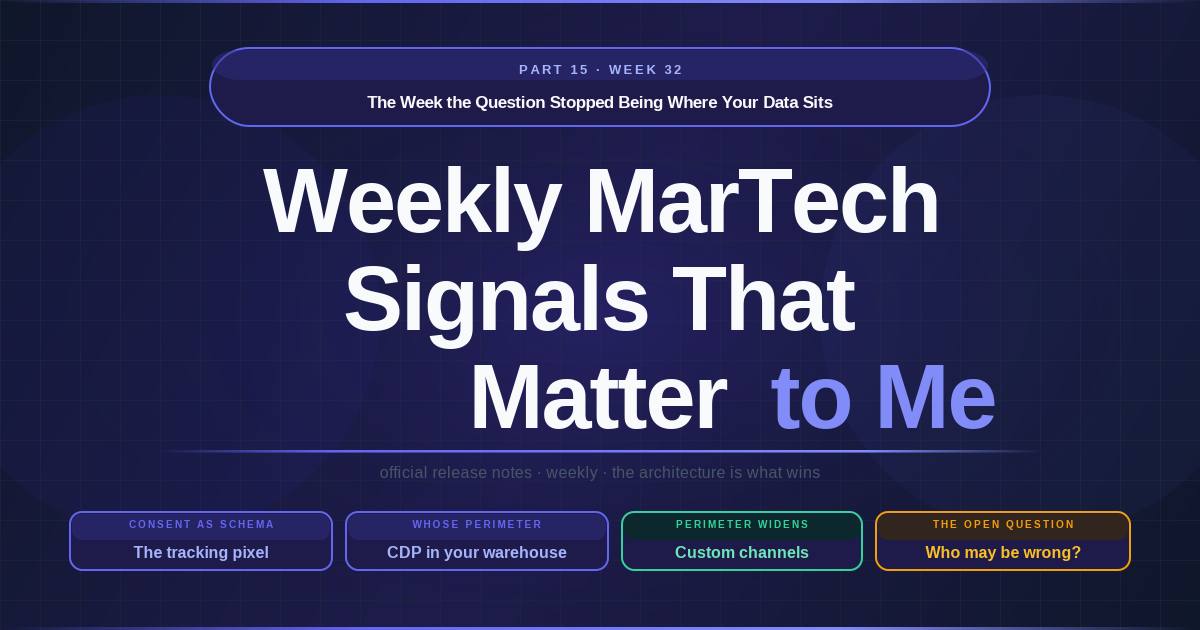
Weekly MarTech Signals That Matter to Me: Part 15, Week 32
The open-tracking pixel became a consent attribute, an entire CDP moved inside the customer's own Snowflake account, and any messaging channel became a no-code configuration. Three items, one week, and the same underlying move: the platform is where your logic runs, not where your state lives.
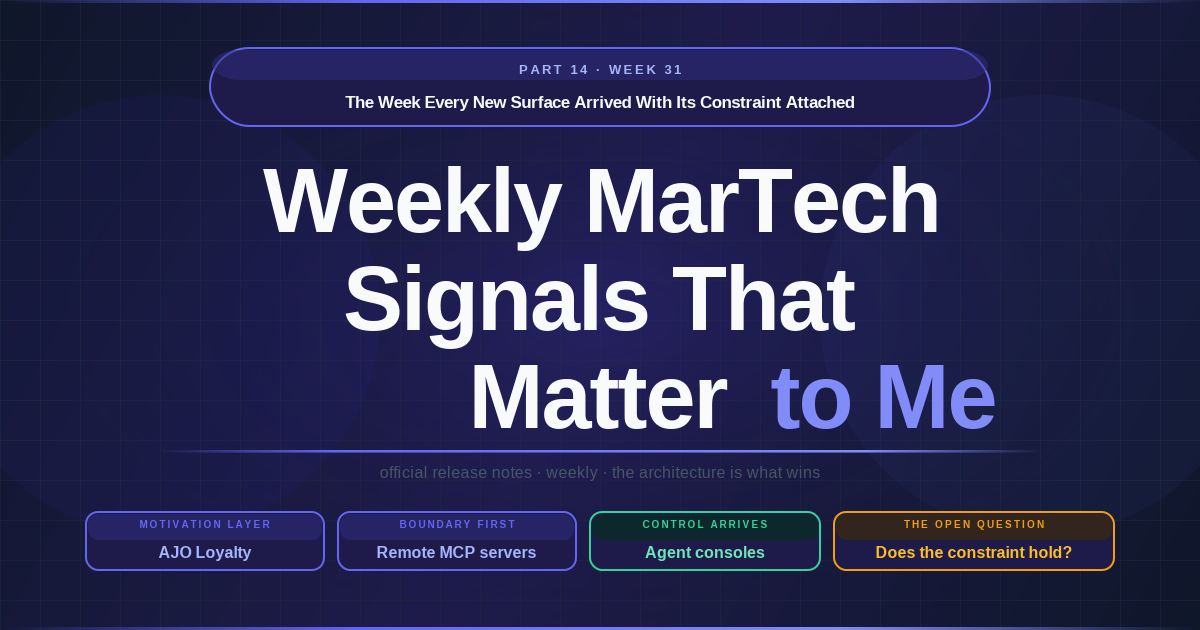
Weekly MarTech Signals That Matter to Me: Part 14, Week 31
Adobe took the motivation layer of loyalty into the CEP and left the points ledger behind. Two vendors shipped remote MCP servers and sold the boundary rather than the reach. A week where every new surface arrived with its constraint attached.
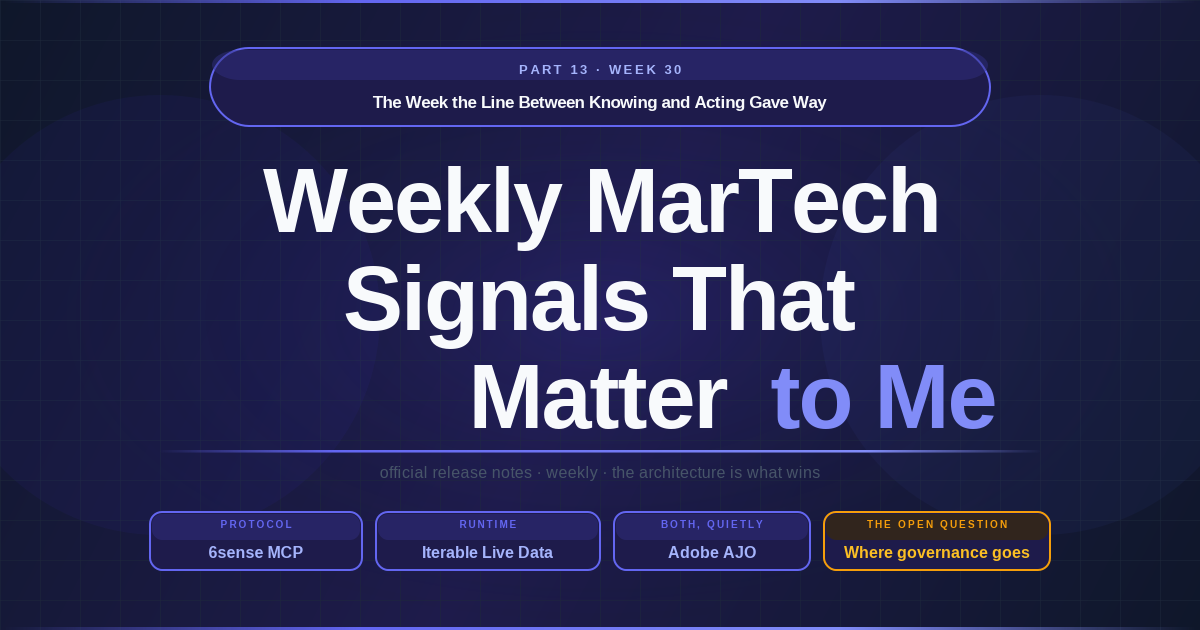
Weekly MarTech Signals That Matter to Me: Part 13, Week 30
In a single week, 6sense put its intelligence behind MCP, Iterable pulled live data into journeys, and Adobe Journey Optimizer shipped both. Three vendors, one move: the line between knowing the customer and acting on them is giving way.
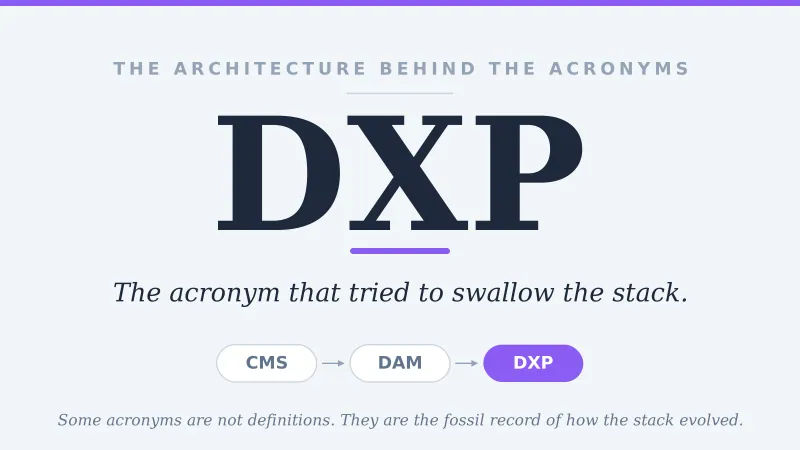
The Architecture Behind the Acronyms (DXP): The Acronym That Tried to Swallow the Stack
DXP emerged when websites became complex digital experiences and the CMS was no longer enough. Then the category expanded until it began to describe almost the entire stack.
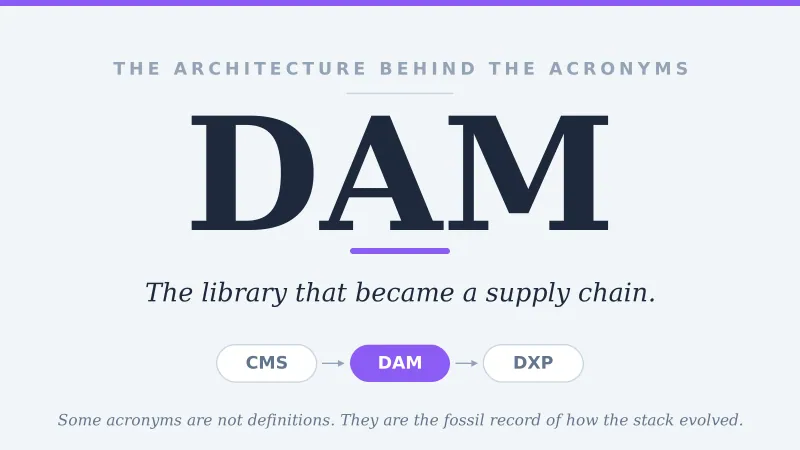
The Architecture Behind the Acronyms (DAM): The Library That Became a Supply Chain
DAM began as a searchable library for digital files. It became the governance and distribution layer for assets moving across brands, markets, channels and AI-assisted content operations.
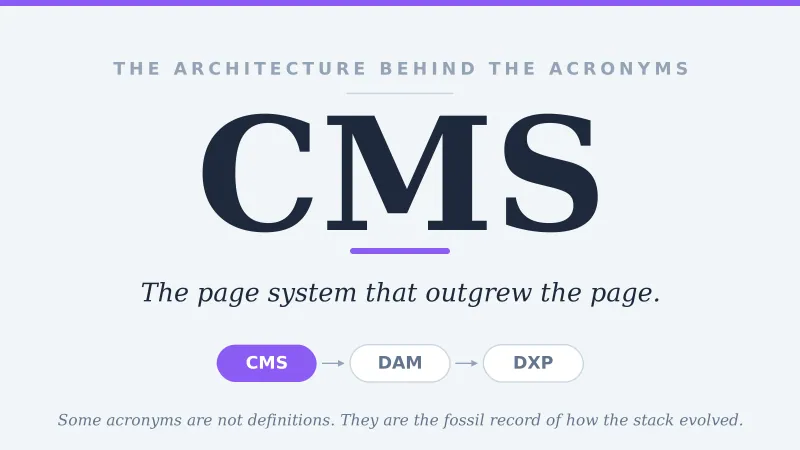
The Architecture Behind the Acronyms (CMS): The Page System That Outgrew the Page
CMS began as a way to publish web pages without editing HTML. It became the structured content layer behind websites, applications, channels and, increasingly, AI agents.

Weekly MarTech Signals That Matter to Me: Part 11, Week 28
A quiet holiday week with no agent launches, yet one of the quarter's most architecturally interesting: catalogs, channels and two intent-layer buys.
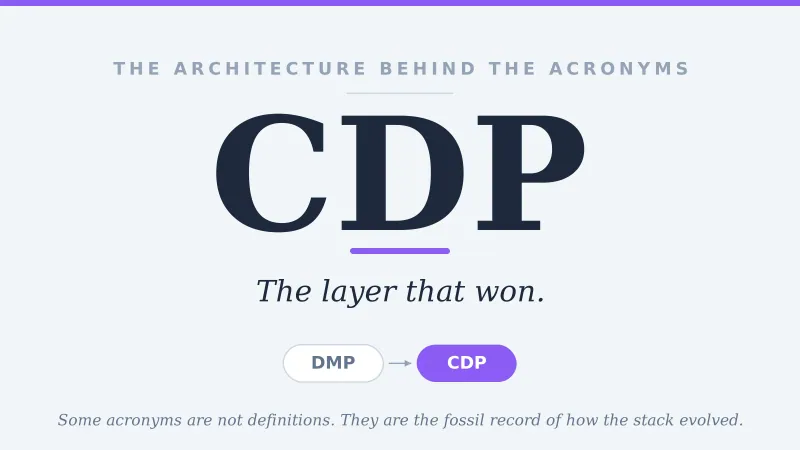
The Architecture Behind the Acronyms (CDP): The Layer That Won
CDP beat every rival to become the default name for the customer data layer, then dissolved into packaged, warehouse-native and suite-embedded forms.
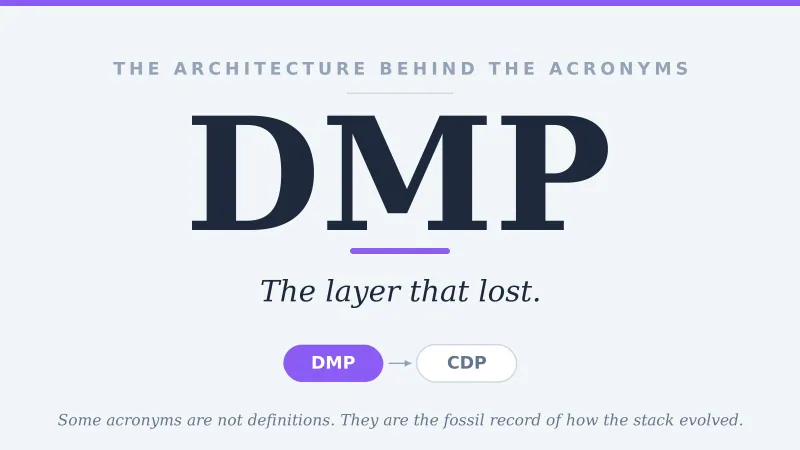
The Architecture Behind the Acronyms (DMP): The Layer That Lost
DMP ran a decade of digital advertising and then collapsed, even as the identity logic it pioneered survived everywhere else.
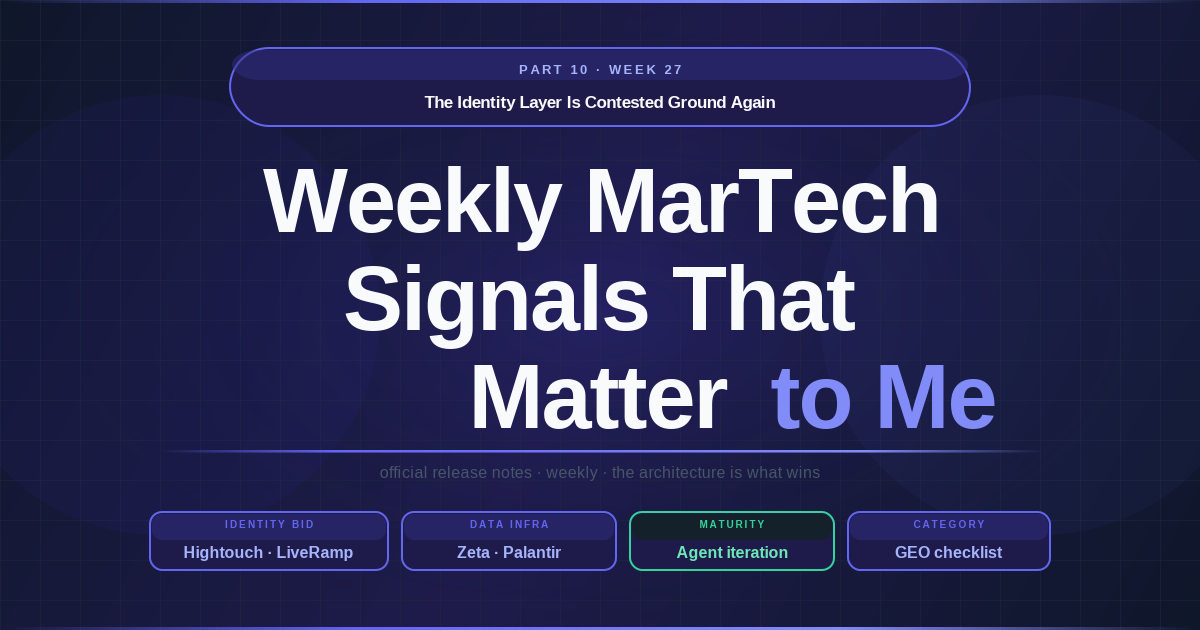
Weekly MarTech Signals That Matter to Me: Part 10, Week 27
Hightouch's LiveRamp bid, Zeta's Palantir partnership, Databricks CustomerLake and Tealium Context API all point to the same shift
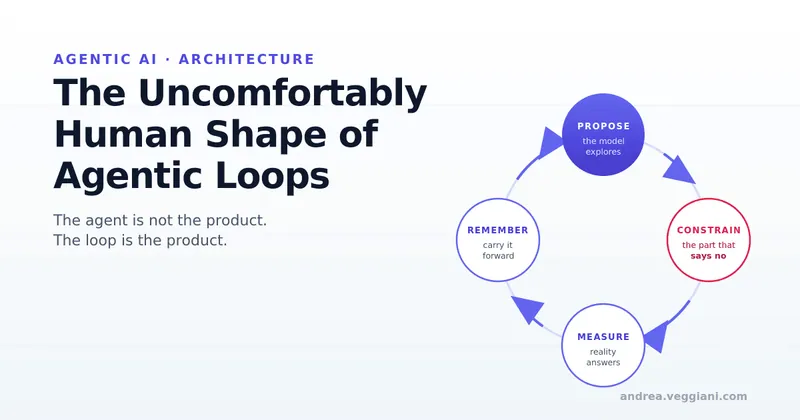
The Uncomfortably Human Shape of Agentic Loops
Why LLM agents grounded by feedback, memory and constraints feel so unsettlingly familiar, and what that means for MarTech architecture.
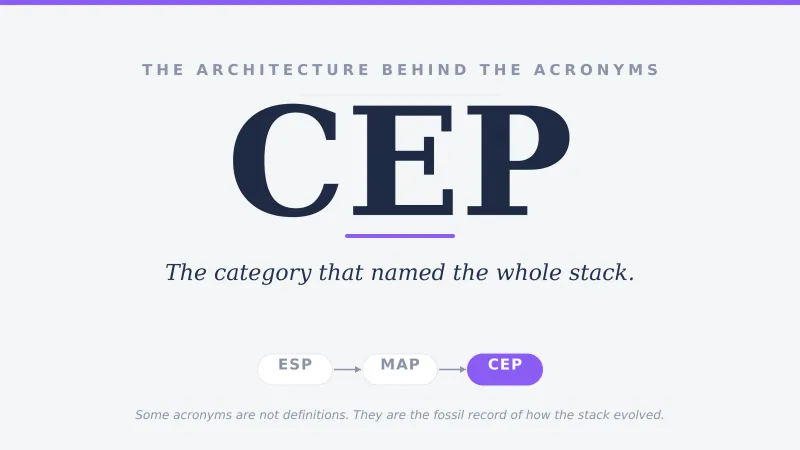
The Architecture Behind the Acronyms (CEP): The Category That Named the Whole Stack
Customer Engagement Platform absorbed ESP and MAP, then collided with CDP. That is why it is useful, vague, and dangerous to buy against.
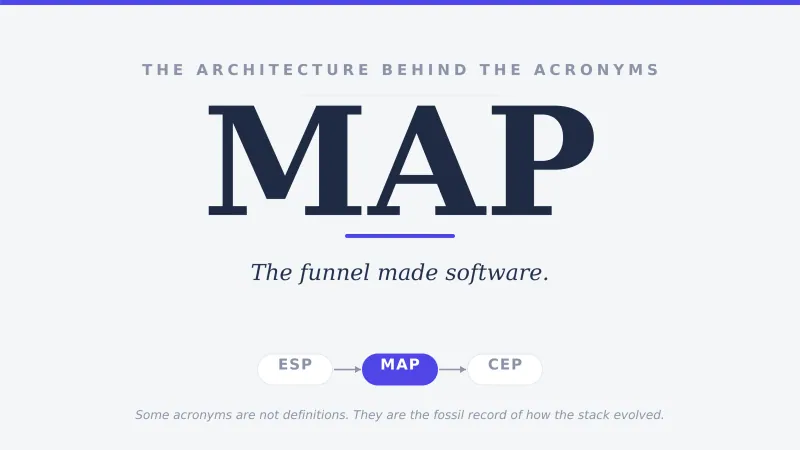
The Architecture Behind the Acronyms (MAP): The Funnel Made Software
Marketing Automation encoded the funnel into software. It still fits B2B well, but its campaign-tempo model explains why B2C moved toward event-driven
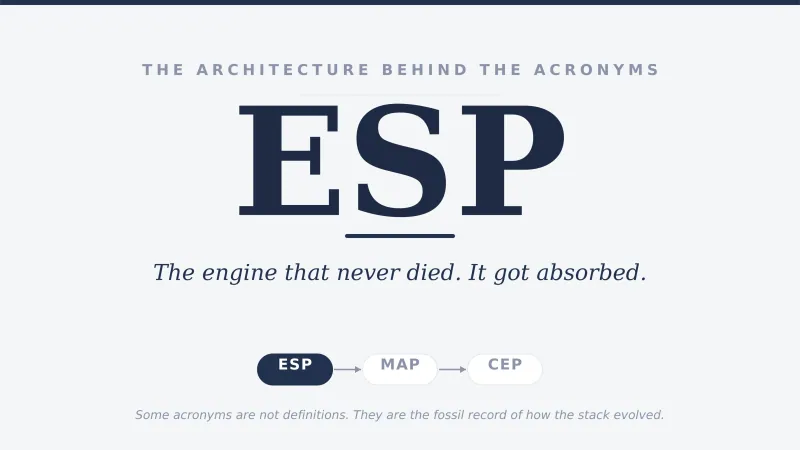
The Architecture Behind the Acronyms (ESP): The Engine That Never Died, It Got Absorbed
The Email Service Provider faded as a category, but its function still sits inside every modern engagement stack: delivery, reputation, consent
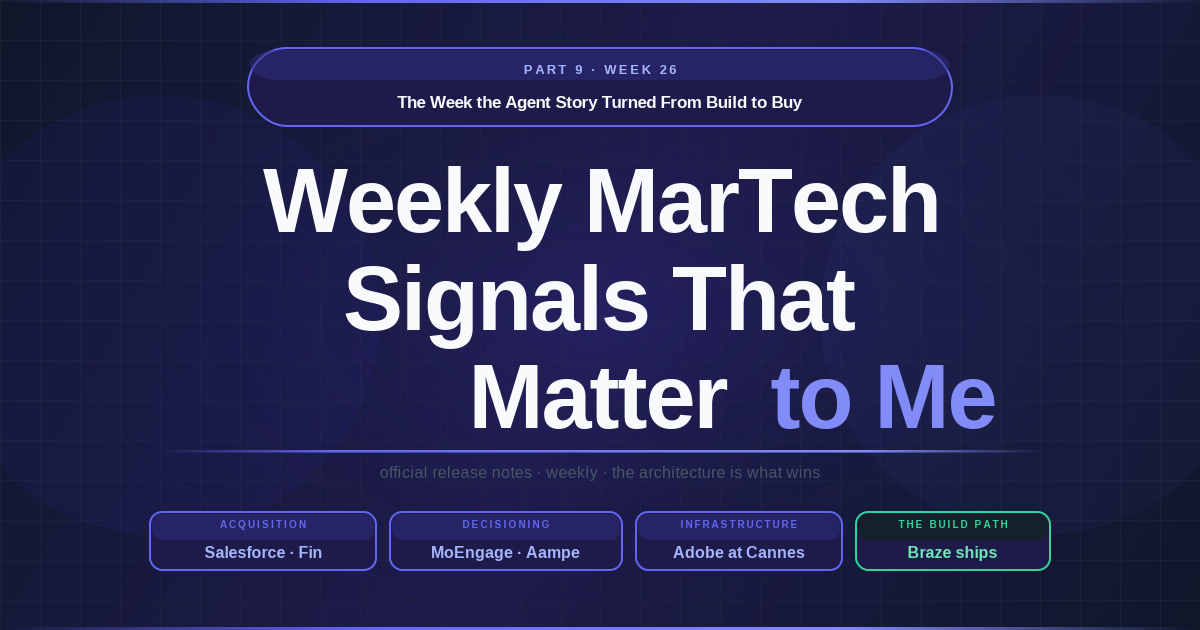
Weekly MarTech Signals That Matter to Me: Part 9, Week 26
Salesforce agreed to acquire Fin for $3.6B and MoEngage acquired Aampe's per-customer decisioning engine.
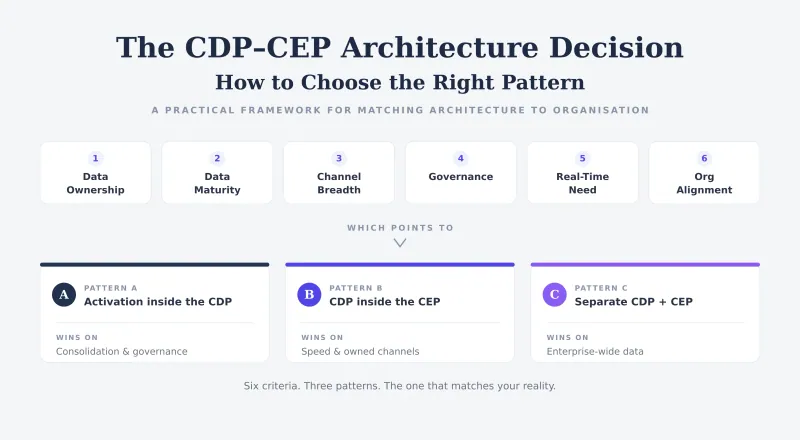
The CDP-CEP Architecture Decision: How to Choose the Right Pattern - Part 2
After mapping the three CDP-CEP wiring patterns, this is the practical framework for choosing which architecture fits your organisation.
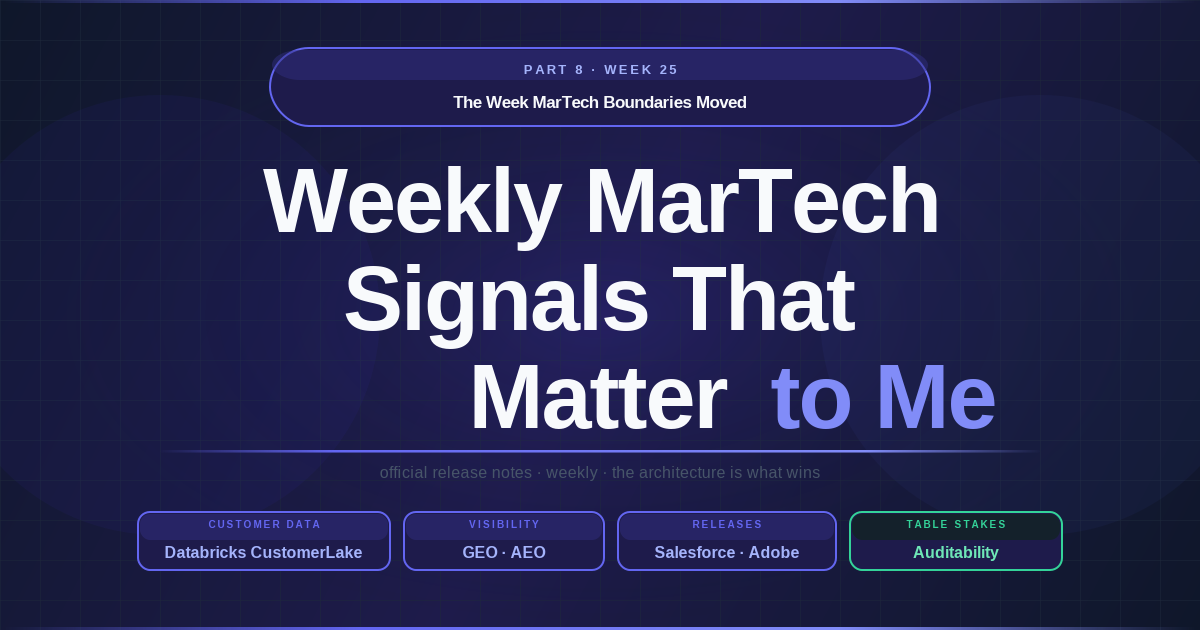
Weekly MarTech Signals That Matter to Me: Part 8, Week 25
Databricks launched an agentic CDP inside the lakehouse, GEO became a buyable category almost overnight, and Salesforce shipped Summer '26.
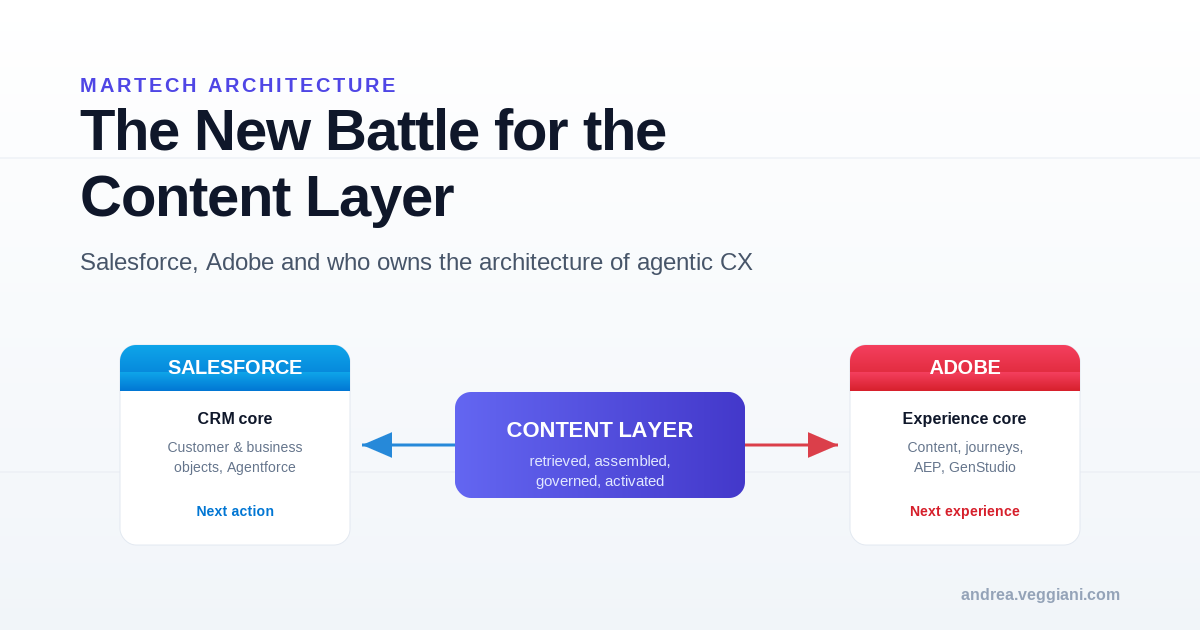
Salesforce, Adobe and the New Battle for the Content Layer
Salesforce's agreement to acquire Contentful is not just a CMS move. It is another chapter in its long-running content-layer battle with Adobe.
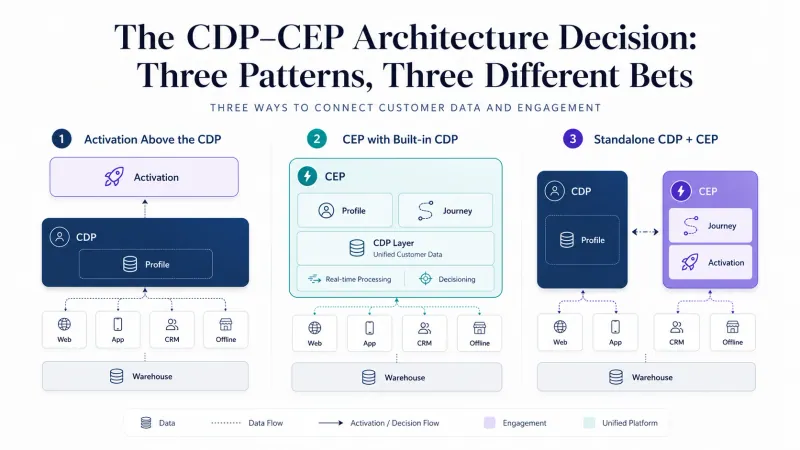
The CDP-CEP Architecture Decision: Three Patterns, Three Different Bets - Part 1
Activation inside the CDP, the CDP inside the CEP, or best-of-breed apart: three ways to wire customer data and engagement, and what each choice really implies.