9 min read
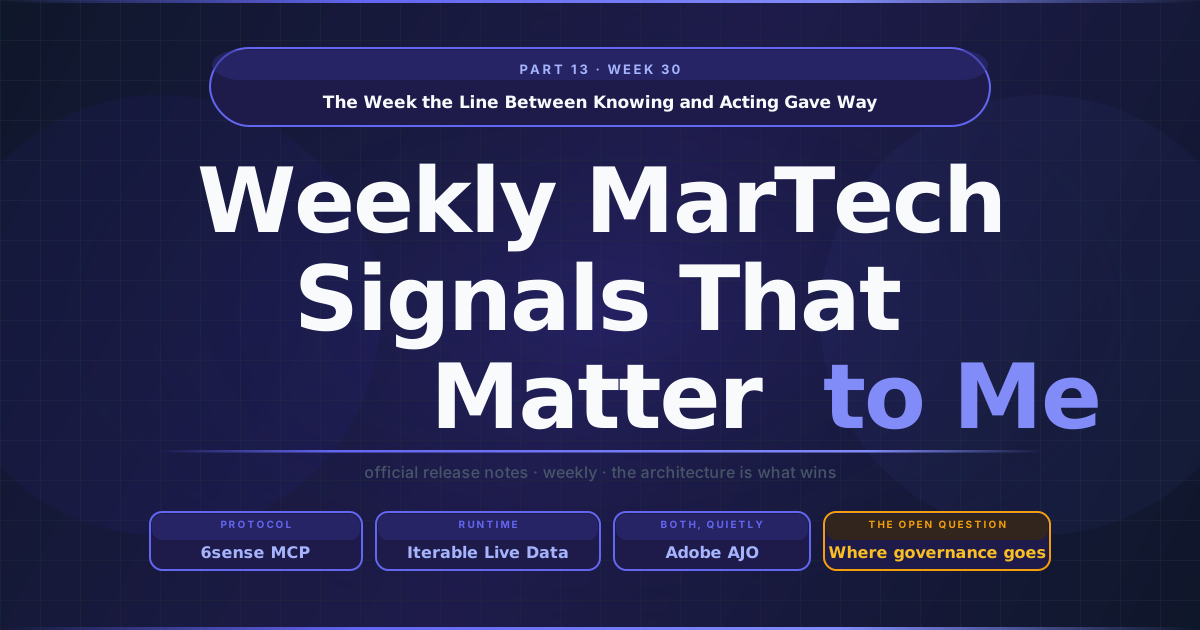
The Week the Line Between Knowing and Acting Gave Way
For most of the last decade I have drawn the same diagram on the same whiteboard for the same reason. On the left, the system that knows the customer: the CDP, the identity graph, the unified profile. On the right, the system that acts on that knowledge: the campaign tool, the journey orchestrator, the engagement platform. In the middle, an arrow, and next to the arrow a long conversation about latency, about who owns consent, about how fast a segment can travel from the place it is computed to the place it is used. That arrow has been the most expensive line on the whiteboard for years. This week three separate releases, from three vendors who were not coordinating, all pushed on it from different sides.
None of the three is a headline on its own. 6sense put its go-to-market intelligence behind an MCP server. Iterable shipped a way to pull live data into a journey at the moment of the decision. Adobe’s Journey Optimizer July release did a bit of both. Read as individual release notes they are easy to skim past. Read together, inside a single week, they describe the same movement: the boundary between the system that knows and the system that acts is being dissolved, and it is being dissolved from more than one direction at once.
TL;DR
- 6sense put its GTM intelligence behind an MCP server, and Adobe Journey Optimizer added read-only MCP tools in the same week. This is convergence by protocol: when both the specialist and the incumbent expose themselves over the same protocol in the same window, the protocol has stopped being a differentiator and become an expectation.
- Iterable shipped Journeys Live Data, fetching inventory, loyalty, pricing, or eligibility at decision time rather than reading a value synced earlier onto the profile. Adobe independently shipped a file-based targeting audience consumed at execution and deliberately not persisted, so two very different vendors agreed that volatile data belongs at the moment of the decision, not in the profile store.
- A deal I caught late, BlueConic’s June acquisition of Blueshift, is the same convergence written into an org chart. The CDP bought the engagement layer it used to feed, so the profile stops being the output and the action becomes the output, the structural version of what protocol and runtime were doing the same week.
- The convenient part is obvious, the cost is the boundary. When any agent can call your intelligence over a protocol, journeys fetch live data at execution time, and decisioning moves inside the data platform, the integration junction where consent, identity resolution, and the record of why a decision was made used to sit is the junction that just disappeared.
Interoperability is arriving as a protocol
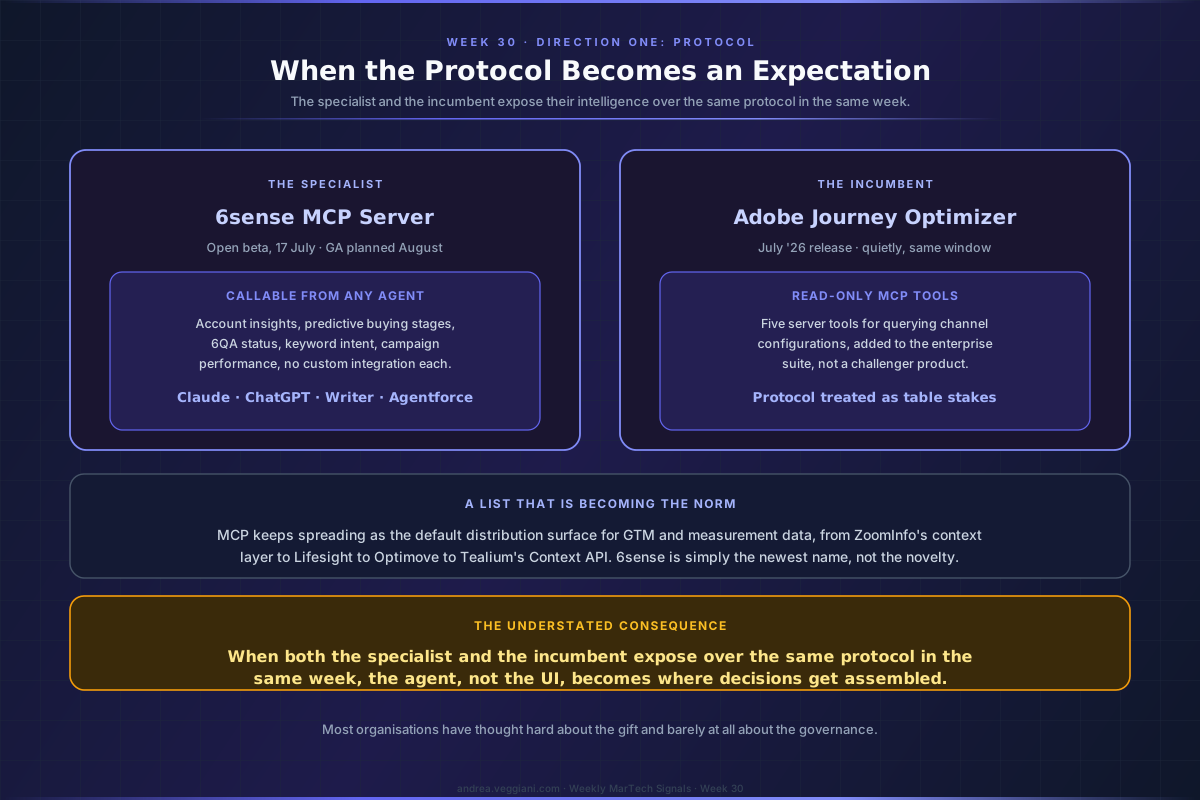
The first direction is the protocol. On the seventeenth, 6sense put its go-to-market intelligence behind an MCP server, now in open beta with general availability planned for August. Account insights, predictive buying stages, qualified-account status, keyword intent, and campaign performance all become callable from any MCP-compatible agent, whether that is Claude, ChatGPT, Writer, or Agentforce, without a custom integration for each. The platform stops caring which agent is doing the asking, and the intelligence stops being locked behind a particular user interface.
I have been tracking the steady spread of MCP as the default distribution surface for GTM and measurement data across these digests, from ZoomInfo’s context layer to Lifesight to Optimove to Tealium’s Context API, and 6sense is simply the newest name on a list that is becoming the norm rather than the novelty. What made this particular week land for me is that Adobe made the same move in the same window, quietly, when the Journey Optimizer July release added a set of read-only MCP server tools for querying channel configurations. That is worth noticing precisely because it is the incumbent enterprise suite, not a challenger, treating the protocol as table stakes. When both the specialist and the incumbent expose themselves over the same protocol in the same week, the protocol has stopped being a differentiator and become an expectation.
The architectural consequence is understated but real. When your intelligence is reachable by any agent over a protocol, the agent, not your UI, becomes the place where decisions get assembled. That is a gift and a governance problem at once, and it is worth being honest that most organisations have thought hard about the gift and barely at all about the governance.
Live data at the moment of the decision
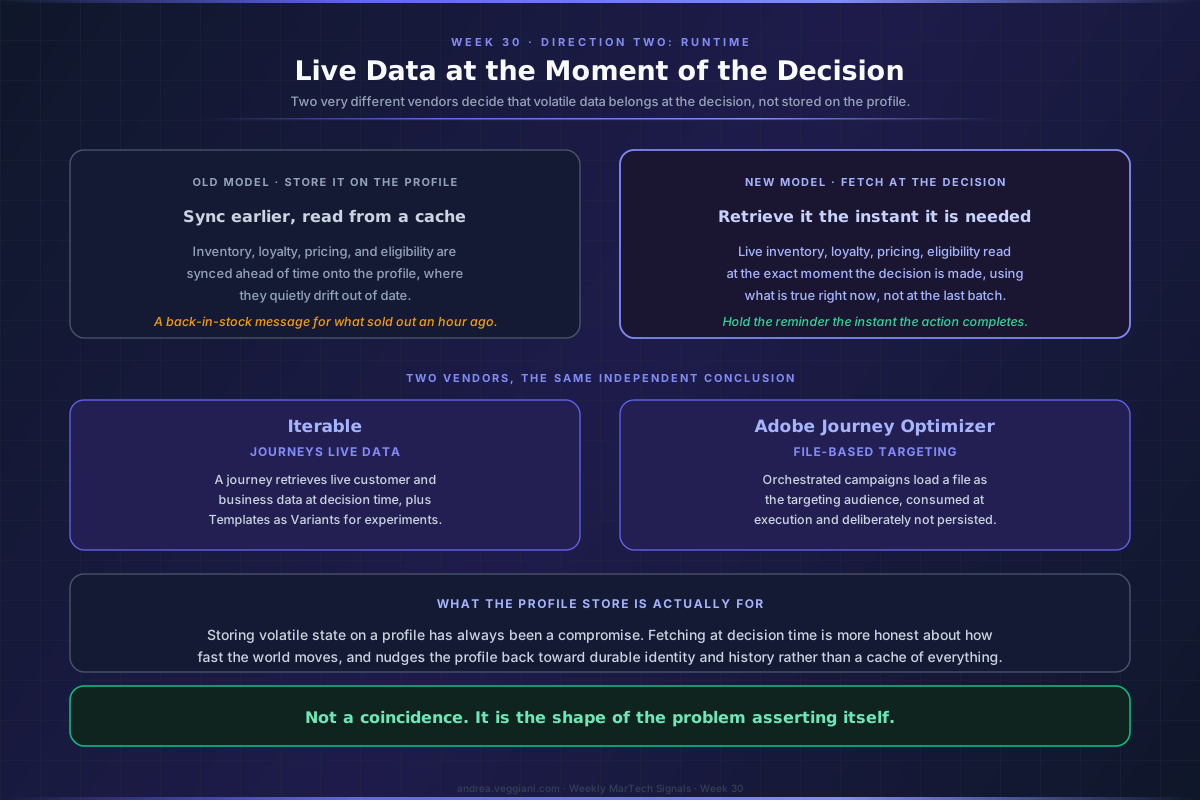
The second direction is time. Iterable’s July product spotlight introduced Journeys Live Data, which lets a journey retrieve live customer and business data, such as inventory, loyalty status, pricing, or eligibility, at the exact moment a decision is made, rather than relying on values that were synced earlier and stored on the profile. The example that stuck with me is suppression: hold a reminder the instant a customer completes the action it was chasing, using what is true right now instead of what was true at the last batch.
Adobe, again in the same week, shipped a version of the same idea into Journey Optimizer, where orchestrated campaigns can now load a file directly into the canvas as the targeting audience, consumed at execution time and deliberately not persisted as a platform dataset. When two vendors as different as Iterable and Adobe independently decide that some data should be used at the moment of the decision and then forgotten rather than stored, that is not a coincidence, it is the shape of the problem asserting itself. Journeys Live Data is a quiet admission that the profile store, for all its value, is the wrong place to keep things that change by the minute. Storing volatile state on a profile has always been a compromise, and every architect who has watched a customer get a back-in-stock message for something that sold out an hour ago knows the cost of that compromise. Fetching at decision time is more honest about how fast the world moves, and it nudges the profile back toward what it should be, a store of durable identity and history rather than a cache of everything.
The same convergence, in an acquisition I caught late
The third direction is ownership, and here I need to be upfront that this one is not this week’s news. Back in June, BlueConic, a B2C customer data platform, acquired Blueshift, an AI-powered cross-channel engagement platform that sends across web, email, push, in-app, and SMS. It only surfaced on this cycle’s corporate-newsroom scan, so I am late to it, and I am mentioning it here rather than leading on it for exactly that reason. I include it because it is the clearest structural version of the same trend, the version written into an org chart rather than a release note.
The framing in the announcement is what makes it worth the detour. The combined company describes itself as capturing first-party behaviour as it happens, deciding the next best move, and executing across channels in a single system. In other words, the CDP did not buy another pipe into the warehouse. It bought the right-hand side of my whiteboard. The first generation of customer data platforms earned their place by solving a data problem, ingesting events, resolving identity, and producing a profile the rest of the stack could trust, and their honest limitation was that they stopped at the profile. What BlueConic and Blueshift describe is a different shape, where the action is the output and the profile is an internal step on the way to it. This is what people have started calling the agentic CDP, and I have argued before that agentic marketing is an architecture question before it is a tooling question. I would not overread a single deal, since combining a capable cross-channel platform with a CDP that serves a real roster of consumer brands is a sensible commercial move on its own terms. What makes it a signal rather than a transaction is that the protocol and the runtime were pushing in the same direction the very week I finally noticed the deal.
HubSpot, meanwhile, kept doing what it has done all quarter, which is to fold more of the surrounding workflow into the platform itself. This week it added an image editor for AI-generated visuals so you can finish an asset without leaving the tool, a Market Segments capability that derives your best-fit markets from actual closed-won deals and can even surface matching companies that are not yet in your CRM, and a dedicated transactional SMS product so operational messages are separated from marketing ones for compliance. None of these is a headline on its own. Together they are the same instinct as the bigger stories, which is to reduce the number of places a marketer has to leave in order to get the whole job done.
What the erased arrow actually costs
So the arrow on my whiteboard is being erased from three directions at once, and I find myself more cautious than excited, which is usually where I end up when an industry agrees on something quickly. Collapsing data and action into one platform removes a genuine source of pain, the brittle integration, the sync latency, the argument about which system is the source of truth. It also removes something less obvious, which is the junction where governance used to live. That integration boundary was ugly, but it was also where you could inspect what data was leaving the profile, apply consent, and decide what was allowed to become an action. When any agent can call your intelligence over a protocol, and when journeys fetch live data at execution time, and when decisioning moves inside the data platform, the question is not whether this is faster. It plainly is. The question is where consent, identity resolution, and the record of why a given decision was made now live, and who can audit them after the fact.
That is the question I would put to any vendor selling me an agentic CDP this quarter, and it is the one I would want answered before the demo. Not what it can do, because the answer is now almost everything, but where the boundary went, and what replaced it. The platform that knows the customer and the platform that acts on that knowledge are becoming one platform. The value of that is obvious. The cost is that the most important line on the whiteboard, the one where a human used to be able to stand and check the work, is the line that just disappeared.
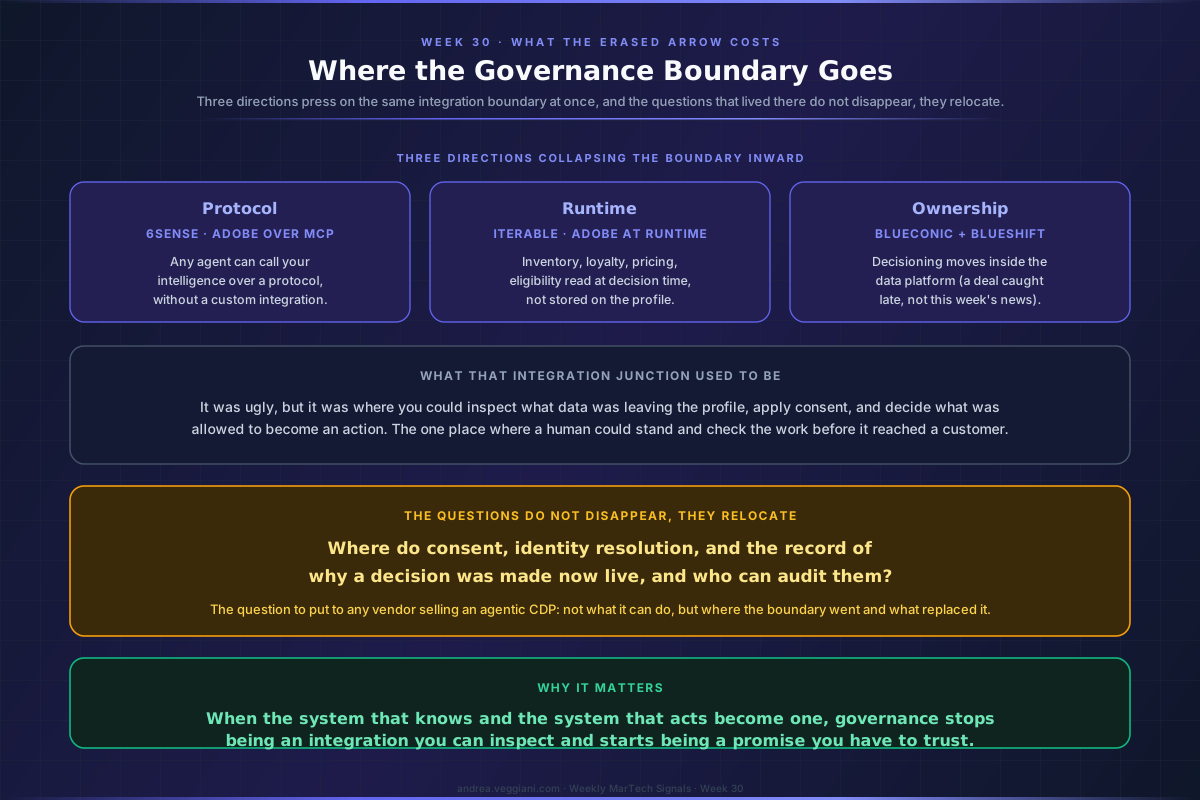
When the system that knows and the system that acts become the same system, governance stops being an integration and starts being a promise.
Sources
6sense MCP Server
Iterable Journeys Live Data
Adobe Journey Optimizer July ‘26
HubSpot
BlueConic + Blueshift (announced June 2026, captured this cycle)
Sprinklr Summer ‘26
Weekly roundup
The digest behind each weekly article is produced through a structured AI-assisted scan of official release notes and product update sources. I review the output, verify the relevant signals and write the architectural interpretation.
This article draws from the Martech Weekly Digest scans run on July 23, 2026, covering release notes and product updates across several CEP platforms and vendors.
If you find errors or gaps in coverage, I want to know. The process improves when the output is challenged.