11 min read
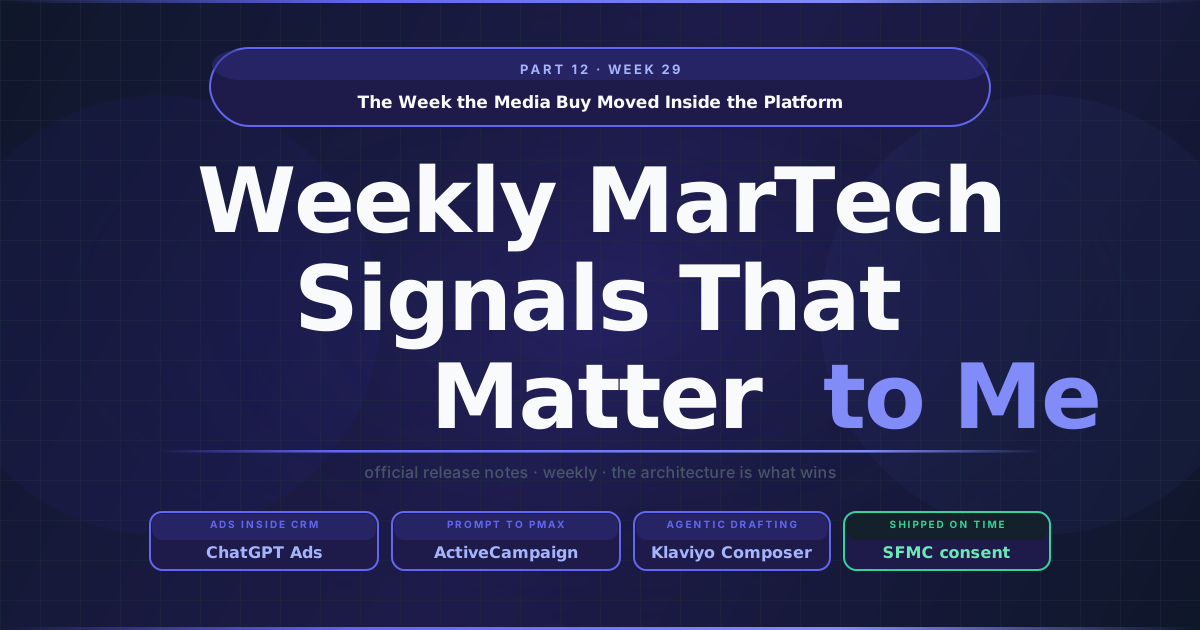
The Week the Media Buy Moved Inside the Platform
Most of what I track this week did not move. The Adobe stack stayed on its June releases, Braze had no new dated page, Bloomreach held at 1.313, and Iterable and MoEngage were quiet. On a release-notes reading, week 29 was one of the slowest of the year.
And yet several vendors, operating at different points in the stack, described variations of the same structural direction: paid-media execution is being pulled closer to the platforms where customer engagement is already planned and measured, while more of the campaign-production chain is being compressed into agentic interfaces.
That does not mean every product is moving in exactly the same way. HubSpot is absorbing another ad network into its existing CRM advertising surface. ActiveCampaign is bringing Google Ads campaign creation into a conversational automation layer. Klaviyo is compressing research, content inputs, drafting, and campaign creation into one agentic workflow. The implementations are different, but the architectural consequence is similar: a boundary that used to sit between tools, teams, data contracts, and budgets is relocating inside the platform.
That is the kind of shift that rarely appears as one big launch. It shows up as a junction quietly relocating, and junctions are where much of the real architecture work happens.
TL;DR
- HubSpot added ChatGPT Ads as a native advertising network, while ActiveCampaign introduced AI-guided Google Performance Max creation. One extends the CRM advertising surface; the other brings campaign execution into a conversational automation layer. Both reduce the distance between customer data, campaign creation, attribution, and paid-media execution.
- ChatGPT Ads starts from conversational context rather than a conventional audience segment. The primary matching signal is what someone is asking in that moment, which introduces a different measurement problem from the audience-based buying models most attribution frameworks were designed around.
- Klaviyo moved Composer into public beta and added a Social Insights Agent. This is an adjacent pattern rather than the same paid-media shift: the campaign-production chain is being compressed into one agentic surface instead of being spread across research, content, social, and execution tools.
- Salesforce’s email consent mapping between Marketing Cloud Engagement and Marketing Cloud Next is now available, with SMS and WhatsApp following in the staged rollout. It is the least visible signal of the week, but the one I would flag to a regulated client, because the risk in a consent migration lives in the interval between systems, not only in the final go-live.
The quiet week that moved a boundary
There is a habit, when you read release notes every week, of equating a quiet week with an unimportant one. It is usually wrong. Product cadence and architectural consequence are not the same axis: a platform can ship forty usability tweaks that change nothing about how you scope a stack, and it can ship one connector that quietly redraws which team owns a budget.
Week 29 was closer to the second case. The individual releases were modest. What matters is the direction they point toward.
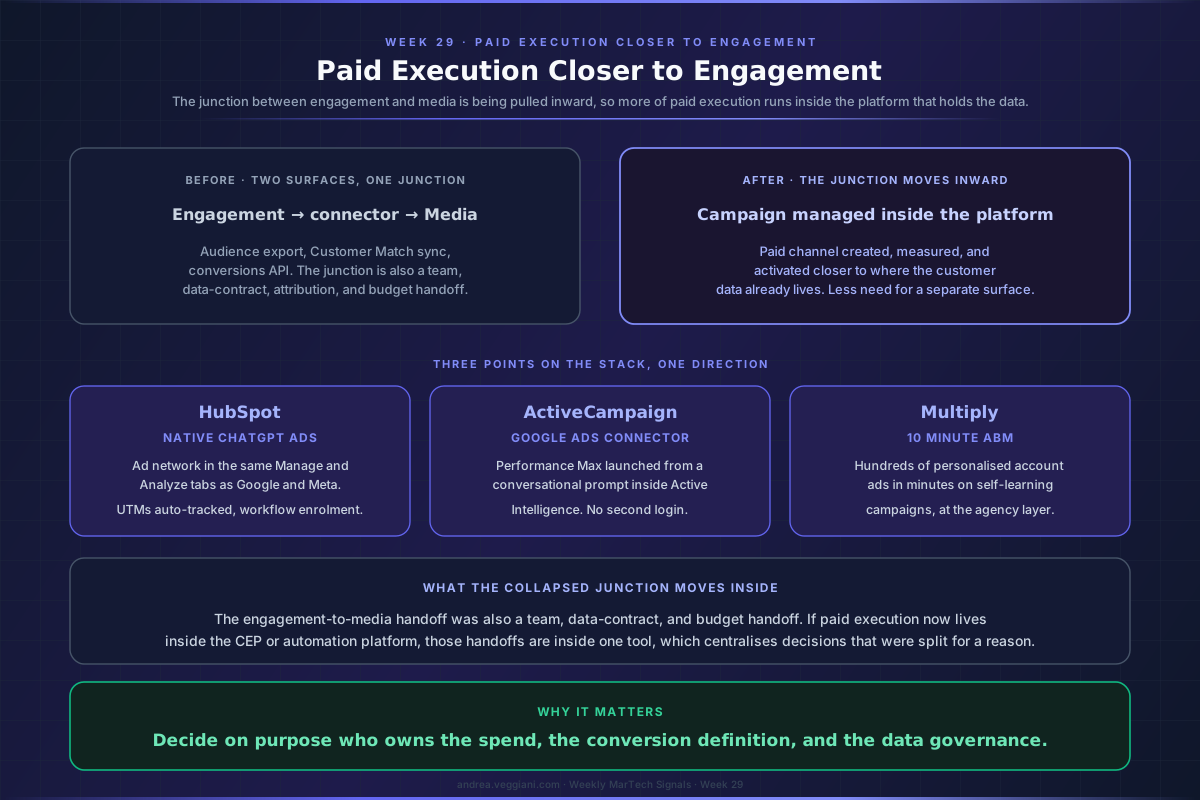
For most of the last decade, the customer-engagement platform and the advertising platform were separate surfaces. You orchestrated journeys in one, bought media in another, and placed a connector between them: an audience export, a Customer Match sync, a conversions API, or some combination of the three. That connector was the junction, and the junction was where a great deal of architecture work happened, because it was also where data crossed an ownership boundary.
This week, HubSpot and ActiveCampaign described two different ways that junction is being pulled inward. HubSpot is making another paid network manageable from inside the CRM advertising environment. ActiveCampaign is using its intelligence layer to guide campaign creation and reporting without requiring the marketer to leave the automation platform.
When a junction you have been designing integrations across turns into an internal capability of one tool, the integration does not disappear. It moves inside, and it takes its governance questions with it.
Two vendors, one direction: paid execution closer to engagement
HubSpot added ChatGPT Ads as a native ad network. You connect the account under the advertising settings, build the creative, define the targeting context, set the budget, and manage the campaign alongside Google, Meta, and Microsoft. Reporting is unified inside HubSpot, UTMs are tracked into contacts and deals, and contacts who interact can enter workflows.
From the marketer’s chair, this looks like one more network inside a familiar console. From an architecture chair, it means that another paid channel can now be created, measured, and activated from inside the CRM environment, with less need for a separate media-management surface in the operating flow.
ActiveCampaign is moving in the same direction from a different starting point. Its Google Ads connector for Active Intelligence lets marketers use ActiveCampaign data to create, launch, and analyse Performance Max campaigns with AI guidance and conversational prompts.
HubSpot is extending the advertising surface already attached to CRM. ActiveCampaign is extending the automation surface into paid-media creation. The user experience is different, but both moves reduce the distance between the profile, the campaign decision, the conversion definition, and the media spend.
Multiply, working at the agency layer rather than the platform layer, announced “10 Minute ABM” for creating large volumes of personalised account advertising through self-learning campaigns. The performance claims remain vendor claims, but the direction is still relevant: more of the media-planning and execution chain is being packaged as an automated or agent-guided workflow.
Three different points in the stack, one direction of travel: paid execution is being pulled closer to the systems that already hold customer data and engagement logic.
When a junction you have been designing integrations across turns into an internal capability of one tool, the integration does not disappear. It moves inside, and it takes its governance with it.
The reason this matters for stack design is that the engagement-to-media handoff is rarely only a technical handoff. It is usually also a team handoff, a data-contract handoff, an attribution handoff, and a budget handoff.
If paid execution now lives inside the CEP, CRM, or automation platform, those handoffs do not automatically stop existing. They become internal decisions inside one product.
That is convenient until you ask who owns the spend, who owns the conversion definition, and whose data governance applies when the same platform holds the profile and buys the impression.
Convenience at the tool layer can quietly centralise decisions that were deliberately separated for a reason.
Starting from a question, not an audience segment
The HubSpot integration contains one detail that deserves more attention than the packaging.
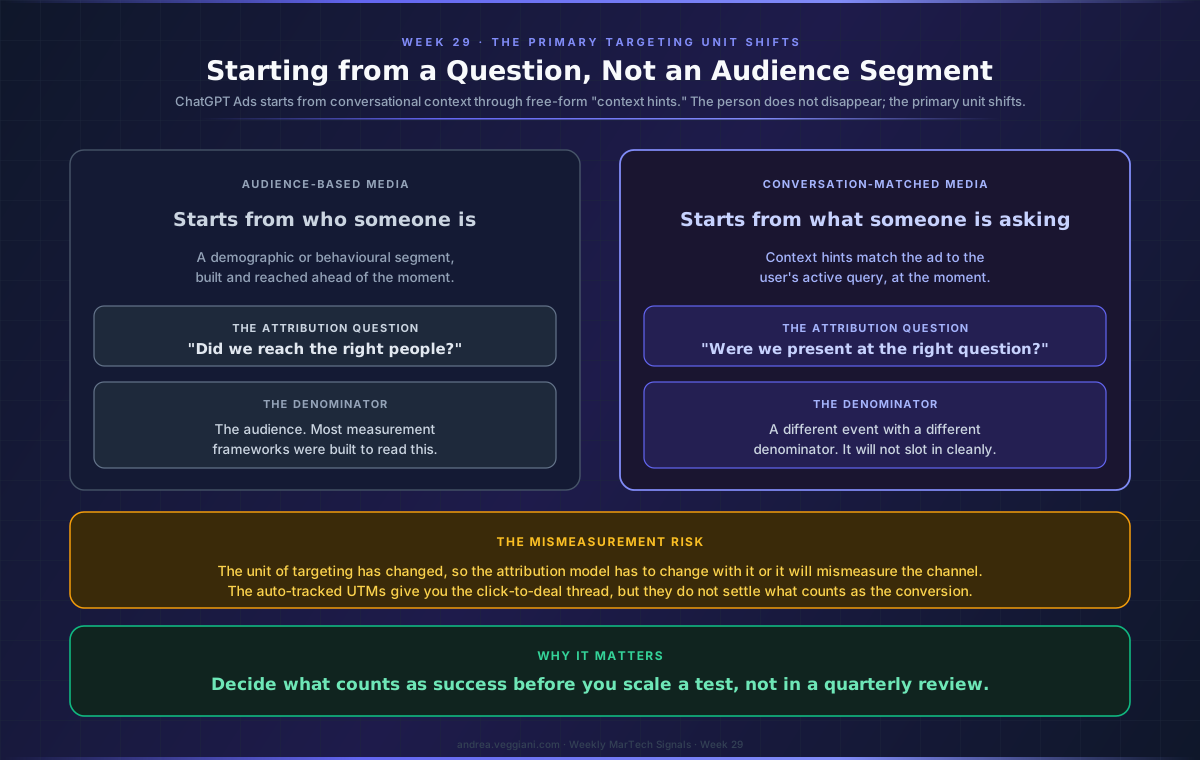
ChatGPT Ads starts from conversational context rather than from a conventional audience segment. Advertisers provide “context hints”: free-form phrases describing the types of conversations where the ad may be relevant. Matching begins with what the user is asking in that moment, rather than with a pre-built demographic or behavioural audience alone.
That does not mean the person disappears from the delivery model, or that no other campaign settings apply. It means the primary targeting unit has shifted.
For anyone whose measurement framework was built around audience-based buying, an intent-at-the-moment channel does not slot in cleanly. Audience-based media asks whether we reached the right people, while conversation-matched media asks whether we were present at the right question. Those are not the same event, and they do not have the same denominator.
HubSpot’s UTM tracking can still give you the click-to-contact and click-to-deal thread, which helps. But the older question underneath is the one worth settling before you scale a test: what counts as success when the ad appears in the context of a question rather than inside a feed or against a predefined audience segment? Is it the click, the assisted conversion, the quality of the downstream conversation, the creation of new demand, or the capture of demand that already existed?
That is not only a HubSpot question. It is a measurement question every platform adopting AI-search advertising will eventually hand to its customers, and it is cheaper to answer deliberately than to discover the ambiguity in a quarterly review.
The B2C echo: compressing the campaign-production chain
The same market direction is visible on the B2C side, although not through the absorption of paid media.
Klaviyo moved Composer, its agentic campaign-drafting capability, into public beta and added several capabilities around it in the second week of July: a Campaign Brief that accepts templates, images, coupons, and products as inputs; subject-line and preview-text intelligence grounded in the brand’s own historical performance; and universal-content support so generated emails can remain aligned with reusable brand components.
On top of that came a Social Insights Agent that reads Instagram user-generated content and surfaces it through proactive cards or inside the Composer chat experience.
This is an adjacent pattern rather than the same product move. HubSpot and ActiveCampaign are pulling paid execution closer to the engagement platform, while Klaviyo is compressing the campaign-production chain: social signal, content inputs, drafting, optimisation, and execution are being brought into one agentic surface instead of being distributed across a sequence of tools and handoffs.
The architectural result is still a reduction in visible junctions. Fewer tools appear in the workflow, more decisions are made inside the platform, and more of the context that used to pass explicitly between systems is now managed internally by the product.
That can improve speed and usability. It also makes it more important to understand what has become implicit: which data trains or informs the agent, which content sources are authoritative, how reusable components are governed, what approval logic remains outside the agent, and where the audit trail lives when a campaign is assembled through a conversation rather than through a sequence of forms.
The governance counterpoint
The first three signals show interfaces and ownership collapsing inward. Salesforce provides the counterpoint: some boundaries cannot safely disappear unless authority is explicitly synchronised.
Salesforce’s email consent mapping between Marketing Cloud Engagement and Marketing Cloud Next is now available, allowing consent status to remain aligned across the two applications. SMS and WhatsApp follow in the staged rollout. It is the least visible release in this article, but the one I would flag first to a compliance-sensitive client.
Staged consent migrations are exactly where governance gaps open. For a period, email consent may be authoritative in one system while another channel still depends on a different mapping or migration stage. Every send during that interval carries operational and regulatory risk.
The governance work is therefore not only the launch date. It is the transition calendar.
You need to know which system is authoritative for each channel on each date, how conflicts are resolved, what happens when a status changes during synchronisation, and whether the send logic reads consent from the correct source at that point in the migration.
The new agentic surfaces promise to remove friction from campaign creation and execution. Consent mapping is a reminder that some friction exists because authority, accountability, and customer rights need to remain explicit.
The question the week leaves on the table
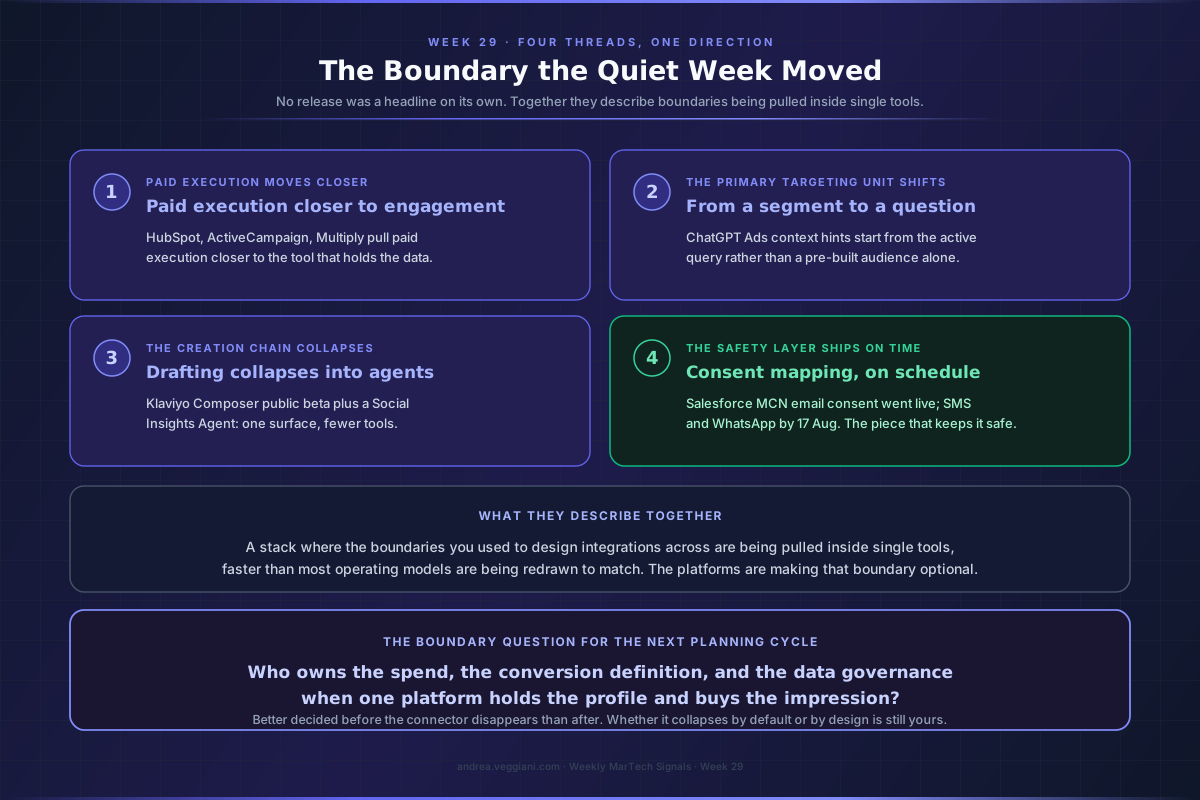
Put the pieces together and the direction is clear enough to plan against. Paid execution is moving closer to engagement and automation platforms. Conversational context is becoming a targeting input. The campaign-production chain is being compressed into agentic interfaces. At the same time, the least glamorous plumbing, consent authority across systems, remains the layer that determines whether any of this can be operated safely at scale.
None of these is a major headline on its own. Together they describe a stack where the boundaries we used to design integrations across are being pulled inside single tools faster than most operating models are being redrawn to match.
So the question I would take into the next planning cycle is not which of these features to adopt.
It is a boundary question.
If paid execution moves inside your CRM, CEP, or automation platform, decide on purpose who owns the spend, who owns the conversion definition, and whose data governance applies when one platform holds the profile and buys the impression.
If campaign creation moves into an agentic surface, decide which inputs are authoritative, which decisions still require human approval, and where the audit trail sits.
If consent is being synchronised across platforms in stages, decide which system is authoritative for each channel throughout the transition, not only after it is complete.
The platforms are making these boundaries less visible. Whether you allow them to collapse by default or redraw them by design is still your decision.
The architecture always wins, and this week the architecture question is not whether the boundary disappeared. It is where it moved.
Sources
HubSpot: ChatGPT Ads integration
- HubSpot Updates, Monday Recap, 13 July 2026 (Orange Marketing): native ChatGPT Ads network, context-hint targeting, campaign management, UTM auto-tracking, and workflow enrolment.
ActiveCampaign: Google Ads / Performance Max connector
- ActiveCampaign Launches Google Ads Connector for Active Intelligence (BusinessWire, 8 July 2026): Performance Max campaign creation and reporting with AI guidance inside ActiveCampaign.
Multiply: 10 Minute ABM
- Multiply Launches 10 Minute ABM (PR Newswire, 9 July 2026): vendor announcement for automated account-based advertising campaigns.
Klaviyo: Composer public beta + Social Insights Agent
- Klaviyo What’s New feed: Composer Campaign Brief (8 July), subject-line and preview-text intelligence and universal-content support (7 July), Social Insights Agent (10 July), and email-open-tracking consent (8 July).
Salesforce Marketing Cloud Next: consent mapping
- Understanding Consent Concepts in Marketing Cloud Next (Salesforce Help): consent concepts and mapping between Marketing Cloud Engagement and Marketing Cloud Next.
- Marketing Cloud Next Summer ‘26 Release Highlights (MarketingCloudTips): staged rollout context for consent mapping.
Weekly roundup
- Top MarTech News, Week of July 10th (Solutions Review): weekly market context including ActiveCampaign and Multiply.
The digest behind each weekly article is produced through a structured AI-assisted scan of official release notes and product update sources. I review the output, verify the relevant signals and write the architectural interpretation.
This article draws from the Martech Weekly Digest scans run on July 16, 2026, covering release notes and product updates across several CEP platforms and vendors.
If you find errors or gaps in coverage, I want to know. The process improves when the output is challenged.