6 min read
Configuration Now Has a Shelf Life
Most organisations configure an agentic desktop tool the way they configure a printer: someone writes a profile, device management pushes it, and nobody reads it again until something breaks. The releases in the Week 42 AI Watch show why that habit no longer holds. Several of them did not add a feature at all. They changed what an existing configuration means, or set a date on which it will start meaning something else.
TL;DR
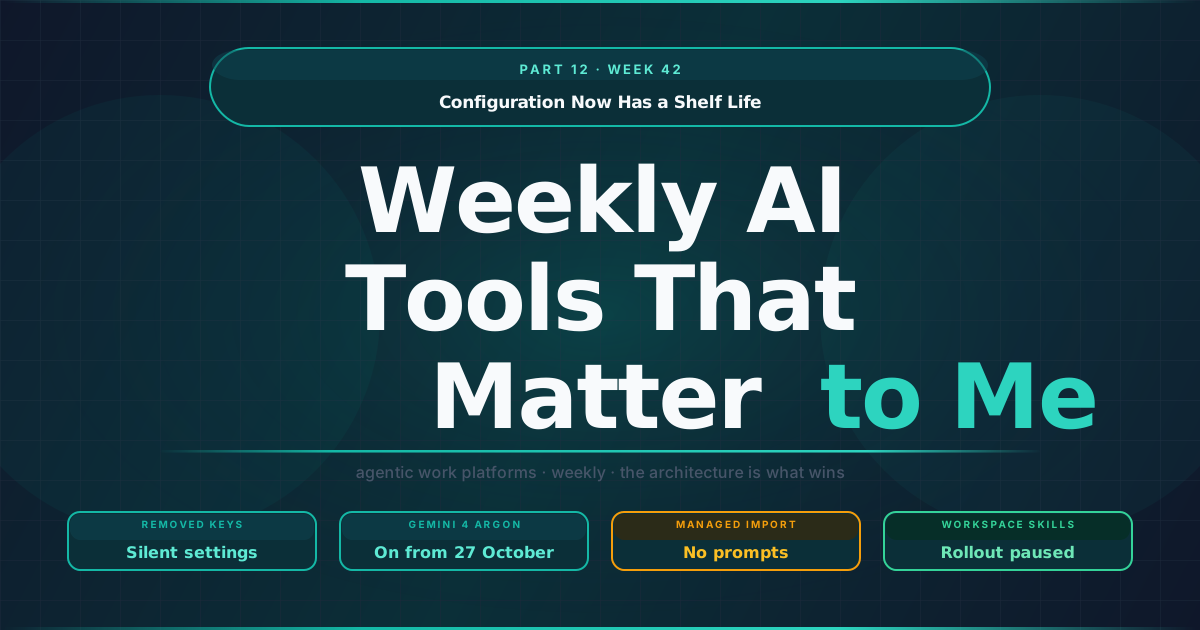
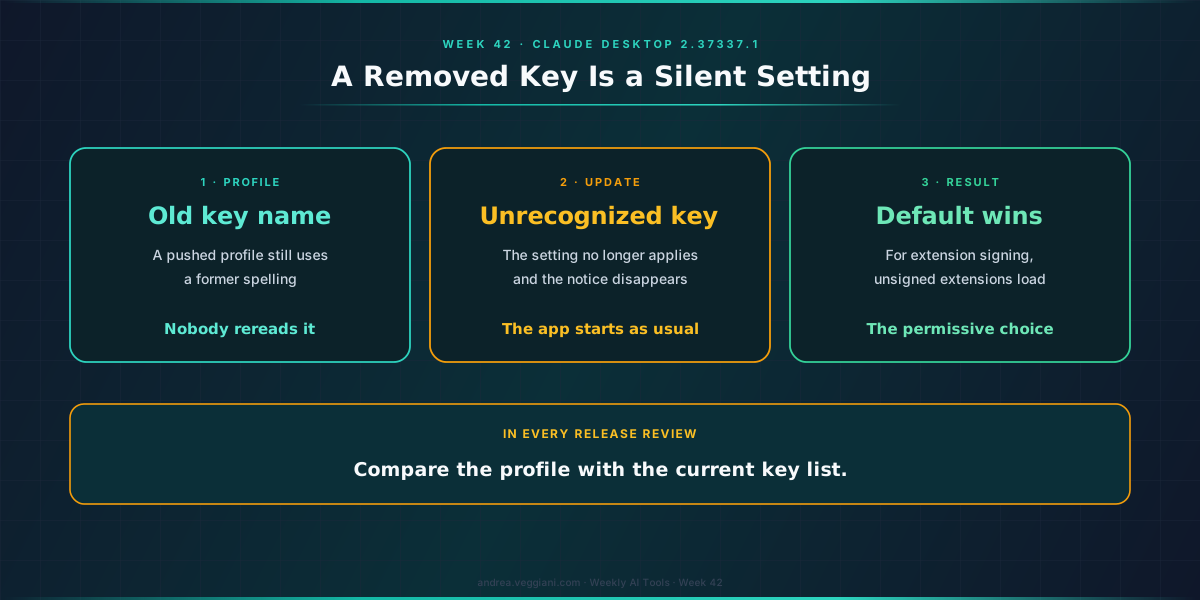
- A removed key is a silent setting. Claude Desktop dropped the old names of several managed-configuration keys, and a profile that still uses one falls back to the default, which for extension signing means unsigned extensions load.
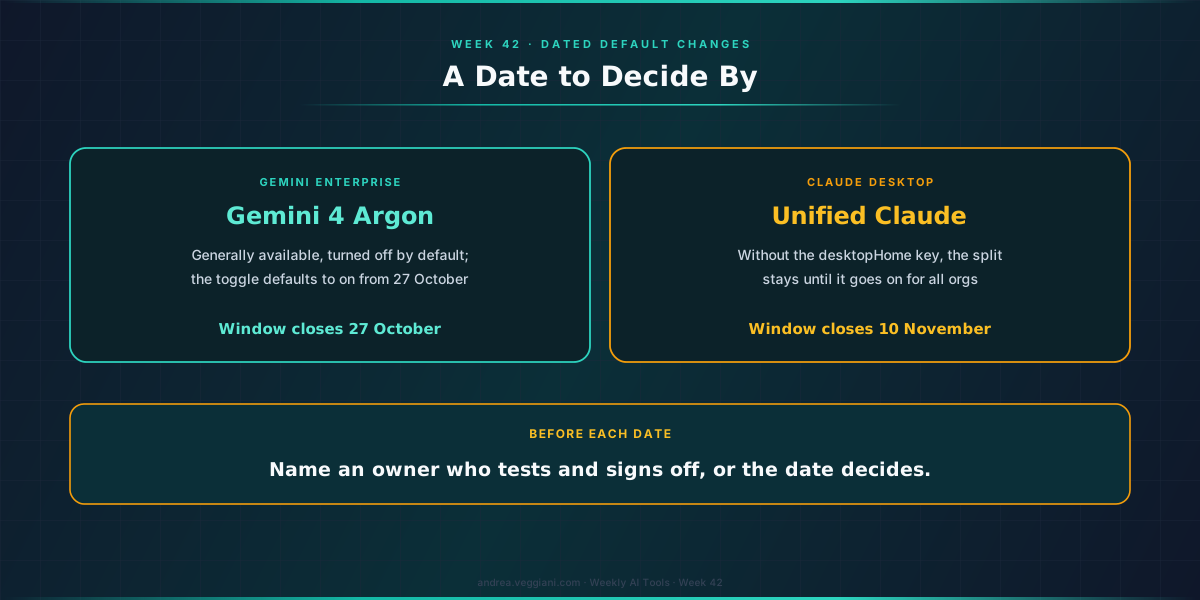
- Dated defaults leave a window that needs an owner. Gemini 4 Argon turns on by default in Gemini Enterprise from 27 October, and Unified Claude goes on for every organisation on 10 November unless a key is set.
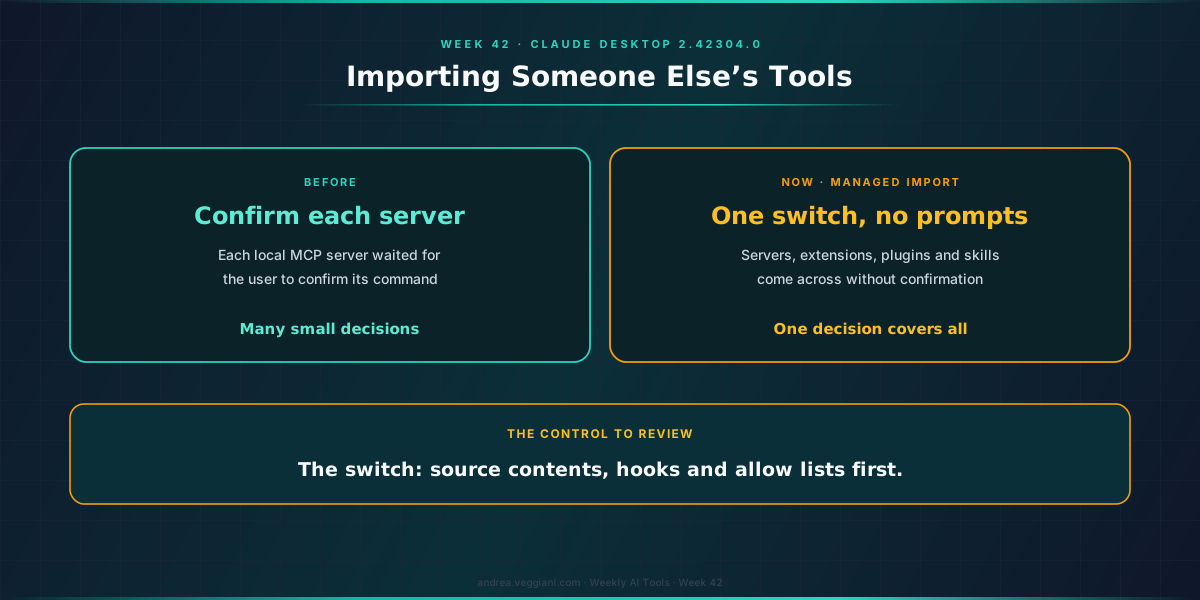
- A managed import moves the decision. Where device management turns on the import from a third-party Claude deployment, local MCP servers, extensions, plugins and skills now come across without per-item confirmation.
- Rollouts move too. Google paused skills in Workspace until further notice while app skills keep rolling out with no admin controls, so the answer is a configuration calendar per tool.
A removed key is a silent setting
Claude Desktop version 2.37337.1 removed the old names of several managed-configuration keys, after a rename that the app had flagged, for most of those names, with an in-app warning since 10 September. The three extension keys are the clearest case, and the changelog is direct about the consequence: “In a profile that still uses one, the name is now an unrecognized key: its setting no longer applies and the deprecation notice no longer appears, so unsigned extensions load and, on standard deployments, extensions are allowed and the extension directory shows.” It also corrects itself in the same entry, noting that this “differs from earlier notes for third-party deployments, which said extensions would be disabled and only signed extensions would load.”
The same release removed other former names for third-party deployments, with similar effects: end-user attribution is then on (except in the Windows registry, where key names ignore case), a bootstrap address set by device management is trusted without asking each user, and no custom headers are sent to the inference gateway. Each new name exists, does the same job, and was announced in advance. Nothing here is hidden.
What makes it worth an essay is the failure shape. In Part 7 I wrote about a misconfiguration that stopped the product, which is loud and gets fixed quickly. A removed key is the opposite. The app starts, the user sees nothing unusual, and the deprecation notice that would have warned an administrator is gone too, because the key it belonged to no longer exists. The setting simply stops applying, and the app falls back to its default, which for extension signing is the more permissive choice.
In my reading, the risk sits less in the change than in the profile that nobody rereads. A configuration written for a pilot, exported once and pushed to the fleet carries old spellings for as long as nobody compares it with the current key list. For an administrator, that comparison now belongs in every release review, next to the release note itself, and it is cheap compared with discovering that a signing requirement has not applied since an update went out.
A date to decide by
Two other changes come with a calendar instead of a surprise. In Gemini Enterprise, Gemini 4 Argon is generally available and, in Google’s words in the release notes, “Turned off by default. The toggle defaults to on beginning October 27, 2026.” In Claude Desktop, version 2.31226.0 added a key for the unified Chat and Cowork view, and an organisation that leaves it out stays on the current split “until November 10, when Unified Claude goes on for all orgs.”
I wrote about default changes as governance decisions in Part 9. The difference here is the window in front of each change. Both vendors give administrators a period in which the decision is still theirs, and the window is only useful if someone owns it: which teams try the new model first, which workflows are tested against it, whether the unified view suits people who use Chat today, and who signs off before the date arrives. Without an owner, the date decides.
Importing someone else’s tools
Version 2.42304.0 changed the import that brings work across from a third-party Claude deployment. Where device management has turned that import on, Claude now adds and starts local MCP servers, installs the extensions and uploaded plugins the organisation allows, and uploads skills that grant tools or declare hooks, “all without asking you to confirm.” Organisations under the HIPAA restriction get none of these. A few releases earlier, version 2.31226.0 introduced the import of local MCP servers with a confirmation for each server’s command and settings.
This is a reasonable choice for an organisation that has decided to move people across in bulk, and it is clearly bounded. What it changes is where the decision is made. With per-item confirmation, each person approved each server. Without it, the decision is made once, by whoever turned the import on, and it covers every tool that comes across. In my reading, that makes the switch itself the control to review: what the source deployment contained, which skills declare hooks, and whether the organisation’s allow lists were set before the import ran.
The rollout that waited
The last item is a pause. Google started rolling out skills in the Gemini app and delayed skills in Workspace “while we work to ensure skills in Workspace launch in a safe and reliable manner”, with the earlier dates replaced by “Delayed until further notice”. The same post states that “There are no admin controls for skills in the Gemini app.”
A paused rollout is useful information for planning. Training and guidance for app skills can start now, because they are arriving and administrators cannot switch them off. Plans that depended on the Workspace date should treat it as open until Google publishes a new one.
Verdict: keep a configuration calendar
None of these changes is hard to handle on its own. Together, they describe configuration that ages: keys that are renamed and then removed, defaults that flip on a published date, imports that carry decisions with them, and rollouts that move. On public documentation as of publication, each vendor announces its own changes in its own place, so the calendar that joins them up has to live with the team that runs the tools. I would keep one list per tool, with every managed key and its rename and removal dates, every dated default change, and the owner of each decision, and reread it at every release.
A configuration nobody rereads is a decision nobody is still making.
Sources
Anthropic
- Claude Desktop changelog, versions 2.31226.0, 2.37337.1 and 2.42304.0. Source for the removed key names and their effects, the in-app warning from 10 September, the vendor’s correction of earlier notes, the unified view date, and the import change with its HIPAA exclusion.
- Gemini Enterprise release notes, 13 October 2026. Source for Gemini 4 Argon general availability and the 27 October default.
- An update on the launch of skills in the Gemini app and Workspace, 13 October 2026. Source for the Gemini app rollout, the Workspace delay and the absence of admin controls for app skills.
The record
- AI Watch, Week 42. Every date and status referenced in this essay.
- Part 7, Week 37 and Part 9, Week 39. Earlier essays on misconfiguration that stops the product and on defaults as governance decisions.
- Weekly MarTech Signals That Matter to Me: Part 24, Week 42. The same week on the customer engagement beat, where the question was how a journey, a segment or an integration ends.
The digest behind each weekly article is produced through a structured AI-assisted scan of official release notes and product update sources. I review the output, verify the relevant signals and write the interpretation.
This article draws from the AI Tools Weekly Digest scans run on October 15, 2026, covering release notes and product updates across the major agentic work platforms. The dated record behind it is in AI Watch, Week 42.
If you find errors or gaps in coverage, I want to know. The process improves when the output is challenged.