Articles about
acronym architecture
Thoughts and field notes on MarTech, customer engagement, and solution architecture.
The Architecture Behind the Acronyms (MDM): The Referee the CRM Bought
Master data management was built to settle arguments between systems of record. In 2025 the largest system of record bought one of the category's leaders, and that tells you what MDM has become.
The Architecture Behind the Acronyms (CRM): The Acronym That Was Never a Product
CRM is the largest software market in the enterprise, and the analysts who define it do not describe it as a product at all. They describe it as a business strategy.
The Architecture Behind the Acronyms (DXP): The Acronym That Tried to Swallow the Stack
DXP emerged when websites became complex digital experiences and the CMS was no longer enough. Then the category expanded until it began to describe almost the entire stack.
The Architecture Behind the Acronyms (DAM): The Library That Became a Supply Chain
DAM began as a searchable library for digital files. It became the governance and distribution layer for assets moving across brands, markets, channels and AI-assisted content operations.
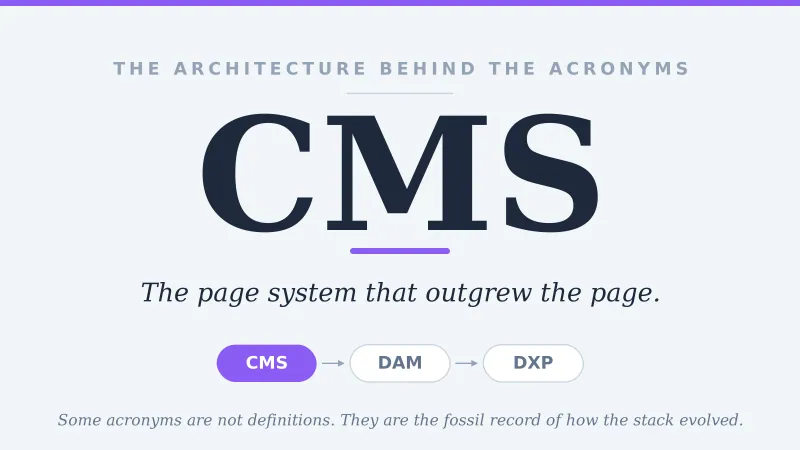
The Architecture Behind the Acronyms (CMS): The Page System That Outgrew the Page
CMS began as a way to publish web pages without editing HTML. It became the structured content layer behind websites, applications, channels and, increasingly, AI agents.
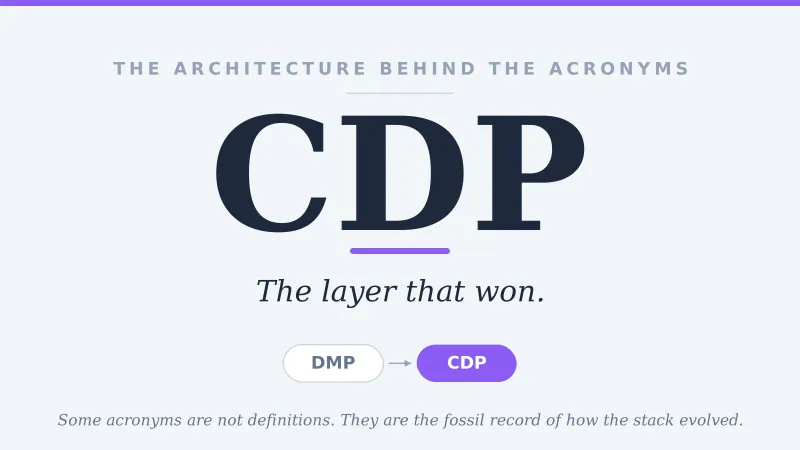
The Architecture Behind the Acronyms (CDP): The Layer That Won
CDP beat every rival to become the default name for the customer data layer, then dissolved into packaged, warehouse-native and suite-embedded forms.
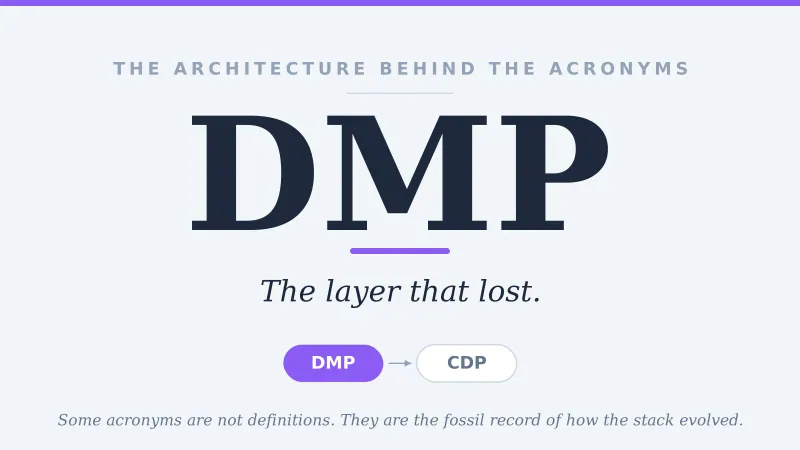
The Architecture Behind the Acronyms (DMP): The Layer That Lost
DMP ran a decade of digital advertising and then collapsed, even as the identity logic it pioneered survived everywhere else.
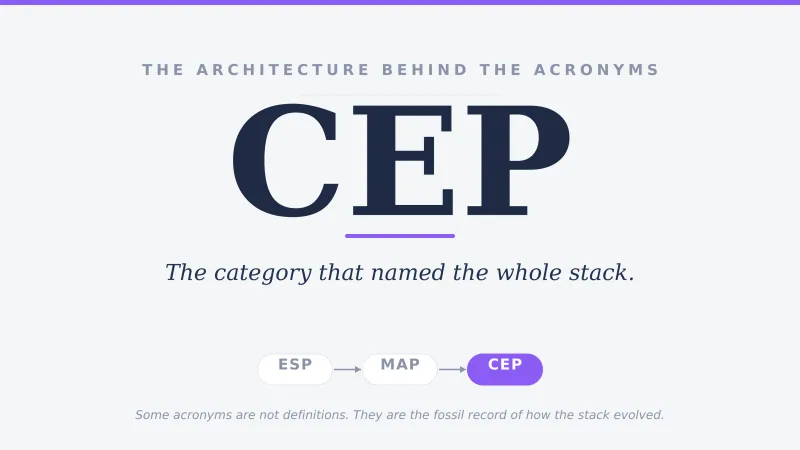
The Architecture Behind the Acronyms (CEP): The Category That Named the Whole Stack
Customer Engagement Platform absorbed ESP and MAP, then collided with CDP. That is why it is useful, vague, and dangerous to buy against.
The Architecture Behind the Acronyms (MAP): The Funnel Made Software
Marketing Automation encoded the funnel into software. It still fits B2B well, but its campaign-tempo model explains why B2C moved toward event-driven
The Architecture Behind the Acronyms (ESP): The Engine That Never Died, It Got Absorbed
The Email Service Provider faded as a category, but its function still sits inside every modern engagement stack: delivery, reputation, consent