Weekly MarTech Signals
The platform moves, agentic shifts, and data-architecture developments that matter to me, filtered through the lens of someone who builds these stacks for a living.
Week 42 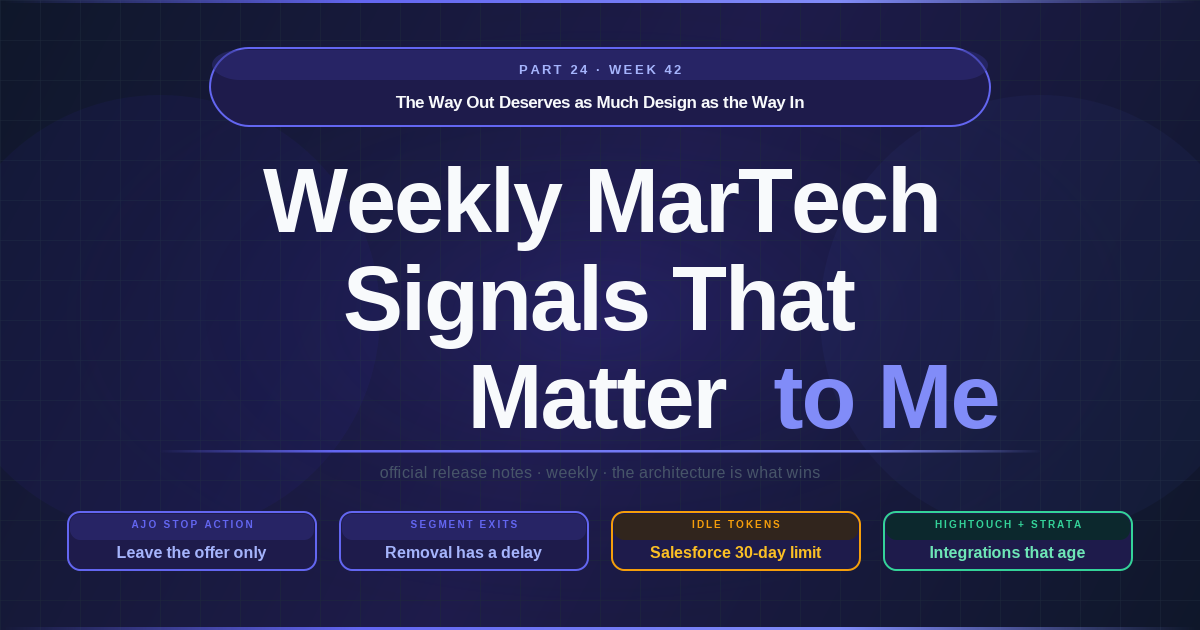
Weekly MarTech Signals That Matter to Me: Part 24, Week 42
Adobe Journey Optimizer can now take a profile out of inbound experiences without ending its journey, Insider removes people who leave a segment from a ChatGPT Ads audience, Salesforce will revoke integration tokens left idle for thirty days, and Hightouch bought an agent that keeps integrations running. The way out deserves as much design as the way in.
Week 41 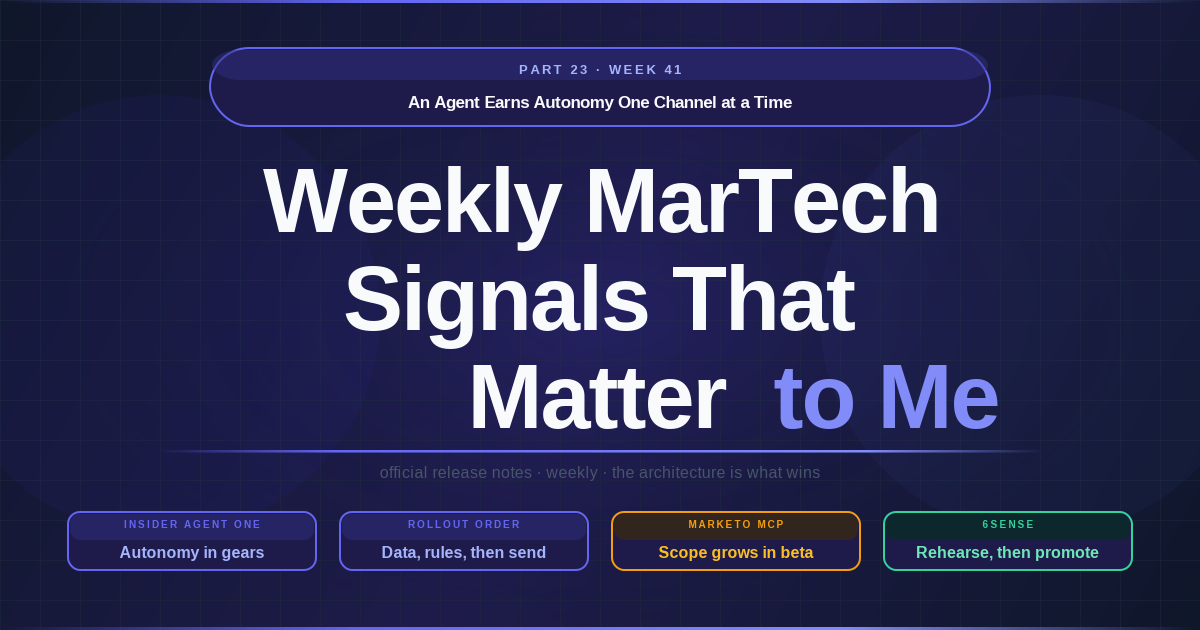
Weekly MarTech Signals That Matter to Me: Part 23, Week 41
Insider made agent autonomy a mode chosen per use case and channel, 6sense let workflows be rehearsed in a sandbox before promotion, Iterable spelled out the order in which a control must be switched on, and Marketo's MCP server gained smart list operations during its open beta. Rollout is becoming part of the product.
Week 40 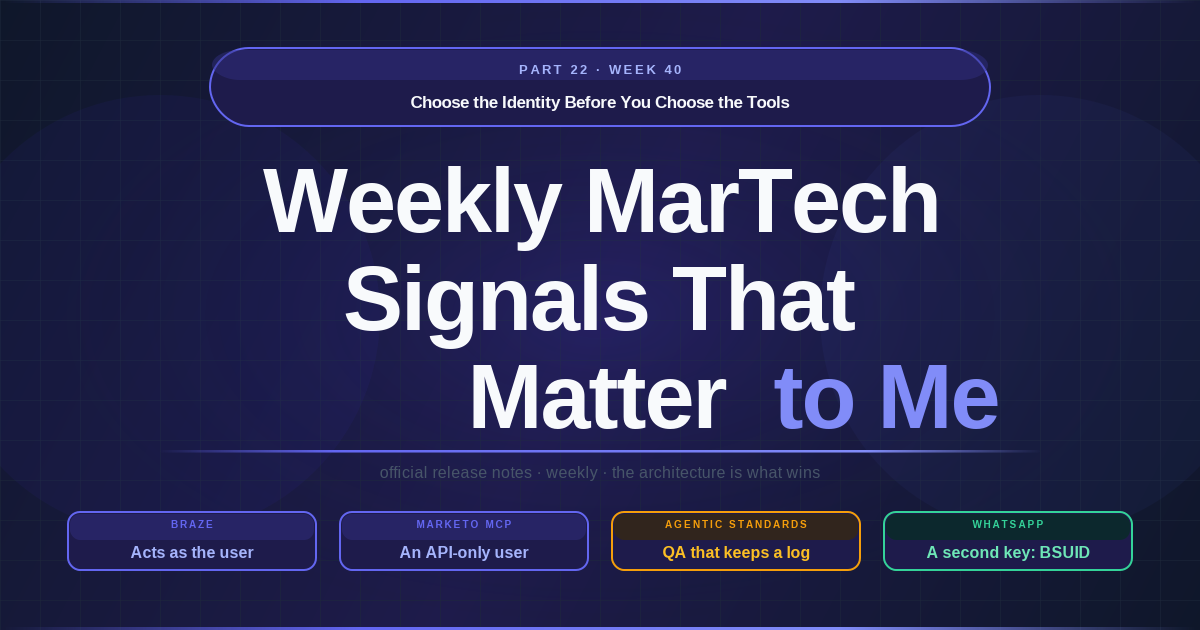
Weekly MarTech Signals That Matter to Me: Part 22, Week 40
Braze put its Operator inside Claude and ChatGPT under the individual user's identity, Marketo's MCP server runs as a dedicated API user, and OpenAI gave its specialist dots an identity of their own. Three answers to the first architecture question of agentic marketing.
Week 39 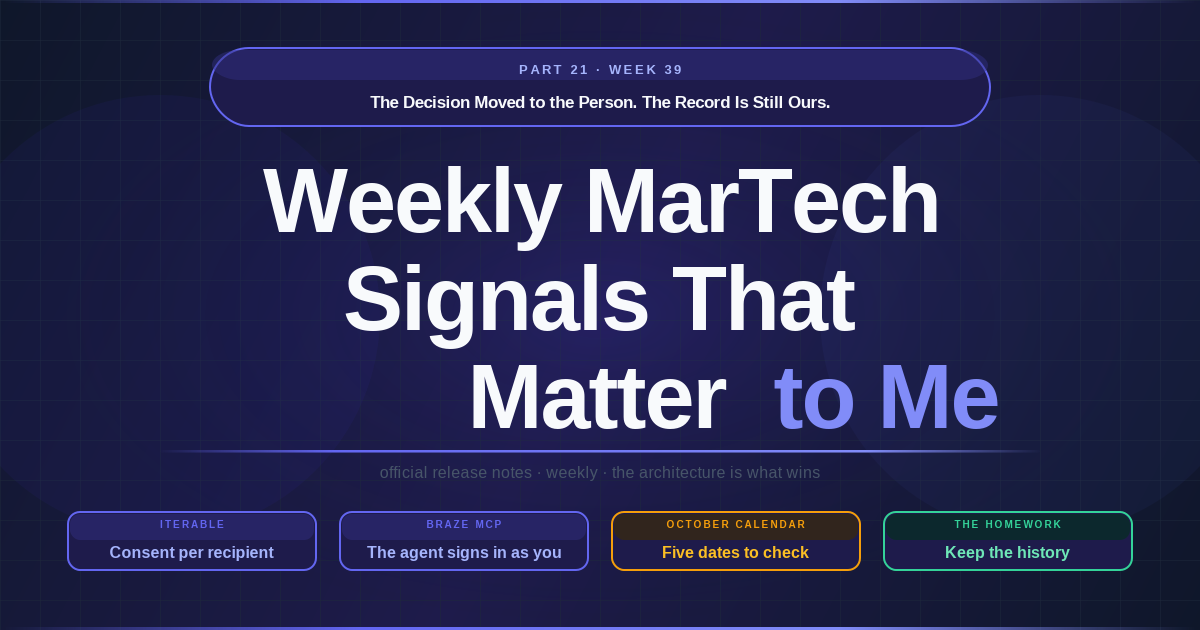
Weekly MarTech Signals That Matter to Me: Part 21, Week 39
Iterable made the email tracking pixel a per-recipient consent value and Braze made its MCP server sign in as the person using it. The same design decision from two ends of the stack, and the history nobody has planned to keep.
Week 38 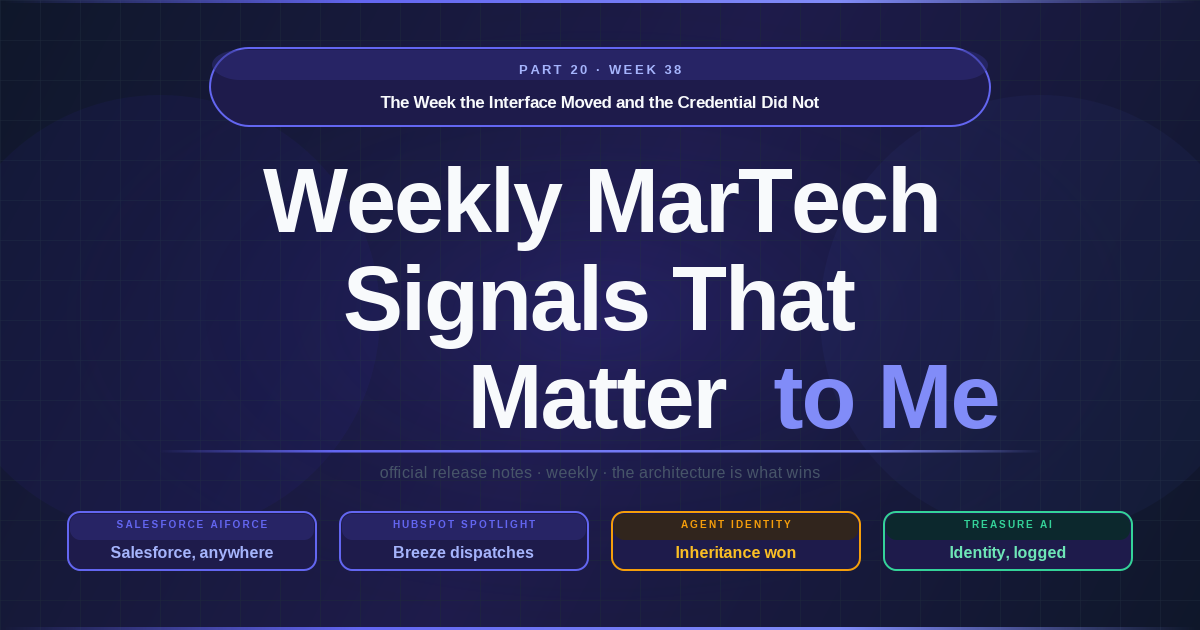
Weekly MarTech Signals That Matter to Me: Part 20, Week 38
Salesforce and HubSpot both announced that their own screen is no longer where you use them, and both answered the governance question with inheritance. What that leaves unresolved for anyone who has to audit it.
Week 37 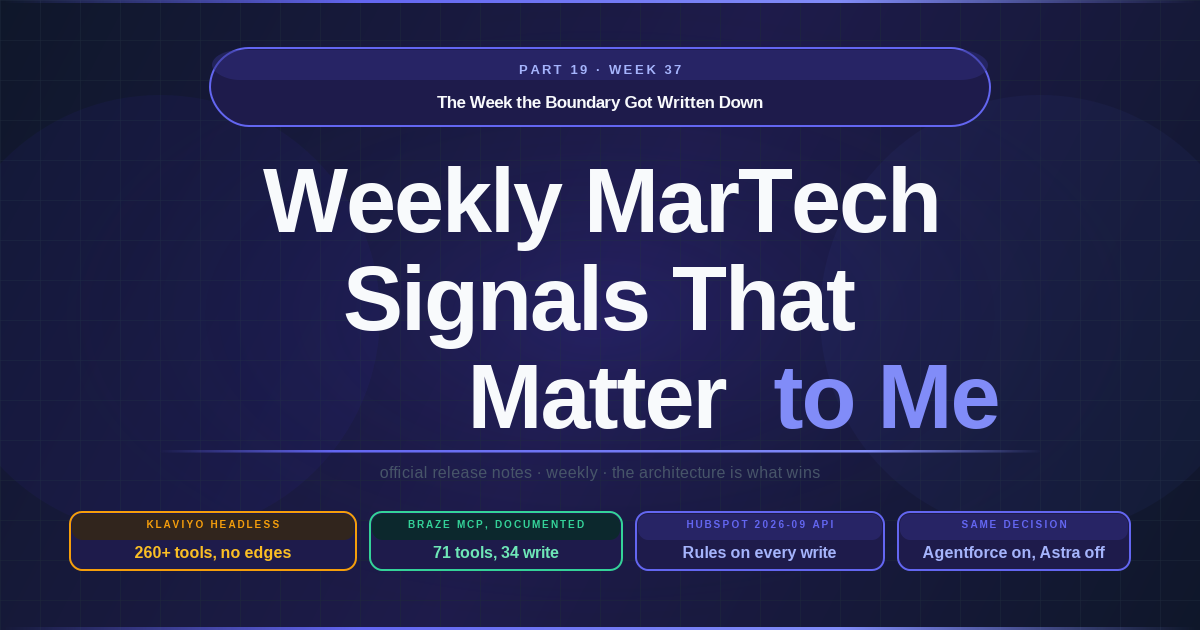
Weekly MarTech Signals That Matter to Me: Part 19, Week 37
Three customer engagement platforms published what their agent may actually do, and they put the answer in three different places: the launch copy, a reference table, and the API contract. The ones that write the boundary down are the ones you can buy from.