Articles about
composable
Thoughts and field notes on MarTech, customer engagement, and solution architecture.
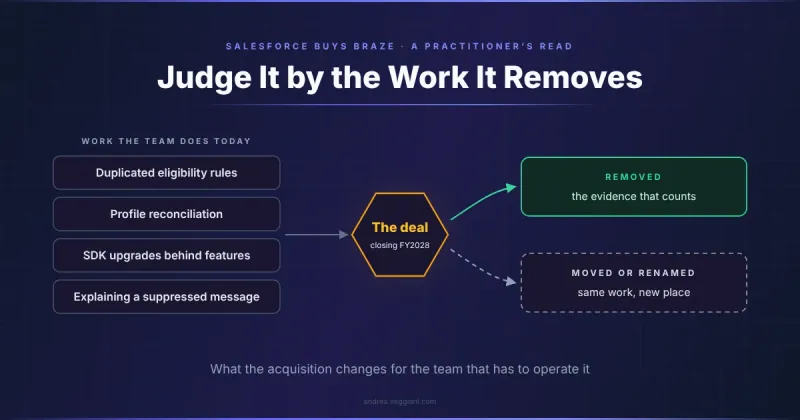
Salesforce Buys Braze: Judge It by the Work It Removes
The Salesforce–Braze deal through the eyes of someone who uses the platforms: strengths you rely on, flaws you hate, and compromises an acquisition still has to resolve.
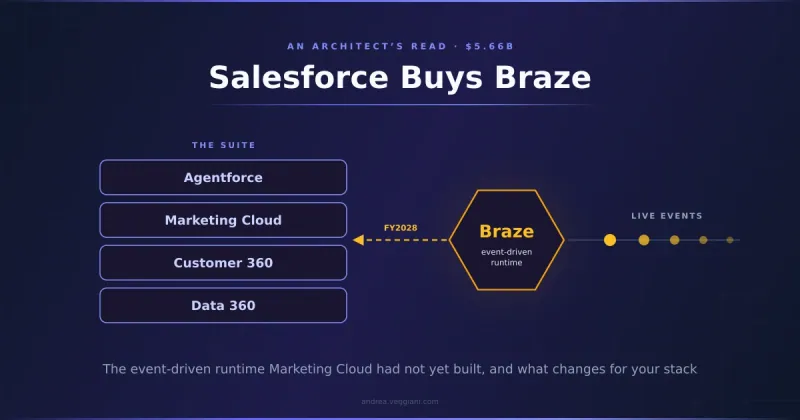
Salesforce Buys Braze: What It Means for Your Stack
Salesforce's $5.66 billion deal for Braze buys an event-driven engagement runtime and the decisioning on top of it, the part of the stack Marketing Cloud's native rebuild had not yet delivered for mobile-first B2C. What it means for Braze customers, Marketing Cloud customers and composable stacks.
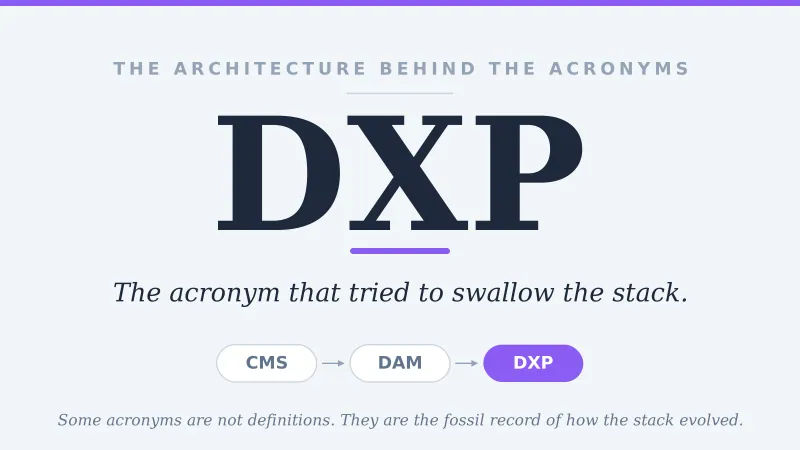
The Architecture Behind the Acronyms (DXP): The Acronym That Tried to Swallow the Stack
DXP emerged when websites became complex digital experiences and the CMS was no longer enough. Then the category expanded until it began to describe almost the entire stack.
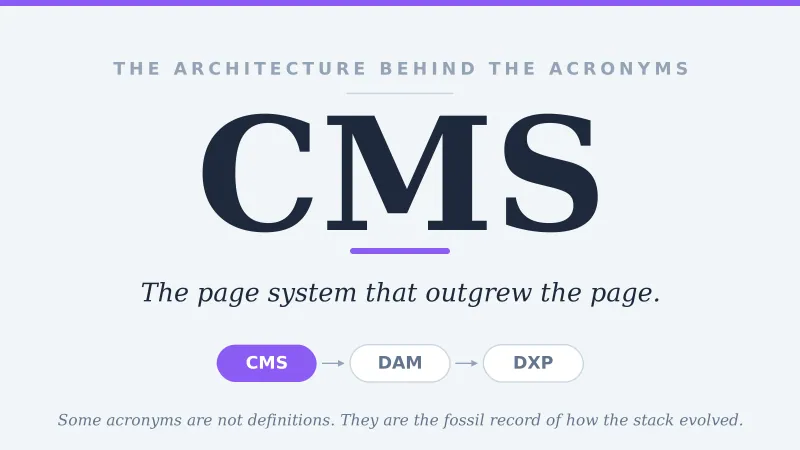
The Architecture Behind the Acronyms (CMS): The Page System That Outgrew the Page
CMS began as a way to publish web pages without editing HTML. It became the structured content layer behind websites, applications, channels and, increasingly, AI agents.
The Architecture Behind the Acronyms (CDP): The Layer That Won
CDP beat every rival to become the default name for the customer data layer, then dissolved into packaged, warehouse-native and suite-embedded forms.
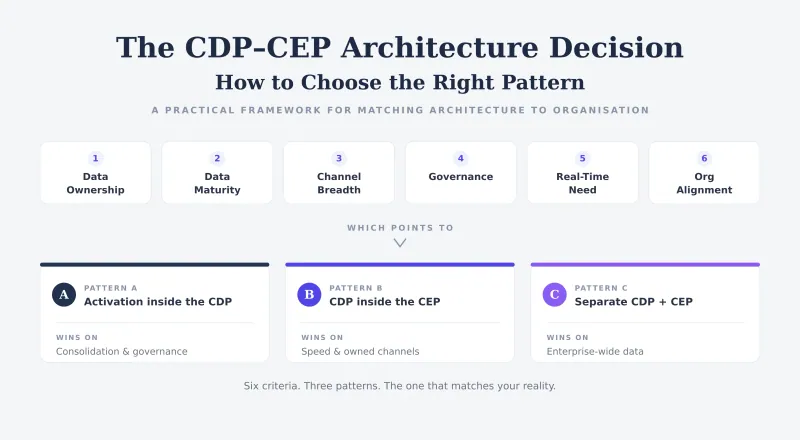
The CDP-CEP Architecture Decision: How to Choose the Right Pattern - Part 2
After mapping the three CDP-CEP wiring patterns, this is the practical framework for choosing which architecture fits your organisation.
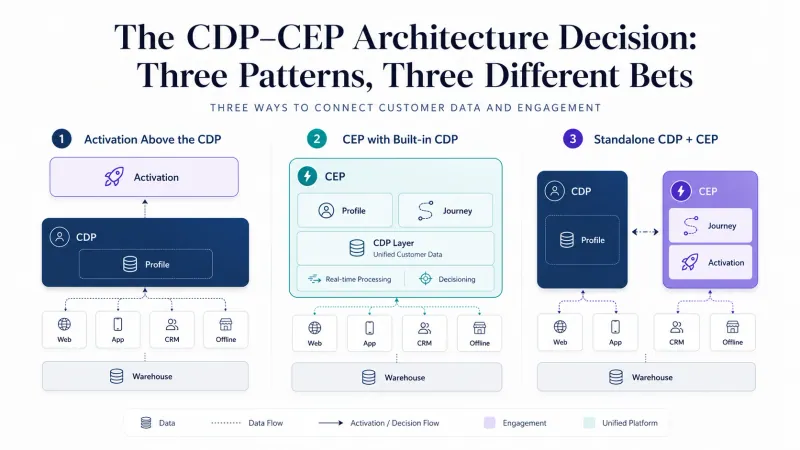
The CDP-CEP Architecture Decision: Three Patterns, Three Different Bets - Part 1
Activation inside the CDP, the CDP inside the CEP, or best-of-breed apart: three ways to wire customer data and engagement, and what each choice really implies.
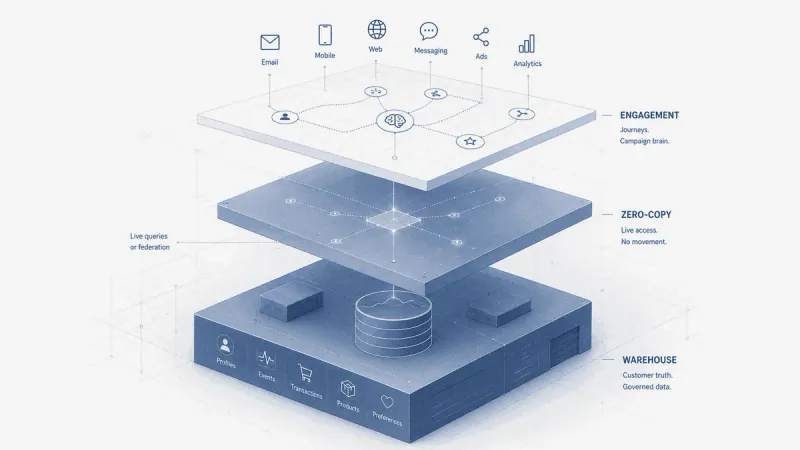
Zero-Copy Engagement: When the Warehouse Becomes the Campaign Brain
Zero-copy activation is not just a new integration pattern. It is a signal that customer engagement architecture is moving closer to the data warehouse