
12 min read
The Leap from Static Rules to Algorithmic Personalization
The shift from Marketing Automation (MA) to Customer Engagement (CE) is fundamentally an algorithmic leap. MA was prescriptive, relying on static “if/then” rules — a meticulous recipe based on averages and manually defined segments. This approach quickly became brittle. In contrast, AI-powered CE is a dynamic chemical reaction, adjusting ingredients based on instantaneous environmental feedback. It operates on massive streams of real-time data to answer the single-most-important question: “What is the best action for this specific customer right now, and what is its probable value?” This shift replaces rigid, human-authored workflows with dynamic, machine-driven intelligence, moving us from the accidental malice of algorithmic apathy to the scalability of algorithmic empathy.
The Unscalable Failure of Rules-Based Automation
Traditional MA failed at external empathy because its logic was inherently rigid. Designed for linear flow, MA prioritized the marketer’s operational ease over the non-linear reality of human behavior, resulting in three organizational penalties:
1. The Combinatorial “If/Then Sprawl” and Governance Failure
MA requires fixed rules for every path, leading to the “If/Then Sprawl.” The sheer volume of hard-coded decision points explodes (combining channels, geographies, and tiers quickly results in hundreds of manual workflows). This complexity makes true personalization impossible at scale and ensures Governance Failure, where conflicting, non-contextual messages damage brand credibility (like sending a promotional email minutes after a customer cancels). The consequence is a high Friction Tax on the customer, and the marketer is trapped, unable to update the sprawling logic fast enough to keep pace.
2. The Maintenance Debt & Opportunity Cost of Innovation
The primary burden is the Maintenance Debt. Marketing teams often spend most of their time simply maintaining and auditing existing campaigns. This immense manual upkeep forces marketers to be auditors instead of strategists, draining resources and slowing the innovation cycle to a crawl. Every new product launch or channel addition requires a time-consuming audit of legacy workflows. This maintenance burden acts as an Opportunity Cost, preventing teams from exploring novel strategies or applying high-value creative thinking.
3. The Latency Penalty & Algorithmic Apathy
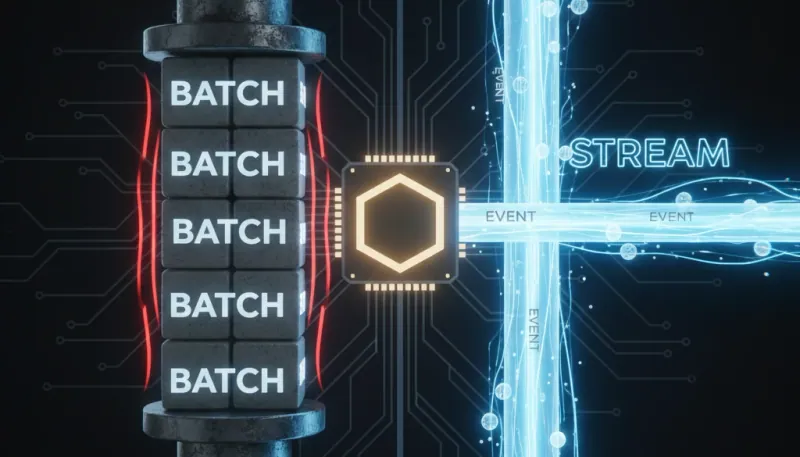
The time delay from manual segment refreshes or batch processes causes the Latency Penalty. This results in algorithmic apathy: sending ill-timed messages (like a cart abandonment email after the purchase is complete) that erode trust. The customer feels a psychological disconnect — they know the brand has their data but is choosing to ignore their latest, most relevant action. This latency, often measured in hours, is an eternity in the modern digital journey.
Predictive Intelligence: The Engine of Empathy
Predictive AI fundamentally changes the marketing equation by embracing the non-linear, unpredictable reality of customer behavior. Instead of forcing customers down predefined, linear paths, the AI engine can literally learn from billions of data points — not just what a customer bought, but how they navigated, how long they paused, which content they ignored, and the exact order of their actions. It computes the optimal decision in milliseconds, transforming marketing from a reactive, script-following process into a proactive, personalized prediction.
Key AI capabilities driving this change include:
Next Best Action/Offer (NBA/NBO): The Core Decision Engine
This is the leap from simple A/B testing (which only tests two variables in isolation) to continuous, smart learning. Think of the AI as a world-class strategic chess player, not a robot following a script. Using advanced techniques, this intelligence continuously determines the single, most likely successful content, offer, or channel for a specific user at that exact moment to maximize a long-term goal, such as Customer Lifetime Value (CLV).
The system models its decisions based on a continuous loop:
- Observe: The AI sees the customer’s current situation (e.g., browsing product X, three items in the cart, high CLV score).
- Act: It chooses a targeted action (e.g., send push notification, show exit-intent pop-up, or critically, do nothing).
- Learn: The system receives feedback — a Reward (a purchase) or a Penalty (an ignored message or an unsubscribe).
The system’s objective is always to estimate the long-term value of any given action. It constantly weighs two options: whether to Exploit (send the message that has historically worked best) or Explore (send a less certain, novel message to gather new data that might lead to a higher long-term reward). If the model predicts the reward for silence is highest, it stays quiet, preventing the common MA error of overwhelming the customer. Real-world results are compelling: studies report a 5–8% increase in revenue and a 20–30% reduction in customer service costs by proactively addressing customer issues (1).
Optimal Pathing & Sequence Modeling: Predicting Intent
AI models understand that a customer journey is a series of interconnected events, where the order of actions is critical. This capability, called Sequence Modeling, captures the temporality and context of recent interactions, essentially figuring out the customer’s “micro-moment” or immediate intent.
- Moment-of-Intent Relevance: This capability prevents the relevance decay common in MA. For example, if a user searches for “running shoes” and immediately clicks on three models, the AI understands this is a high-intent, in-the-moment state. The Sequence Model temporarily suppresses recommendations for previously favored products (like hiking boots bought last year) and focuses only on high-relevance running shoe accessories and content. This shift from “who they are” to “what they are about to do” is crucial for capturing immediate revenue.
- Smarter Attribution: Beyond just prediction, Sequence Modeling is transforming attribution. Traditional models (first- or last-touch) are inaccurate because they treat all touchpoints equally. Sequence Models recognize the subtle causal dependencies in behavior, allowing them to dynamically weigh the importance of each touchpoint leading to a conversion. This provides marketers with an accurate, data-driven understanding of which combinations of channels and content truly influence the customer, vastly improving budget allocation accuracy (6).
Real-Time Signals and Propensity Scoring
The intelligence layer continuously processes high-velocity data to create new, predictive features on the fly. This goes far beyond simple segmentation and is the mechanism that delivers genuine real-time responsiveness. The AI system automatically derives and weights thousands of transient features, such as: “The speed of recent page views,” “Time since last interaction with Category Z,” or “Mouse-hover duration over CTA elements.”
This instantaneous signal generation powers Propensity Scoring (5), which predicts the likelihood of a customer taking a specific action (e.g., likelihood to convert, click a link, or churn). When Propensity Scoring (likelihood) is combined with CLV Modeling (value), the CEP can make highly optimized decisions: prioritizing a high-likelihood action for a high-value customer. This ensures predictive models are making decisions based on the latest, most nuanced signals from the customer’s interaction stream.
Generative AI for Dynamic Creative Optimization (DCO): The Content Layer
While NBA determines the when and where (channel), Generative AI determines the what (content). DCO, powered by GenAI, takes the NBA output (e.g., “best action is a 10% offer for Product A via push notification”) and instantly generates the most effective message variant.
- Headless Creative and Personalized Tone: This architecture requires content to be stored in modular blocks (Headless Creative), accessed via API, rather than being hardcoded into templates. The GenAI system then combines the core offer with the user’s inferred emotional state (e.g., frustrated vs. exploratory). Critically, Brand Safety Guardrails — a set of rules governing tone, legal language, and banned phrases — are automatically enforced by the GenAI model during content synthesis. This is content generation at the moment of send, replacing pre-rendered templates with hyper-specific, AI-authored variants that match the user’s micro-context while ensuring brand consistency. Platforms like Adobe’s GenStudio and Salesforce Einstein GPT are critical in enabling this real-time content fusion.
Customer Lifetime Value (CLV) Scoring: Intelligent Investment
AI moves beyond simple segmentation by using predictive CLV (7) to intelligently allocate marketing spend and effort (4). By continuously modeling future value, platforms can justify high-cost, high-touch marketing efforts only for the most valuable (or soon-to-be-valuable) customers, maximizing ROI and preventing wasteful spending on low-potential leads.
- CLV-Informed Acquisition: CLV scores are now being used to inform upstream acquisition. Instead of optimizing paid media only for immediate conversion (CPA), models optimize for the predicted lifetime value of the incoming customer. This enables businesses to bid higher for a seemingly expensive click if the AI predicts that customer is a high-CLV prospect, allowing the brand to strategically “outspend” competitors for the right customers who will yield long-term profitability.
- Proactive Retention: This is critical for retention. If a high-CLV customer’s score suddenly drops (e.g., due to three failed login attempts or a negative service interaction), the system triggers an immediate, proactive retention effort — before the customer even considers churning. This ability to identify and triage high-value risk accounts has profound financial implications.
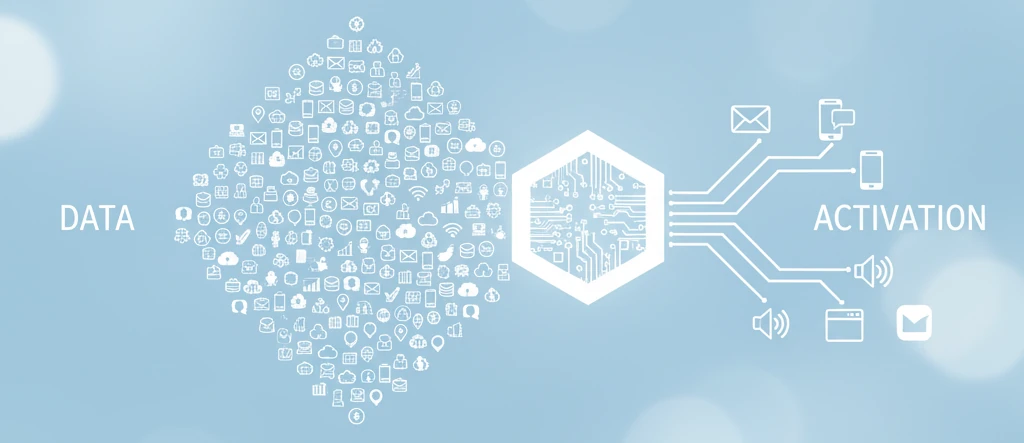
The Customer Engagement Platform (CEP): Data and Activation Unified
The intelligence described above is only possible with a specialized, unified technology stack capable of handling real-time data ingestion and cross-channel activation.
However, the traditional distinction between Customer Data Platforms (CDPs) and Customer Engagement Platforms (CEPs) is increasingly blurred. Many modern solutions on the market — whether branded as CDP or CEP — may span both domains, combining data management, decisioning, and activation within the same environment.
1. The Foundation: Customer Data Platform (CDP) and Stream Processing
The CDP (like Tealium, Segment, Adobe Experience Platform or Salesforce Data Cloud among the others) is the essential data layer responsible for Identity Resolution — stitching together fragmented identifiers (cookies, emails, device IDs, loyalty numbers) into a single, golden, real-time profile. This requires moving beyond traditional data warehousing (fixed schema) to a modern Data Lakehouse architecture (schema-on-read).
- Identity Architecture and Event Sourcing: The CDP’s job is two-fold: it builds the Identity Graph (the map of all known identifiers tied to a single human) and generates the Golden Record (the persistent profile containing the most recent, accurate attribute data). This process is no longer run in batch overnight. It must be powered by Event Sourcing and stream-processed (using technologies like Kafka or Kinesis for example) to ingest every interaction — from a swipe on the app to a call center note — and update the Golden Record in sub-second latency. This real-time capability is what eliminates the Latency Penalty, providing the AI with access to the absolute latest customer status needed.
- AI for Operational Efficiency and Audience Discovery: The use of AI extends to the data layer itself, primarily for operational hygiene and governance. Adobe’s AI Assistant within AEP, for example, helps data engineers and audience managers save significant time — reports indicate up to a full day of work saved per user (3) by automating operational tasks like audience cleanup and quickly constructing complex segments via natural language commands. Furthermore, AI assists in Audience Discovery, proactively suggesting high-value micro-segments that human marketers would overlook, such as “users who watched a video but didn’t visit the pricing page within 5 minutes.”
2. The Engine: Customer Engagement Platform (CEP)
The CEP is the activation, orchestration, and intelligence layer that applies predictive models across all available channels and external systems.
- Speed as a Competitive Advantage and API-First Design: This convergence is driven by the need for speed; Braze Canvas, for example, is cited in case studies for reducing campaign execution time from one hour to just three minutes (2) by tightly coupling data ingestion and orchestration logic. This inherent speed allows CEPs to deliver the “in-the-moment relevance” that legacy systems simply cannot match. The foundation of this speed is an API-first, Headless Design, meaning the CEP treats every touchpoint (email, push, ad platform, CRM, POS) as a connected API endpoint, allowing the predictive decision to flow instantly across the entire enterprise ecosystem.
- Unified Architecture & Operationalizing Empathy (Agentic Capability): CEPs orchestrate the entire customer experience, which includes not only digital channels but also triggering actions in internal systems. This capability is critical for operationalizing empathy, transforming marketing intelligence into business-wide action. The system isn’t just sending messages; it’s managing the entire enterprise interaction based on a predictive decision.
- Cross-Functional Empathy Triage — A Detailed Scenario: Imagine a high-CLV customer attempts to check out but receives three consecutive payment failure messages. The Sequence Model detects this pattern as a high frustration signal and triggers an intervention pathway.
1. Marketing Triage (CEP): The system determines the NBA is silence on promotions, suppressing all campaign emails for 48 hours to avoid adding noise. Simultaneously, it triggers a low-friction “We noticed you had a problem checking out — can we help?” notification via the channel where the user is currently active (e.g., a subtle in-app message) with a one-click link to live chat.
2. Service Triage (CRM Integration): The CEP sends a command via API to the CRM (Salesforce Service Cloud or equivalent) to automatically open a priority ticket tagged “High CLV Risk/Payment Failure,” pre-populating the chat window with payment details so the agent doesn’t have to ask, drastically cutting resolution time.
3. Sales/Inventory Triage (ERP Integration): For tangible goods, the system alerts the customer’s dedicated account manager (if B2B) or places a temporary soft-hold on the cart items in the ERP system to ensure inventory availability for the next 30 minutes, removing the fear of losing the item while resolving the payment issue.
This comprehensive, unified, and real-time response — coordinated across Marketing, Service, and Inventory — is the ultimate expression of algorithmic empathy. It ensures the system manages the entire enterprise-wide experience based on a single, predictive decision, far beyond the scope of traditional automation.
Conclusion
The shift from rigid Marketing Automation to intelligent Customer Engagement marks a return to human-centric marketing, where technology serves the goal of genuine, real-time personalization. By leveraging advanced AI on a unified data foundation, marketers can finally move beyond the limitations of linear workflows and overcome the penalties of sprawl and latency. This enables them to deliver experiences that are not just sent, but are dynamically predicted to be both contextually relevant and commercially effective. This is the future of scalable empathy, where the machine handles the complexity so the human can focus on strategy and creativity.
What’s next in the series
This is the second of three-part series that try to map the evolution from Marketing Automation (MA) → Customer Engagement (CE) → Agentic Marketing (AM).
Join me next week in Part 3 where we describe why Agentic Marketing will finally allow the marketer to step out of the workflow engine and back into strategy and creativity.
Sources
Consultancy research
- McKinsey, Next best experience: How AI can power every customer interaction, 2025.
Vendor documentation and case studies
- Braze, Customer Engagement Automation That Works, 2025. Case study citing a 41% conversion rate lift and campaign execution time cut from one hour to three minutes.
- Adobe, Unlocking operational insights with AI Assistant in Adobe Experience Platform. Customers can expect to save 12 hours each time they use AI Assistant to manage their audience inventory.
- Salesforce, Customer Lifetime Value (CLV): A Complete Guide and How to Calculate, 2024. Overview of CLV tracking.
Academic and applied research
- Artificial intelligence-based lead propensity prediction. These models are promising alternatives to the RF model, especially with a high volume of transactions and prospects or in a big data context.
- ScienceDirect, Intelligent Attribution Modeling for Enhanced Digital Customer Journeys, Journal of Decision Analytics and Marketing Technology, 2024.
- Artificial Intelligence-Driven Customer Lifetime Value (CLV) Forecasting: Integrating RFM Analysis with Machine Learning for Strategic Customer Retention, 2025.