
13 min read
How the pursuit of scale led to the Algorithmic Apathy — and why the next years belong to real-time, event-driven Customer Engagement.
I’ve spent the last 25 years designing, implementing, and delivering complex cross-channel digital marketing solutions across dozens of industries. In that time, I’ve watched Marketing Automation (MA) evolve from a revolutionary concept — a ticket to freedom from manual execution — into a frustrating, self-defeating paradox.
The original promise was irresistible: efficiency, limitless scale, and massive time savings through automated customer journeys. And for a decade, it delivered real, measurable ROI. But somewhere along the line, we confused speed with intelligence, and scale with connection. We built systems that removed friction from our internal processes, but simultaneously stripped empathy from our customer relationships. At the most critical moment, the relentless pursuit of efficiency started actively killing genuine human connection.
The Age of Scale: The Rules Trap: Why ‘If/Then Sprawl’ Crippled the Ecosystem
In the early 2010s, Marketing Automation was not just software; it was the digital holy grail, offering the first scalable way to implement lifecycle marketing. The shift from one-off, batch-and-blast email campaigns to coordinated, multi-step nurture journeys was a seismic event. This technology revolutionized B2C and B2B marketing by introducing concepts like Lead Scoring (quantifying a prospect’s engagement and fit) and Nurture Tracks (pre-defined content sequences designed to move a prospect down the sales funnel) while simultaneously enabling personalized, automated engagement for consumers. Suddenly, marketers could keep leads or customers “warm” without human intervention, leading to faster sales cycles, improved pipeline visibility, and a measurable increase in Customer Lifetime Value (CLV).
Platforms like the pre-acquisition Neolane, ExactTarget (with B2B Pardot inside), Eloqua, and Marketo allowed brands to automate lead scoring, manage complex sales funnels, and send thousands of cross-channel communications with a simple click. The guiding philosophy was simple, if reductive: Reach thousands of prospects with minimal human effort.
This era was defined by aggressive consolidation as major technology vendors scrambled to build comprehensive stacks capable of handling both B2C and B2B workflows. Forrester predicted that global MarTech spending will reach $148 billion in 2024 (5), illustrating the massive scale of this market and the strategic importance of capturing this high-value technology:
- Salesforce: In June 2013, Salesforce made a massive play by acquiring ExactTarget (and the B2B platform Pardot within it). This acquisition formed the bedrock of the modern Salesforce Marketing Cloud (SFMC), blending high-volume B2C email and campaign management with sophisticated B2B lead nurturing (Pardot). The challenge, however, was in integrating these disparate, siloed platforms, often built on different codebases, into a cohesive “cloud” experience.
- Oracle: Oracle was an early mover, acquiring B2B automation leader Eloqua in December 2012 and following up a year later with the December 2013 acquisition of Responsys (1).
This dual acquisition provided Oracle with both B2B and B2C cross-channel orchestration capabilities, cementing its position as one of the three foundational “marketing cloud” platforms. - Adobe: Also in 2013, Adobe acquired Neolane (now Adobe Campaign) to jumpstart its B2C cross-channel orchestration capabilities, later bolstering its B2B portfolio and gaining deep loyalty program capabilities by acquiring Marketo in October 2018. This created a powerful but complex monolith, capable of everything but struggling with unified data and real-time synchronization across its various tools.
These platforms offered powerful, visual workflow engines that felt magical. They allowed us to define every step of the customer funnel with granular precision. But this very precision became the ultimate trap, The Rules Trap. As businesses scaled, marketers began creating endless rule sets, triggers, and deeply nested if/then workflows that sprawled into a myriad of combinations, trying to account for every permutation of customer behavior. Every customer exception required another rule; every new channel required another complex workflow diagram.
Soon, teams were spending more time rigidly maintaining the automation machine and documenting its technical debt — with one in five companies citing technical complexity as a barrier to adoption (2) — than they were dynamically understanding the human beings it was supposed to serve. The complexity became self-perpetuating: a journey designed for five segments quickly ballooned into fifty, requiring constant QA and maintenance. The technology had outgrown the philosophy, creating an environment where the internal systems dictated the customer experience, rather than the customer experience shaping the system.
The Side Effect of Scale: The Impersonality Crisis

Automation’s relentless focus on optimizing scale created a critical and silent crisis: impersonality at the moment of truth.
When every interaction follows a predefined, flowchart-based logic, the system inherently loses sight of the individual. The customer becomes, statistically speaking, a segment ID, a score, or a position on a fixed journey path, rather than a person making unique, non-linear choices. This algorithmic rigidity is becoming increasingly unacceptable to customers, and marketers know it. The urgency to solve this is palpable: A May 2024 Forrester survey found that 67% of AI decision-makers plan to increase investment in generative AI within the next year, highlighting the urgent need to inject intelligence and context into interactions (5).
The consequences have been toxic to brand trust and devastating to Customer Lifetime Value (CLV):
- The Algorithmic Apathy: This is when the automated system actively ignores real-time context. The most classic and damaging example is the abandonment email. The customer who just completed a purchase instantly receives a “What are you waiting for?” abandoned cart email, because the data synchronization between the commerce platform and the marketing platform operates on a batch cycle (e.g., every four hours) rather than instantly. Another painful scenario involves the user who phoned support yesterday to complain about a product and is now targeted relentlessly with ads promoting that same item. This isn’t just annoying; it signals fundamental brand incompetence — a failure of the brand’s right hand to know what the left hand is doing. The result is a fractured experience that undermines the very relationships automation was meant to foster.
- Content Pollution and Fatigue: The scaled communication volume resulted in generic, repetitive content delivered without true contextual awareness, leading to message fatigue. This lack of relevance is the primary factor, as 53.8% of respondents unsubscribe from emails because the content is not relevant (4). Notably, North America records an average unsubscribe rate of 0.39%, higher than the global average, reflecting growing consumer fatigue (4).
This mass of impersonal messaging is not just ineffective; it imposes a real cost on the brand by polluting its primary communication channels. Marketers may point to the success of automated email flows generating 320% more revenue than non-automated campaigns (2), but they often ignore the long-term price paid in consumer goodwill and list health due to high-volume, low-quality interactions. - The Technical Debt Grind: As the complexity grew, MA platforms became highly specialized, requiring dedicated technical teams to manage the custom integrations and data flows needed to connect them to the rest of the enterprise (CRM, ERP, web analytics). This created a cycle of increasing technical debt and high labor costs, making the systems sluggish and difficult to adapt to new channels (like messaging apps or CTV). With 44% of marketers citing difficulty in achieving real-time data integration as a major challenge (2), the technical infrastructure itself became the biggest inhibitor to empathetic, timely communication.
We optimized processes and instantaneous click-through rates, but we systematically degraded long-term relationships. We scaled communication volume, but we tragically eroded understanding depth. This over-engineered, rules-based MA approach is exactly why, as the 9th edition of Salesforce State of Marketing (13) confirms, so many marketers struggle to balance automation with authenticity. Empathy, we discovered, is not a feeling; it is a technical requirement that older, batch-oriented architectures simply could not support.
The Disruption: The Rise of Pure-Play Engagement Platforms
The technical debt incurred by the legacy marketing clouds — particularly the difficulty in achieving real-time data integration and delivering personalized content — left a massive opening in the market. While the traditional MA suites focused on consolidating monolithic B2B and B2C capabilities, a new wave of vendors emerged, focused purely on real-time Customer Engagement (CE) from the ground up. These platforms were built not for database-driven batch-and-blast, but for instantaneous speed and experiential fluidity. They are architecturally event-driven, not rule-driven, and quickly carved out a massive market share by offering the nimbleness the older giants lacked.
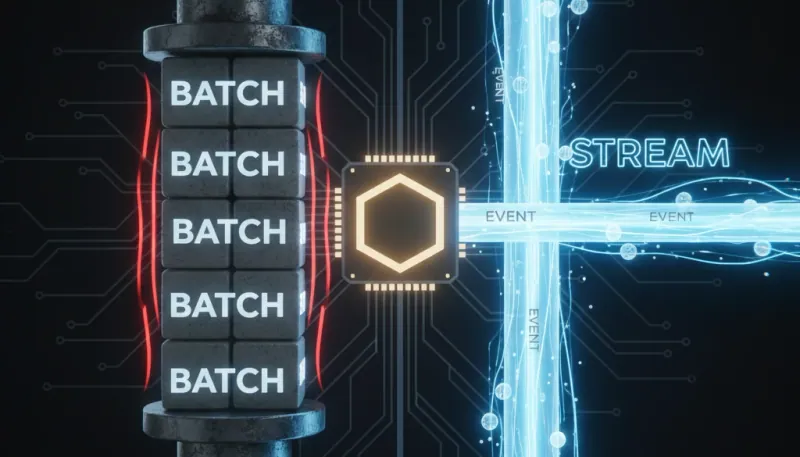
The architectural distinction is critical: Legacy MA systems operate on a batch processing model, where data is synchronized at set intervals (e.g., daily or hourly). Modern CE platforms operate on an event-driven streaming model, where every single customer action generates an event that is processed in milliseconds.
- Braze: Built from the beginning as a mobile-first platform, Braze excels at event-stream processing. It treats every customer action (a tap, a scroll, a location change) as an immediate trigger. This shift in architecture is what allows for true, hyper-relevant in-app messaging, push notifications, and seamless cross-channel orchestration that responds to customer intent in the same session, not hours later. Both Gartner and Forrester recognize this platform as a leader: Braze was named a Leader in the 2025 Gartner® Magic Quadrant™ for Multichannel Marketing Hubs for the third consecutive year (11). Furthermore, data shows that brands using a combination of email, in-app, and push messages see 126 times higher average sessions per user (12), underscoring the power of cross-channel nimbleness and speed. This architectural speed translates directly into superior personalization, allowing for use cases like “sending a limited-time offer to a customer who has been idle for 5 minutes but is currently viewing the pricing page.”
- Bloomreach: Focused on deep commerce and content personalization, Bloomreach uses advanced AI and natural language processing to deliver contextually relevant product recommendations, search results, and dynamic content experiences in real-time. Their platform focuses on the experiential layer of the journey, ensuring the moment a customer lands on a digital property, the entire context is adapted instantly — crucial for high-frequency retail and e-commerce.
- Insider: As a multi-channel growth management platform, Insider emphasizes hyper-personalization across web, mobile, and ad channels. Their platform is engineered for rapid time-to-value, helping marketing teams move beyond simple segmentation to micro-segmentation and predictive audience creation, all driven by a foundation of unified customer data.
These challengers (with some others) proved that event-driven, instantaneous, individual-level responses were not just possible, but the new table stakes, forcing the legacy giants to fundamentally rethink their underlying architecture and embrace the power of the Customer Data Platform (CDP) paradigm.
The Breaking Point: From Fixed Funnels to Liquid Journeys
The truth was that legacy marketing automation tools belonged to a 2010-era linear world — built around a fixed funnel meant to capture, nurture, and convert. That rigid, predefined path might have worked for classic B2B lead nurturing, but it struggles to keep pace with the speed and complexity of modern B2C commerce.
Modern customers move through liquid, non-linear, multi-touch journeys. They browse on a smartwatch, compare on desktop, engage with AI support, convert via voice, and expect the brand to remember everything instantly and seamlessly. They might enter a “loyalty” journey, jump to a “purchase” flow, and then pivot to a “service” interaction, all within minutes.
The rigidity of the old MA rules simply couldn’t keep up. The platforms were designed for processes, not people. Rules calcify, and the resulting experiences go stale within days. This realization forced a massive, multi-billion-dollar strategic pivot across the MarTech landscape — a shift from simple automation logic to complex, real-time engagement architecture built upon a centralized, up-to-the-millisecond data foundation.
The Strategic Pivot: AI, Real-Time Data, and the Death of the Flowchart
The world’s leading vendors recognized that their legacy MA systems — powerful as they were for sending volume — needed to be completely re-architected around the customer profile, not the campaign process. The solution was the integration of a massive, enterprise-grade, Real-Time CDP capable of supporting a global business.
1. Adobe’s AEP Strategy: From Rules to XDM Adobe’s answer was the Adobe Experience Platform (AEP), launched as the unifying backbone for the entire Adobe Experience Cloud. AEP is a Real-Time Customer Data Platform (CDP), and the core of its strategy is the Experience Data Model (XDM). XDM provides a common, standardized, and normalized language for all customer data (behavioral, transactional, observational) across the enterprise, overcoming the chaotic nature of disparate system data. This semantic standardization is key to enabling consistent data governance and, crucially, allowing AI models to learn from clean, universal data sets.
This technical foundation allows AEP to unify data into a single, cohesive Real-Time Customer Profile. This profile is the brain that receives live signals from all touchpoints, replacing the need for brittle, predefined logic built inside tools like Adobe Campaign or Marketo Engage. Tools like Adobe Journey Optimizer (AJO) then sit on top of AEP, consuming these real-time events to enable true in-the-moment decisioning. This strategic separation of the data layer (AEP) from the orchestration layer (AJO) is key. It effectively replaced the fixed, complex flowcharts of the legacy tools with a dynamic, AI-informed, event-driven orchestration system. The results are significant: A 2023 Forrester Total Economic Impact study found that organizations using AEP applications achieved an average 431% ROI, including a net gain of $534 million in additional revenue from conversions and an 11% business growth from larger audiences (9). This scale is achieved because over one trillion experiences are activated through AEP annually (10), demonstrating its hyperscale capability for modern, data-intensive marketing.
2. Salesforce’s Data Cloud Strategy: The Hyperscale Profile Salesforce’s shift was equally dramatic with the launch of Salesforce Data Cloud. The focus here is on integrating all enterprise data — from Sales, Service, Commerce, and Marketing — into a single, hyperscale CDP that lives on the Customer 360 platform. While legacy Marketing Cloud customers already realize a 299% average ROI over three years (7), Data Cloud aims to accelerate this further by solving the data silo problem.
The technical significance lies in its Zero-Copy Architecture. Data Cloud can ingest and unify massive, real-time data streams without requiring massive data replication, which had plagued earlier data warehouse approaches. This reduces IT infrastructure costs and ensures the data remains “fresh.” This unified, real-time profile is critical because it makes AI (Salesforce’s Agentforce/Einstein) accessible to every single touchpoint across the ecosystem. Gartner recognized Salesforce as a Leader, placing it Furthest in Completeness of Vision and Highest in Ability to Execute in the 2025 Magic Quadrant™ for Customer Data Platforms (8). By unifying the data fabric, Salesforce is explicitly moving past the inherent rigidity and data silos of Marketing Cloud (ExactTarget/Pardot) to enable truly personalized, cross-cloud actions, allowing sales reps, service agents, and marketers to operate from the same, fresh, unified customer understanding. The ultimate goal is to empower not just the marketer, but every employee who interacts with the customer, making every touchpoint a moment of personalized service or sales.
From Process to Relationship: The Path Forward
The fundamental shift is philosophical. Customer Engagement is not another tool; it’s a new operating system for the entire business. It replaces the archaic question, “How do I automate this process?” with, “How do I make this interaction relevant, timely, and empathetic for this specific individual, right now?”
Automation made marketing faster. AI — powered by these new real-time platforms— is finally making it smarter, enabling intelligent, empathetic decisioning at the individual level in milliseconds. In projects I’ve led for global brands in retail, fashion, and insurance, the teams that win are those who are willing to abandon rigid, comfortable journey diagrams and shift their focus to building living, learning systems that adapt to the customer, not the other way around. The modern MarTech leader is no longer a workflow configurator; they are an architect of data, ethics, and empathy — responsible for ensuring the speed of the machine is always subservient to the quality and relevance of the human experience.
What’s next in the series
This three-part series maps the evolution from Marketing Automation (MA) → Customer Engagement (CE) → Agentic Marketing (AM).
Join me in Part 2, where we break down the transition from brittle rules to flexible, predictive next-best-action models — and why Agentic Marketing in Part 3 will finally allow the marketer to step out of the workflow engine and back into strategy and creativity.
Sources
Vendor and platform
- CMS Wire, Oracle Buys Responsys for $1.5 Billion, Merges with Eloqua
- Adobe, Experience, Marketing & Commerce Reports. Gartner recognition for Adobe.
- Adobe, Forrester Consulting study: Adobe Experience Platform applications deliver a 431% ROI
- Adobe, Adobe Launches Adobe Experience Platform Agent Orchestrator. AEP activation scale.
- Salesforce, Analyst Reports. Data Cloud placement in the 2025 Gartner MQ for CDPs.
- Salesforce, State of Marketing, 9th edition
- Braze, Customer Engagement Platform. Analyst recognition, 2025 Gartner MQ for CCMH.
Market data and statistics
- Emailmonday, Ultimate Marketing Automation statistics overview, 2025. Marketing automation challenges and ROI.
- Email Vendor Selection, 39+ Major Marketing Automation Statistics to Know in 2025. Original source for the market value figure.
- Amra & Elma, Best email unsubscribe rate statistics 2025
- Integrate.io, Salesforce Data Integration ROI Figures: 50 Statistics Every Business Leader Should Know in 2025
- Contentsquare, Global customer engagement: 3 key insights from our report
Forrester
- Marketing automation blog category. Global martech spending reaching $148 billion in 2024, and generative AI trends across business functions.