10 min read
The Leap from Latency to Real-Time Intelligence
In Part 1, we identified the terminal illness of traditional Marketing Automation (MA): Latency Debt and architectural data silos. The legacy approach — relying on slow, overnight batch processes — guaranteed that customer experience would always lag behind reality. For marketers to evolve from simple message senders to true orchestrators of personalized journeys, the foundation itself had to change. The market demanded platforms built not for efficiency, but for Real-Time Intelligence. This is the story of the Second Wave, where data streams replaced data batches, and the Customer Engagement Platform (CEP) became the central nervous system for the modern brand.
The Second Wave: Customer Engagement Platforms (CEPs)
This wave introduced the necessary architectural leap — moving from batch processing to stream processing — and culminated in the introduction of autonomous Generative AI agents.
- 2008: CEP Pioneer (Bloomreach Engagement). Bloomreach Engagement (formerly Exponea) was founded, anticipating the need for data unification by focusing on embedding a native CDP core directly into its execution layer.
- 2011: The Mobile-First Shift (Braze). Braze (originally Appboy) emerged as the definitive mobile-first platform, purpose-built to handle the high velocity and volume of mobile data, challenging the email-centric MA incumbents.
- 2013: The CDP Concept Emerges. David Raab coins the term Customer Data Platform (CDP), recognizing the critical need for unified, un-siloed customer data. Iterable was also founded, emphasizing a flexible, API-driven platform built for data maturity and rapid experimentation.
- 2016: E-commerce CEP Specialization (Klaviyo). Klaviyo accelerates as a high-growth e-commerce/SMS platform, specializing in deep, native integrations with platforms like Shopify and WooCommerce. This validated the strength of CEPs tailored for specific industry verticals.
- August 2020: Enterprise Validation (SAP acquires Emarsys). SAP’s acquisition of Emarsys validated the importance of the agile CEP model (focused on B2C/retail) within massive enterprise ERP/CRM stacks, confirming that real-time engagement was mandatory, not optional, for commerce.
- April 2021: CDP Consolidation (Twilio acquires Segment). Twilio’s acquisition of the leading pure-play Customer Data Platform cemented the concept that data unification (the CDP layer) had become an indispensable, foundational layer for any serious engagement platform.
- November 2022: The Agentic Inflection Point (ChatGPT). The public launch of ChatGPT and Generative AI instantly redefined “personalization,” shifting the focus from predicting the next best action to autonomously generating the next best creative/copy. This marks the true inflection point for Agentic Marketing.
- Q4 2023: Generative AI Ecosystem Maturity (OpenAI). ChatGPT announced Custom GPTs, GPT Apps, and Browsing capabilities, enabling users to create goal-oriented, specialized AI agents and providing LLMs with real-time web access. This capability immediately defined the architecture for the next generation of marketing “co-pilots.”
- October 2024: Adobe GenStudio for Performance Marketing GA. A major update to Adobe Journey Optimizer (AJO) integrating GenStudio for autonomous content generation (copy, imagery, offers) based on real-time profile attributes, moving from static content to dynamically generated creative assets at scale.
- March 2025: Adobe Experience Platform Agent Orchestrator Unveiled. Adobe unveiled Agent Orchestrator (at Adobe Summit), the foundational engine within AEP that provides the intelligence and reasoning capabilities for Adobe and third-party AI agents, establishing enterprise-grade governance and a unified framework for goal-oriented AI automation.
- Q1 2025: Salesforce Agentic Goal-Setting. General availability of new Einstein GPT features allowing marketers to set high-level business goals (e.g., increase CLV) that the AI autonomously translates into campaign structure, budget allocation, and channel priorities across Marketing Cloud.
- Q2 2025: Braze Canvas Autopilot. Braze rolls out Canvas Autopilot, an enhancement to its journey orchestration tool that uses LLMs to perform dynamic channel optimization in real-time based on predicted fatigue, eliminating the need for hard-coded channel priorities and further reducing Latency Debt.
- Q3 2025: Conversational Commerce Agents. Insider and Bloomreach Engagement launch expanded conversational AI suites focused on combining real-time intent prediction with GenAI-powered dialogue, fully enabling end-to-end purchasing via chat/voice interfaces, marking the shift to agent-to-customer interactions.
The list above represents only a fraction of the important announcements made in recent years. With new features and enhancements emerging daily, the pace of development is unprecedented.
This new guard, founded in the early 2010s, specialized in solving the MA bottleneck. They approached marketing from a data-first, real-time perspective, effectively inventing the modern CEP category by prioritizing mobile data, speed, and API-first architecture. Gartner recognizes the leaders in this category as Multichannel Marketing Hubs (MMH) (2).
The Disruptors: Real-Time Agility and Stream Processing
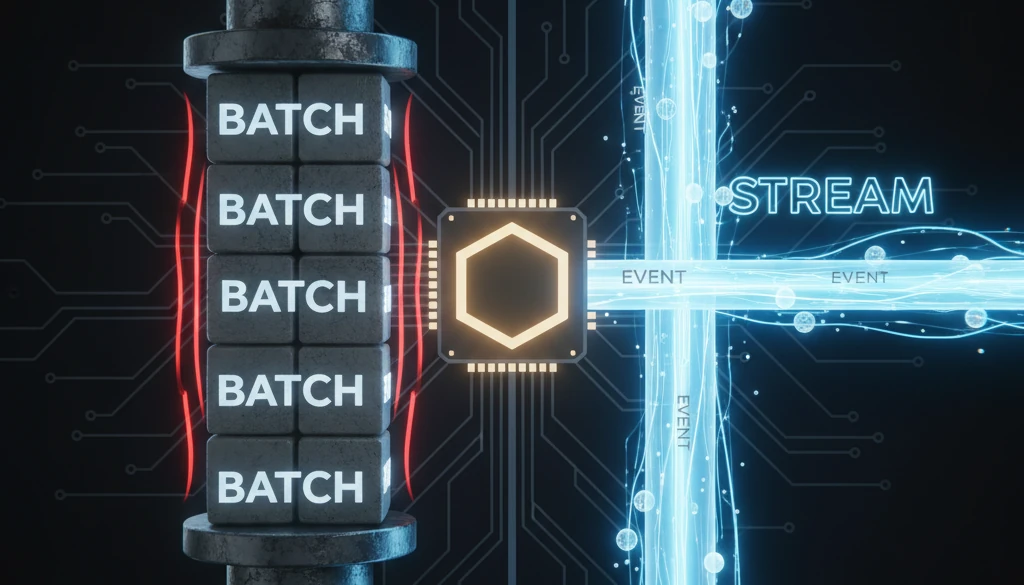
The fundamental architectural difference between MA and CEP is the move from batch processing to stream processing. Instead of waiting for data to be loaded into a static table, CEPs ingest and act upon data as a continuous stream of events. This enables hyper-personalization at the moment of truth. Some of the platforms on which I worked were created in this phase:
- Braze (Founded: 2011, originally Appboy): Emerged as the definitive mobile-first platform. It was purpose-built to handle the speed and volume of mobile data, enabling brands to orchestrate journeys across push notifications, in-app messaging, SMS, and email from a single, agile platform. Their central Canvas tool is not a flowchart of pre-set steps but a real-time decisioning layer that processes incoming events immediately to decide the next best touchpoint. A customer opening a push notification can trigger an immediate database write and prevent a follow-up email from being queued seconds later — a true demonstration of eliminating Latency Debt.
- Insider (Founded: 2012): Distinguished itself by placing AI-powered personalization at its core. It rapidly built a suite of tools for individualized experiences across the web and mobile, using machine learning and sophisticated Intent Prediction models to anticipate customer behavior, such as a user’s likelihood to browse a specific category or abandon a session. For instance, their platform can observe mouse movements and scroll velocity to predict “exit intent” and instantly deploy a highly personalized coupon before the customer leaves, based on their predicted CLV.
- Iterable (Founded: 2013): Focused on data maturity and experimentation, providing marketers with a flexible, API-driven platform for visual workflow building. Its core strength lies in enabling marketing engineers to easily consume real-time data from external sources and use it instantly to trigger and personalize messages. This API-first approach treats all marketing events — whether an email open or a data update from a supply chain system — as triggerable actions, making sophisticated journey logic accessible to non-developers.
- Bloomreach Engagement (formerly Exponea, Founded: 2008, rebranded in 2021): Also established itself as a pure-play CEP focused on embedding a native CDP core directly into its engagement layer. This architecture bypasses the need for complex, brittle integrations, making a unified customer profile available for every campaign decision instantly. Forrester specifically notes that platforms like Bloomreach are “ahead of CCMH rivals when it comes to conversational AI innovation” (1).
(Note: This list is illustrative, not exhaustive, of the dynamic landscape of innovative CEP/CDP vendors.) It’s important to note that the CEP/CDP market is highly dynamic. Alongside these leaders, other influential platforms like Tealium (a leading pure-play CDP focused on data governance), Segment (acquired by Twilio), and Emarsys (acquired by SAP) have also driven innovation in data unification and agile campaign execution, demonstrating the widespread industry shift away from monolithic, batch-driven MA (6).
The Enterprise Transformation: Architectural Rewrite and Agentic Marketing
The intense pressure from the agile CEPs and the non-negotiable demand for a true 360-degree customer view prompted the enterprise titans — Adobe, Salesforce, and Oracle — to undergo a fundamental architectural rewrite. This was a move beyond acquisitions and into AI-native data convergence (3).
Adobe: The Experience Platform (AEP) and XDM Foundation
Adobe’s transformation centered on the Adobe Experience Platform (AEP). This wasn’t just a product; it was a shared, open System of Record for Experience Data designed to be the central nervous system for all customer experience activity.
AEP solved the MA’s data gravity problem by providing three mandatory services: the Real-Time Customer Profile (the heart of AEP, which instantly merges data streams), the AEP Data Lake and Data Science Workspace, and a Unified Edge for low-latency data collection. Crucially, this foundation is built on the Experience Data Model (XDM), which is an open, standardized schema for structuring customer experience data. XDM ensures that when data from the web, call center, or CRM is ingested, it is instantly harmonized and ready for use by any application (like Adobe Journey Optimizer — AJO) without the need for manual, custom ETL mapping. AJO then moves execution logic from pre-set, static campaigns to instant, one-to-one journey orchestration, referencing the single, up-to-the-millisecond profile. Furthermore, the integration of Generative AI via GenStudio ensures that the content delivered by AJO is not only timely but visually and textually tailored to the individual.
Salesforce: Data Cloud and the AI Co-Pilot
Salesforce’s evolution culminated in the modernization of its Marketing Cloud offerings, tightly integrating data, AI, and execution.
The core innovation is the tight coupling of the execution layer with Data Cloud (their real-time CDP). Data Cloud acts as the massive, unifying data repository, ensuring a single, coherent data set across marketing, sales, and service. It handles the complex identity resolution across various CRM and external IDs, providing a single source of truth.
This foundation enables Agentic Marketing through the integration of Einstein GPT (the generative AI layer). Agentic systems go beyond simple prediction; they act as a co-pilot that can autonomously manage campaigns toward a defined business goal. For example, a marketer can task the system: “Increase CLV for high-value segments by 15% this quarter.” The AI would then proactively generate content variants, allocate budget across channels, dynamically optimize the entire channel mix (email, social, ads), and constantly iterate creative output to achieve the defined Customer Lifetime Value (CLV) goal (3). This shift requires a new layer of governance where marketers supervise the AI’s goal-oriented autonomy, rather than manually building every step. The primary challenge in adopting Agentic Marketing is establishing robust Guardrails — governance rules that prevent the AI from generating off-brand content, targeting protected audiences, or spending above preset budgetary limits.
Conclusion: The Three Pillars and the Organizational Gap
The entire MarTech landscape is now defined by three mandatory pillars. If your current solution does not meet these criteria, you are operating with an obsolete architecture:
- Real-Time Data Unification (The CDP Imperative): Data must be unified, resolved to a single customer ID, and available in milliseconds, not hours. This is the foundation that eliminates Latency Debt and fuels trust.
- Omnichannel Orchestration: Journeys must be fluid and responsive, seamlessly crossing from email and SMS to in-app, web, physical store, and paid media touchpoints, all driven by the same real-time decisions. The platform must manage the complexity of channel priority and frequency automatically.
- AI-Driven Personalization (The Agentic Leap): The platform must use machine learning and generative AI to predict individual intent and autonomously optimize the entire marketing mix (content, timing, channel, budget) toward a defined business outcome.

The era of simple marketing automation is over; the age of hyper-individualized customer engagement has fully arrived.
The New Challenge: Closing the Organizational Gap
While the technology is almost ready, the biggest hurdle for enterprises remains organizational maturity. You cannot activate a real-time, agentic platform with a batch-and-blast team structure. The adoption of CEPs and Agentic AI demands a complete realignment of roles and priorities.
The Rise of the Marketing Engineer
Marketers must evolve into Marketing Engineers — supervising AI agents and focusing on strategy, ethics, and hypothesis testing (3). This is a hybrid role: part data scientist, part strategist, part ethical watchdog. The Marketing Engineer is not bogged down in campaign execution but is focused on system architecture and optimization. Their day-to-day shifts from:
- Old Role: Drag-and-drop workflow building and manual segment list pulling.
- New Role: Designing the data ingestion schema, setting the core CLV goal models, defining the AI’s guardrails and budgets, and running A/B tests on the AI’s strategy rather than the email subject line.
Governance, Ethics, and New Metrics
McKinsey notes that the successful integration of Gen AI requires companies to fundamentally redesign workflows to capture meaningful value (5). This is a massive change management exercise that requires the C-suite to get fluent in MarTech, understand the return on investment (ROI) tied to customer outcomes, and break down the historical silos between Marketing, IT, and Data Science.
The most mature organizations are replacing simple campaign-centric KPIs (like open rate and click-through rate) with customer-centric metrics like Customer Lifetime Value (CLV) and Net Promoter Score (NPS), ensuring the technology is aligned with long-term business growth. Furthermore, as AI agents operate with increasing autonomy, a new focus on Data Ethics and Compliance becomes paramount. The organization must ensure the AI is not creating discriminatory segments or violating privacy regulations, meaning the Marketing Engineer must work closely with legal and compliance teams to set the automated ethical boundaries for the system. The platform doesn’t just need speed; it needs a Moral Compass by Design.
Sources
Forrester
- The Forrester Wave: Cross-Channel Marketing Hubs, Q4 2024. Analyzes how CCMHs handle real-time data, AI, and conversational innovation.
Gartner
- Magic Quadrant for Multichannel Marketing Hubs, 2024. Evaluates vendors based on completeness of vision and ability to execute in the MMH space, recognizing the shift toward CEPs and MMHs.
McKinsey & Company
- Rewiring martech: From cost center to growth engine. On the necessity of a dynamic customer graph and the agentic opportunity presented by AI to redefine marketing.
- The state of AI: How organizations are rewiring to capture value. Survey noting that redesigning workflows is key to driving bottom-line impact from generative AI deployment.
Oracle
- Oracle Responsys Campaign Management. Product documentation detailing the use of Advanced Intelligence and real-time data integration to enhance personalization.
IDC
- Worldwide Customer Data Platform Applications Software Forecast, 2025-2029, July 2025. Five-year view of the CDP software market and its role in real-time, personalized engagement, with the market growing at a 19.8% CAGR.