Articles about
privacy
Thoughts and field notes on MarTech, customer engagement, and solution architecture.
The Architecture Behind the Acronyms (CMP): The Banner That Became a Layer
CMP started life as the name for a cookie banner inside an adtech framework. The job the category now has to do, holding a customer's permissions across every channel, is one the acronym was never built to describe.

Consent You Have to Keep Current: Signals W45
Tracking consent is moving out of the moment of sending and into the preference centre, where recipients can change it whenever they like. This week's releases show what that asks of the platforms, the consent signals around them and the access model for the agents that now act on the same data.
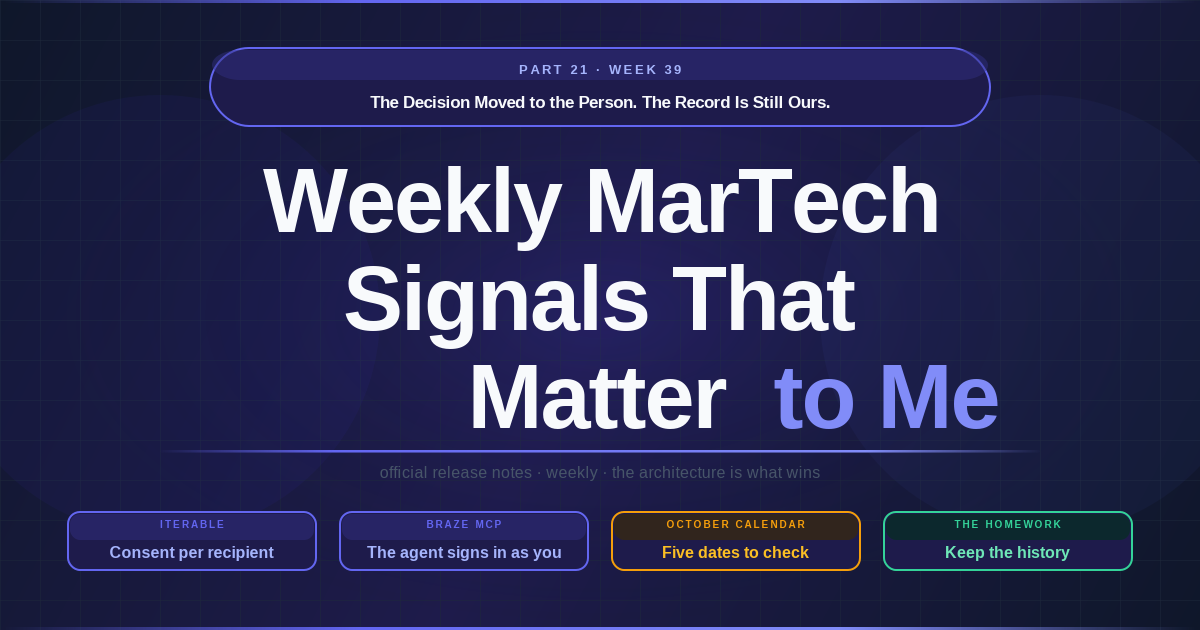
Weekly MarTech Signals That Matter to Me: Part 21, Week 39
Iterable made the email tracking pixel a per-recipient consent value and Braze made its MCP server sign in as the person using it. The same design decision from two ends of the stack, and the history nobody has planned to keep.

Weekly MarTech Signals That Matter to Me: Part 16, Week 33
Klaviyo published 260 MCP tools with write access in a single sentence, and published nothing about session lifetime or permissions. In the same four days, a regulator, a messaging provider and a standards body all turned the opt-out path into something with an API and an audit trail.
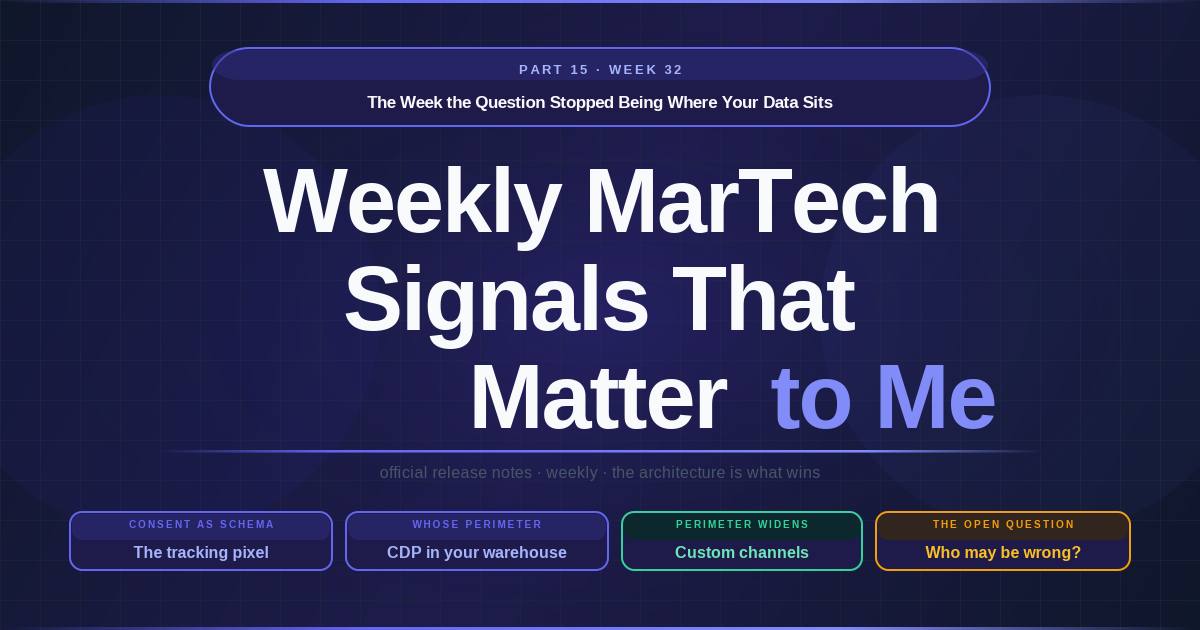
Weekly MarTech Signals That Matter to Me: Part 15, Week 32
The open-tracking pixel became a consent attribute, an entire CDP moved inside the customer's own Snowflake account, and any messaging channel became a no-code configuration. Three items, one week, and the same underlying move: the platform is where your logic runs, not where your state lives.