
7 min read
My 25-Year View on the MarTech Revolution
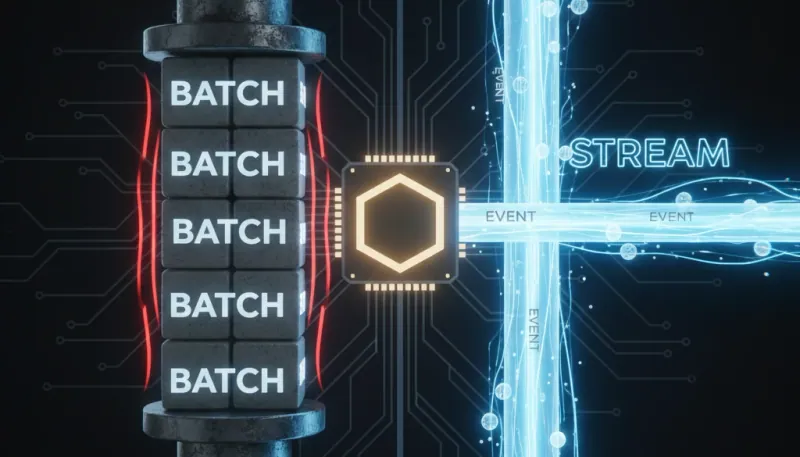
The story of marketing technology is one of constant acceleration. It’s the story of trading the predictability of batch-and-blast email for the complexity and necessity of real-time, personalized conversations. Since the rise of the iPhone and the fragmentation of the customer journey, the traditional Marketing Automation (MA) paradigm has been dying a slow death, clearing the way for a new, data-native architecture: the Customer Engagement Platform (CEP).
As a MarTech Leader who has designed and delivered cross-channel solutions for over two decades, I’ve seen this shift firsthand — from the siloed implementations of early Marketo and Neolane to the unified, AI-native power of Adobe Journey Optimizer (and taking only Adobe as an example). The difference is more than just a product name; it’s a total overhaul of the customer relationship.
The stakes today are no longer about efficiency; they are about relevance and revenue. The modern consumer has zero tolerance for poor context. If a multi-million-dollar brand fails to recognize a customer’s purchase made five minutes ago, they don’t just lose a sale — they erode the fundamental trust required for a long-term relationship.
Consider this scenario: A customer browses a high-end jacket on their desktop, adds it to the cart, and then, while commuting, completes the purchase via the brand’s mobile app. If the brand’s marketing system, an hour later, sends a batch-generated email offering a 10% discount to “complete your purchase,” that message is not just irrelevant — it feels disrespectful, showcasing a profound technical fragmentation that screams, “We don’t know you, and we don’t talk to each other.”

The MarTech architecture must now be a Real-Time System of Intelligence that powers every interaction (1,3). It must act as a single, unified brain, ensuring that every touchpoint knows the current state of the customer, down to the millisecond.
The underlying philosophical shift is from Efficiency by Default (MA) to Empathy by Design (CEP). The legacy MA platforms prioritized the marketer’s efficiency — making it easier to send bulk messages — over the customer’s experience. The CEP revolution flips this: the customer experience (personalization, timeliness, context) is the primary design constraint, and the platform’s efficiency must be built around achieving that perfect moment of engagement.
The First Wave: The Fatal Limitations of Marketing Automation
The foundation for modern MarTech was laid by the early MA leaders. Their goal was monumental for the time: to replace manual emailing with automated, multi-step nurturing flows based on simple rules. This was the era of efficiency.
The Consolidation Era (Pre-2010 to Mid-2010s)
For the large enterprise players like Adobe, Salesforce, and Oracle, the path to building a complete “marketing cloud” was paved through massive acquisitions, as they sought to connect their core competencies (CRM, Content, and Analytics) with campaign execution.
The first wave established the concept of automated nurturing but quickly ran into the challenge of data fragmentation and slow processing.
- 1999 (The MA Genesis): Eloqua is founded, pioneering lead scoring and automated nurturing, establishing the first modern B2B Marketing Automation platform.
- 2000 (Cross-Channel Messaging Emerges): ExactTarget is founded, specializing in email service provider (ESP) technology, which would later expand into a cross-channel platform.
- 2001 (MA Deep Dive): Neolane is founded, specializing in cross-channel campaign management, which would later become the foundation of Adobe Campaign.
- 2006 (Market Definition): Marketo and HubSpot are founded, formalizing the core MA focus on email workflows and lead management.
- 2007 (MA Expansion): Pardot is founded, adding a significant B2B player to the growing Marketing Automation landscape.
- October 2012 (Consolidation Prelude): ExactTarget acquires Pardot, folding the B2B marketing automation leader into its cross-channel portfolio.
- December 2012 (The First Giant Buy): Oracle acquires Eloqua (approx. $871M), signaling the enterprise rush to capture the B2B marketing automation space.
- July 2013 (The Great Consolidation — Adobe’s B2C Move): Adobe acquires Neolane (approx. $600M) to form the foundation of its marketing cloud’s campaign execution layer.
- July 2013 (The Great Consolidation — Salesforce): Salesforce acquires ExactTarget (approx. $2.5B), a major move to expand its cloud beyond CRM and into the B2C cross-channel execution space (and gaining Pardot B2B solution in the process).
- December 2013 (The Great Consolidation — Oracle’s B2C Move): Oracle acquires Responsys (approx. $1.5B), adding a critical B2C cross-channel execution platform alongside its B2B Eloqua asset.
- September 2018 (The Great Consolidation — Adobe’s B2B Move): Adobe acquires Marketo (approx. $4.75B), solidifying the final structure of the three major enterprise clouds and marking the near-completion of the MA consolidation era.
The MA Bottleneck: The Data Gravity Problem and Latency Debt
By the mid-2010s, the assembled stacks of Adobe, Salesforce, and Oracle were often integrations of separate products, not a unified whole. They were structurally ill-equipped for the demands of the modern customer due to three critical architectural flaws:
- Batch Processing and Data Staleness (Latency Debt): MA systems were fundamentally designed around Extract, Transform, Load (ETL) processes. Segments were not computed instantly; they were calculated during overnight or hourly batch windows to manage the intense database load. This reliance on ETL meant the data used for decision-making was inherently stale by the time the campaign was executed. We call this accumulated lag Latency Debt.
The Consequence of Latency Debt: If a customer abandoned a cart at 11 PM and then purchased the item via a different channel at 8 AM the next day, the MA system, due to its batch window, would still be working with 11 PM data. It would send the “Abandoned Cart” email at 10 AM, completely ignoring the most recent transaction. This latency killed relevance and severely damaged customer experience. It turned automation into annoyance. The financial cost is non-trivial: According to industry estimates, irrelevant messaging driven by latency can increase customer churn rates by up to 15% in high-velocity sectors like e-commerce, as repeated errors signal incompetence to the consumer. - Siloed Identity (“The Data Gravity Problem”): The biggest barrier was identity. Customer data was scattered across the CRM, the Web Analytics platform, the Commerce engine, and the Campaign tool. Achieving a true, single view of the customer was not a native platform feature but a costly, brittle integration project. Identity resolution — the process of linking disparate IDs like a web cookie, a mobile IDFA, an email address, and a physical loyalty card number — had to be managed outside the core MA engine. The MA platform had to constantly fight the data gravity well — the tendency of data to stay locked in its system of origin. This required complex, high-maintenance data pipelines that were often owned by IT, creating a permanent dependency and slowing down marketing’s ability to respond to changing market conditions.
- Mobile and High-Velocity Blindness (The Stream Processing Gap): Most MA leaders were born in the desktop/email era. They struggled profoundly with the sheer speed, volume, and complexity of mobile and in-app events (clicks, gestures, location updates, screen views). These systems were not built to ingest and process millions of discrete, high-velocity signals per minute. This required a completely different architecture built on stream processing, which legacy MA systems lacked. Lacking this real-time event processing capability meant that true omnichannel orchestration — such as immediately pausing an SMS promotion the instant a user completes an action in the app — was nearly impossible (2). The architecture of batch processing is inherently poor at handling transient state changes, which are the essence of the mobile and web experience.
As customer journeys fragmented across apps, social feeds, connected devices, and physical stores, the market demanded platforms built specifically for real-time data ingestion and cross-channel orchestration.
Conclusion: The End of an Era
The batch-and-blast era, fueled by the MA architecture, fundamentally failed the modern customer by introducing Latency Debt and entrenching data silos. The inability of these systems to process data in real-time meant that every campaign was inherently irrelevant to the customer’s current state. The solution wasn’t merely optimizing the old stack; it required a complete architectural reset.

In Part 2 of this series, we will dive into the Second Wave — the rise of Customer Engagement Platforms (CEPs), which were purpose-built on real-time data streams and AI to finally close the gap between customer expectation and marketing execution, ushering in the age of Agentic Marketing.
Sources
Forrester
- The Forrester Wave: Cross-Channel Marketing Hubs, Q4 2024. Analyzes how CCMHs handle real-time data, AI, and conversational innovation.
Gartner
- Magic Quadrant for Multichannel Marketing Hubs, 2024. Evaluates vendors based on completeness of vision and ability to execute in the MMH space, recognizing the shift toward CEPs and MMHs.
McKinsey & Company
- Rewiring martech: From cost center to growth engine. On the necessity of a dynamic customer graph and the agentic opportunity presented by AI to redefine marketing.